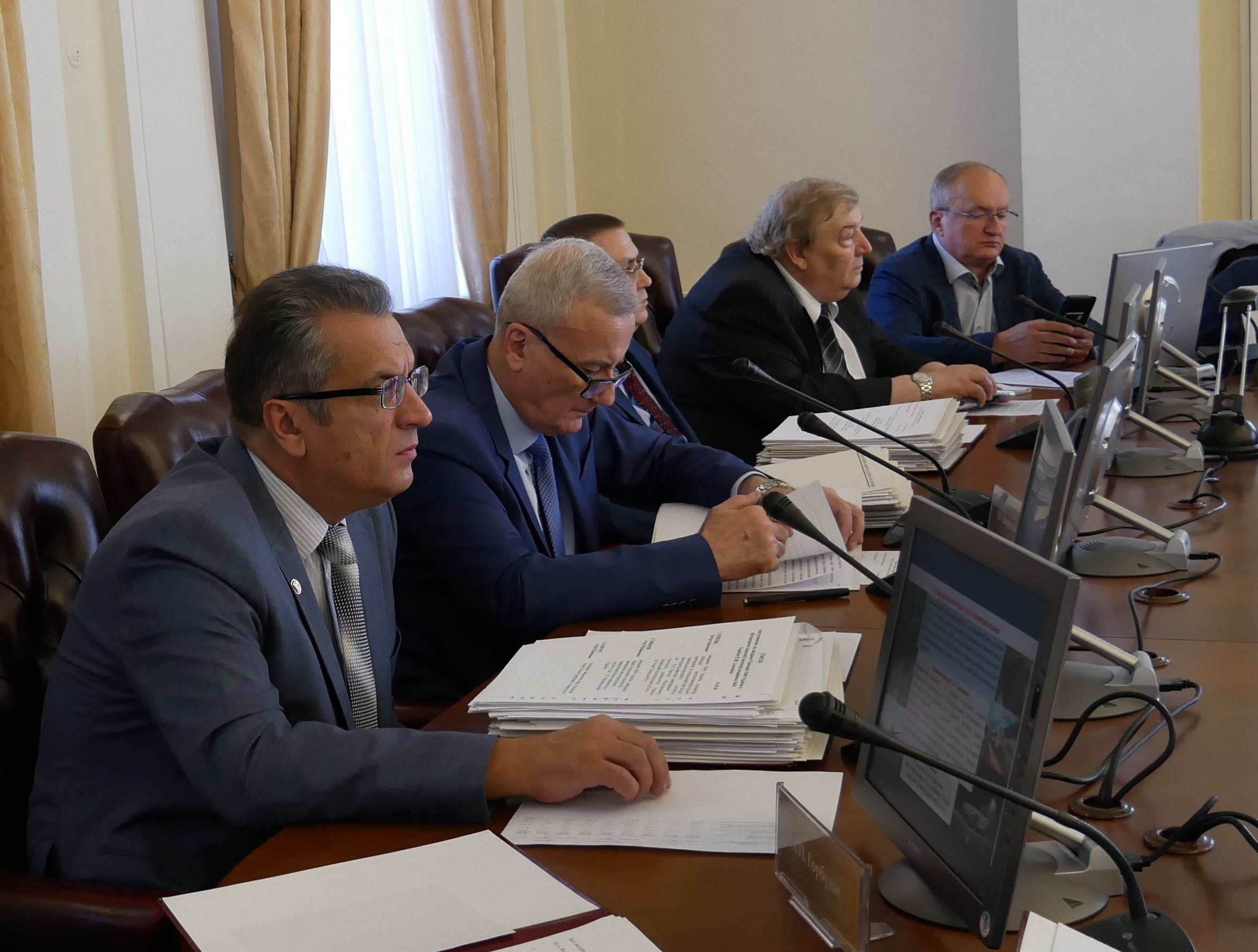
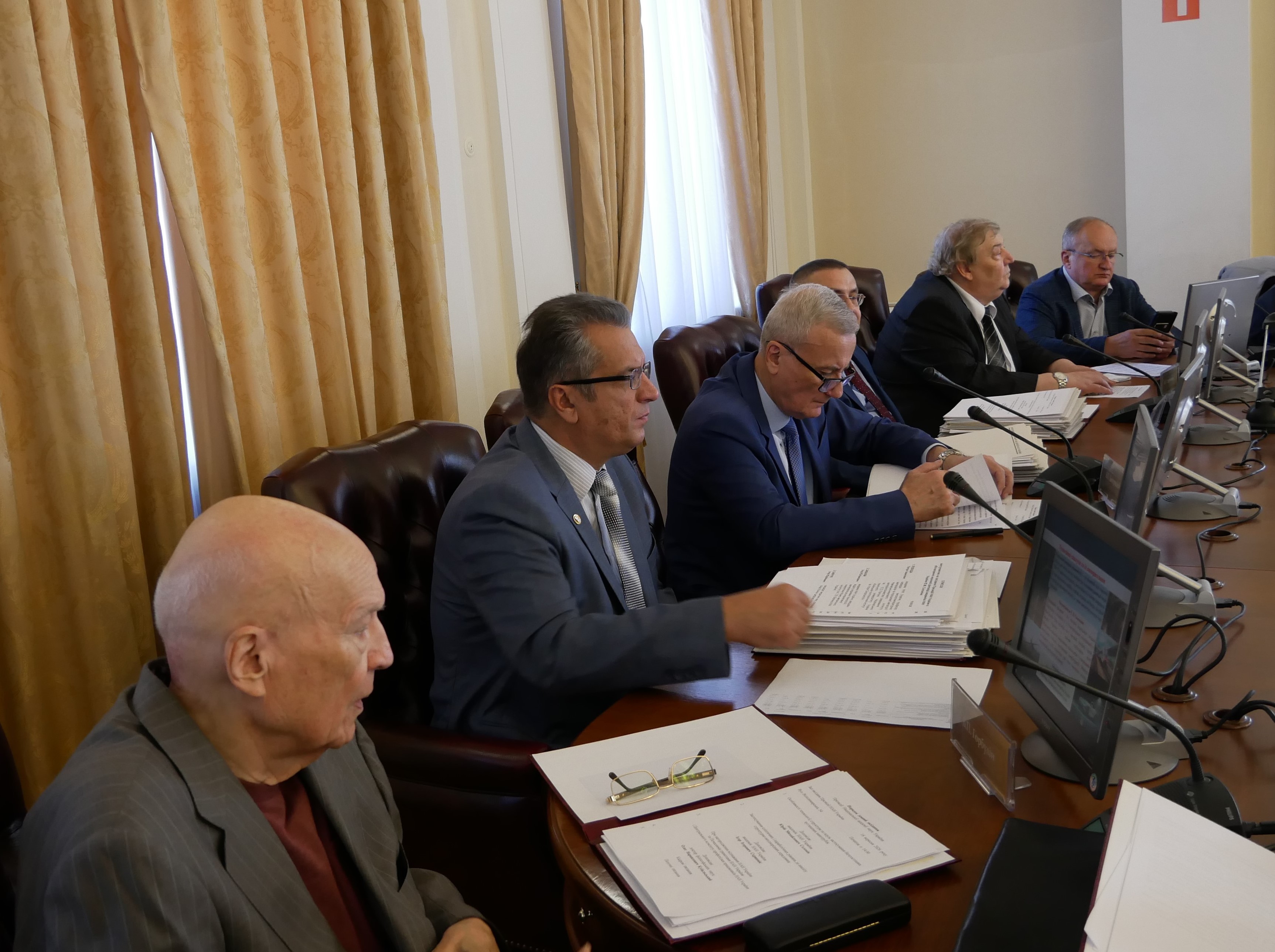
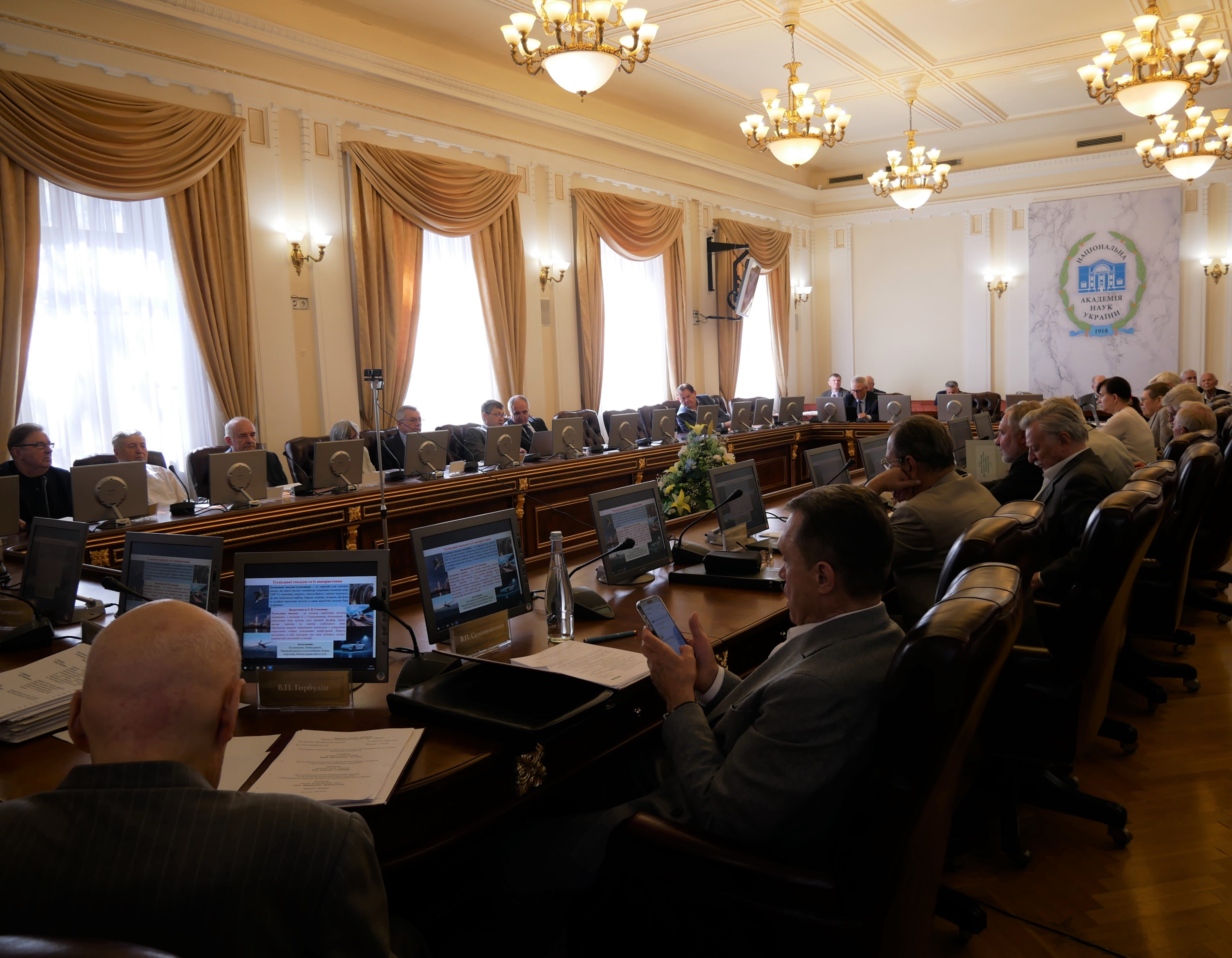
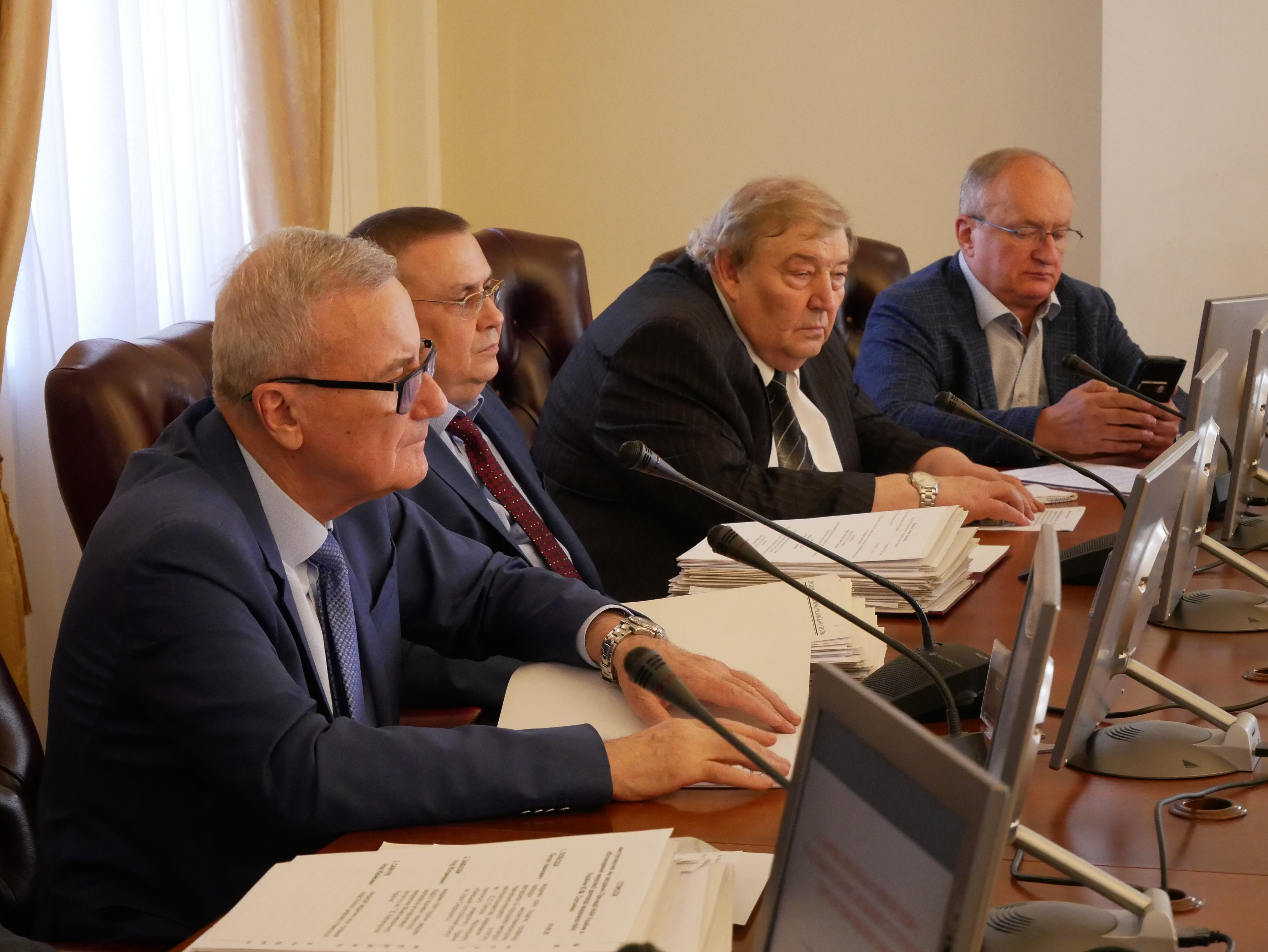
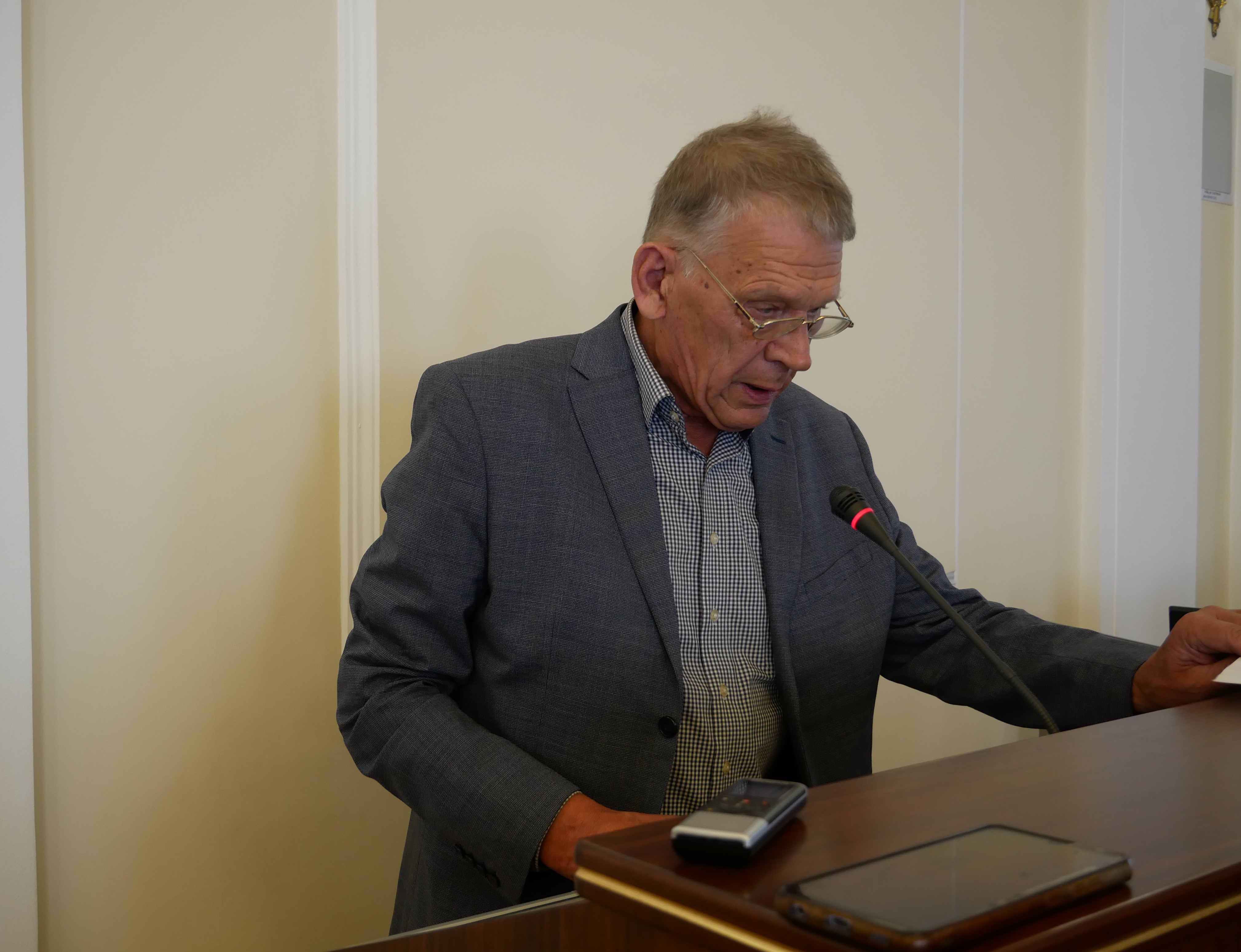
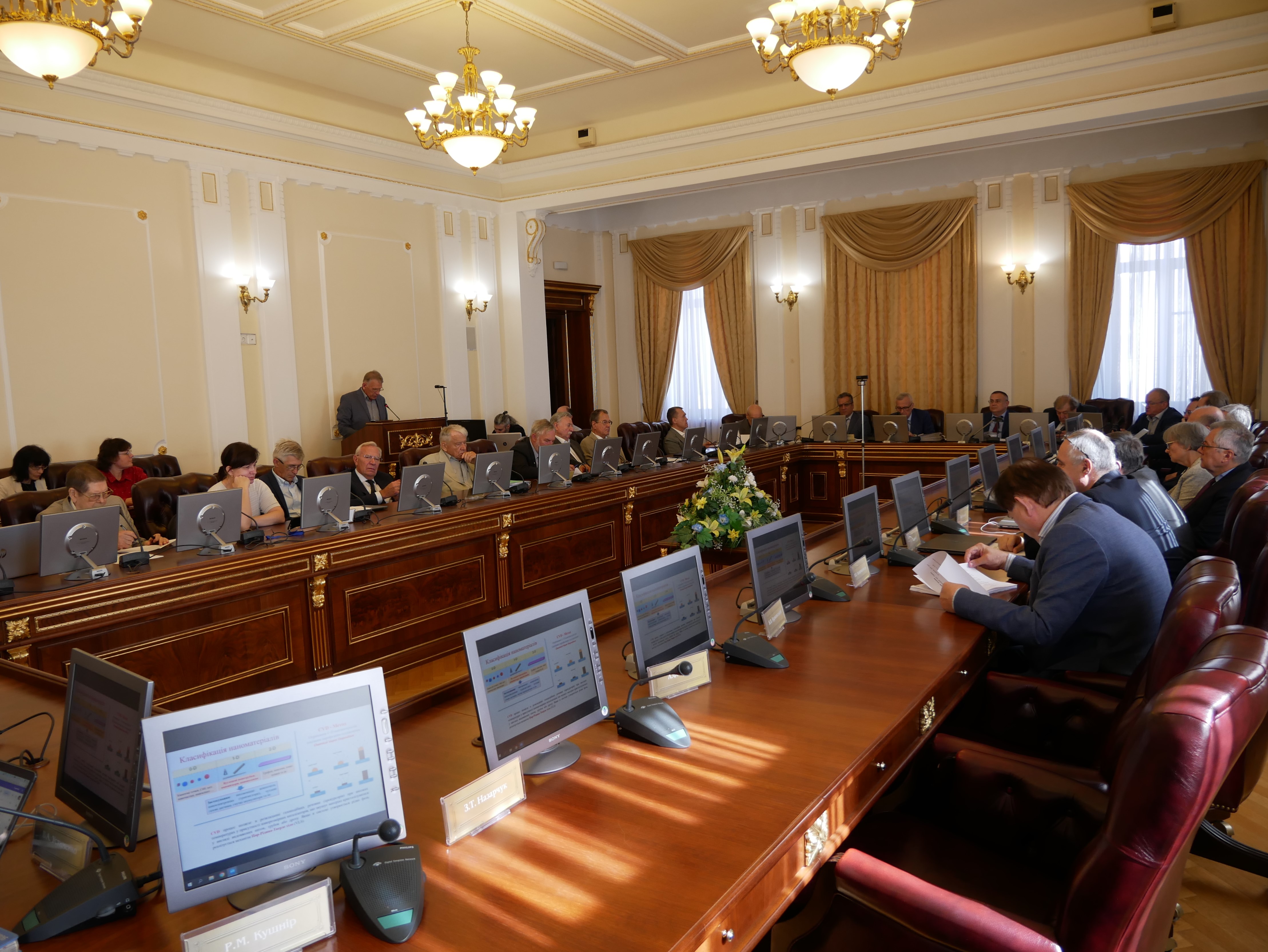
On September 16, 2026, a regular meeting of the Presidium of the National Academy of Sciences of Ukraine took place, chaired by the President of the Academy, Academician Anatoly Zagorodny.
On this day, the meeting participants heard two scientific presentations.
Yuriy Solonin, Academician of the NAS of Ukraine, Head of Department at the I.M. Frantsevych Institute for Problems of Materials Science of the NAS of Ukraine, presented the report Technological Features, Structure, and Application Areas of Multi-Walled Carbon Nanotubes, outlining the results of fundamental and applied research conducted at the Institute on one-dimensional (1D) nanostructures based on carbon and refractory compounds.
According to the speaker, the relevance of the work stems from the fact that traditional bulk materials - including those based on refractory compounds - are increasingly reaching the limits of their capabilities in meeting the needs of high-tech sectors such as aerospace engineering, nuclear energy, microelectronics, and biomedicine. At the same time, 1D structures based on carbon (nanotubes) or refractory compounds (transition metal or silicon carbides, nitrides, and borides) while retaining the key advantages of their bulk counterparts, exhibit strength approaching the theoretical limit, making them indispensable reinforcing additives for composites. Furthermore, they are characterized by a range of additional physical and physicochemical properties.
As revealed in the report, researchers at the institution conducted a comprehensive set of fundamental and applied studies on the synthesis of one-dimensional refractory compounds, such as titanium and silicon carbides and nitrides, titanium diboride, boron nitride, and others. They investigated the influence of the catalyst type, reaction conditions, and precursor composition on the morphology and crystal structure of the resulting product. Technologies have been proposed for the synthesis of ‘spatially distributed nanostructures’, i.e. specifically micro- and nanofibers, on the inner surfaces of highly porous matrices using Chemical Vapor Deposition (CVD) method. CVD is the most widely used method for producing 1D nanostructures, as it enables the controlled growth of oriented arrays of nanofibers, nanotubes, and nanowhiskers with specific parameters regarding diameter, length, and chemical composition.
Academician Yuriy Solonin reported that silicon carbide nanofibers and multi-walled carbon nanotubes have been used to create fluoroplastic-based composites for tribological applications, exhibiting wear resistance two orders of magnitude higher than that of pure fluoroplastic. Flat sliding bearings based on this material have been implemented at First Kyiv Machine-Building Plant JSC, and a batch of sleeve-type bearings has been supplied to the Antonov JSC for testing. A dental composite based on Ftorax resin, reinforced with silicon carbide nanofibers, has undergone biocompatibility testing at the Platon Shupyk National Healthcare University of Ukraine and has been deemed promising for use. The potential use of such ‘spatially distributed nanostructures’ based on nickel foam and silicon carbide for creating fine filters for liquids and gases was also noted.
Petro Loboda, Academician of the NAS of Ukraine and Professor at the Department of High-Temperature Materials and Powder Metallurgy (E.O. Paton Educational and Research Institute of Materials Science and Welding, National Technical University of Ukraine ‘Igor Sikorsky Kyiv Polytechnic Institute’), spoke during the discussion of the report. Andrii Rahulia, Academician of the NAS of Ukraine and Deputy Academician-Secretary of the Department of Materials Science of the NAS of Ukraine, presented the feedback received from Ihor Zavalii, Academician of the NAS of Ukraine and Head of Department at the G.V. Karpenko Physico-Mechanical Institute of the NAS of Ukraine, and Ihor Savchuk, PhD in Medicine and Chief Physician of the Digital Dentistry Clinic. Petro Stryzhak, Academician of the NAS of Ukraine, Academician-Secretary of the Department of Chemistry of the NAS of Ukraine, Head of Department at the L.V. Pysarzhevsky Institute of Physical Chemistry of the NAS of Ukraine, also joined the discussion on the matter. The participants highlighted the importance, relevance, and potential of further research into 1D nanomaterials based on carbon and refractory compounds, as well as the development of a new generation of polymer-based composites utilizing these materials.
Next, Ihor Skrypnik, Academician of the NAS of Ukraine, Deputy Director for Science at the Institute of Applied Mathematics and Mechanics of the NAS of Ukraine, reported on the Application of Elliptic and Parabolic Equations to the Analysis of Structurally Inhomogeneous Media. He presented significant new results concerning the qualitative theory of partial differential equations with complex growth structures.
According to the speaker, these results represent a significant contribution to the development of fundamental mathematics and are of fundamental importance to related applied fields, particularly the mechanics of heterogeneous media, the hydrodynamics of non-Newtonian fluids, materials science, image processing, and mathematical biology.
Academician Ihor Skrypnik reported that the research yielded new, precise conditions for the boundedness and unboundedness of solutions and established the regularity of weak solutions under conditions significantly weaker than classical logarithmic conditions. For such classes of parabolic equations, a Harnack inequality involving an intrinsic time scale, which naturally adapts to the local properties of the solution and the equation's coefficients, is proved for the first time; the result holds under precise conditions on the ratio of growth exponents that are optimal in light of known counterexamples. Furthermore, local Hölder continuity of solutions is established under a condition regarding the ratio of anisotropy exponents. Since the lack of homogeneity regarding the solution and/or the gradient precludes the use of traditional classical methods, fundamentally new approaches have been developed for formulating and solving problems involving nonlinear differential equations with complex growth structures. A key conceptual innovation is an improved method of local internal scaling, in which the geometry of parabolic cylinders is adaptively determined by both the local values of the solution and the structure of the equation's coefficients, while for anisotropic equations, the scale is differentiated in each spatial direction.
A significant portion of this research was conducted in close collaboration with leading mathematicians from universities in Italy and Portugal, and the results possess not only fundamental value but also profound practical significance. Since mathematical models based on equations with non-standard growth conditions directly describe complex physical and applied processes, the obtained results are crucial for solving pressing problems in the hydrodynamics of electrorheological fluids, specifically, investigating the interaction between electromagnetic fields and a moving fluid, as well as in digital image processing and reconstruction, the development of anisotropic and composite materials, and the mathematical modeling of the spread of epidemic diseases.
Speakers during the discussion of the report included Oleksandra Antoniuk, DSc in Physics and Mathematics, Chair of the Scientific Committee of the National Council of Ukraine on Science and Technology Development, Leading Researcher at the Institute of Mathematics of the NAS of Ukraine; Olha Niesmielova, DSc in Physics and Mathematics, Director of the Institute of Applied Mathematics and Mechanics of the NAS of Ukraine; and Academician Oleksandr Tymokha, Academician-Secretary of the Department of Mathematics of the NAS of Ukraine, Director of the Institute of Mathematics of the NAS of Ukraine, noting the fundamental importance of the results obtained, their alignment with the current global standard, and their significant value for the development of related applied fields.
Finally, the meeting participants addressed personnel and routine matters.
Photo: Press Service of the NAS of Ukraine