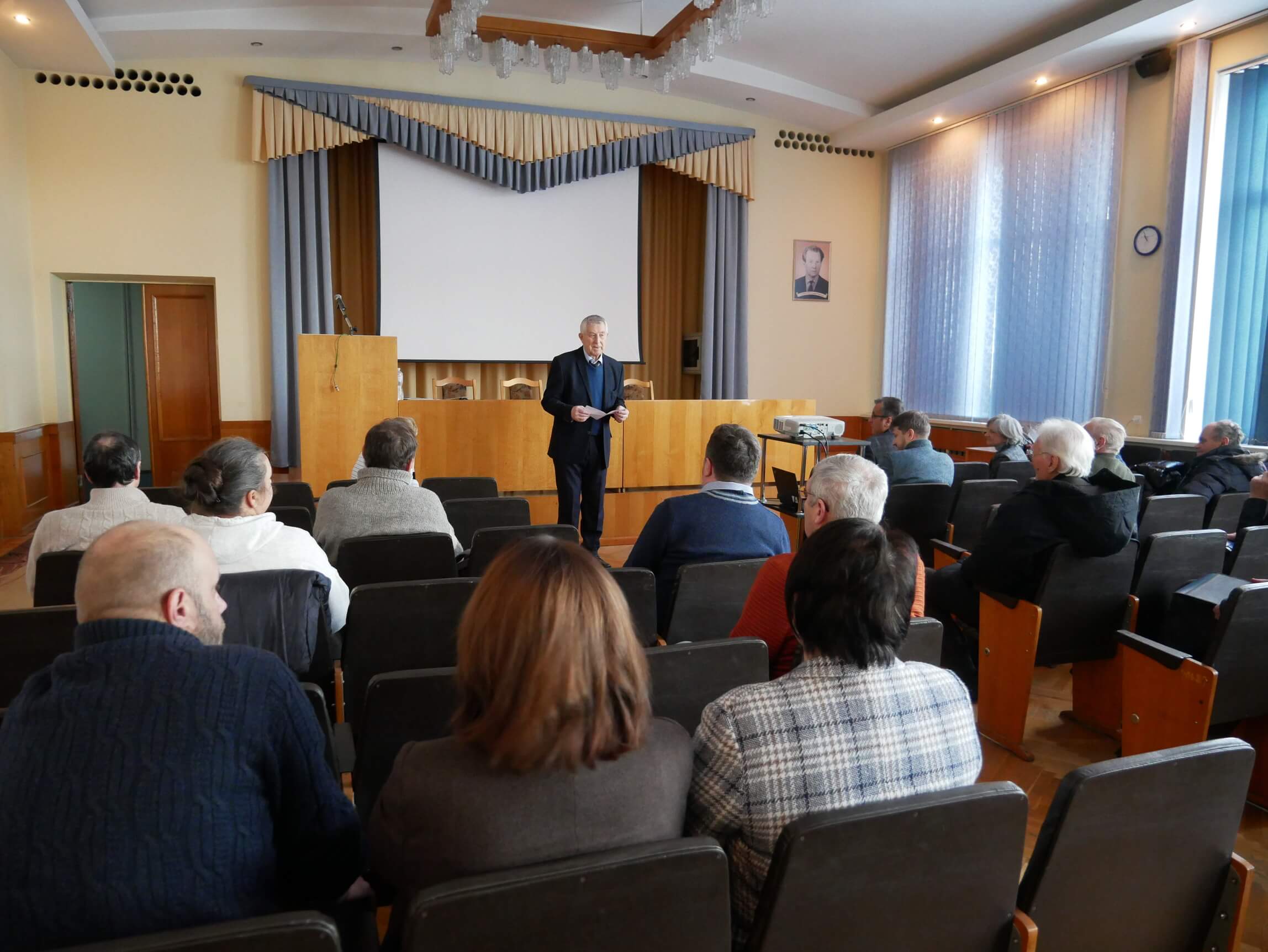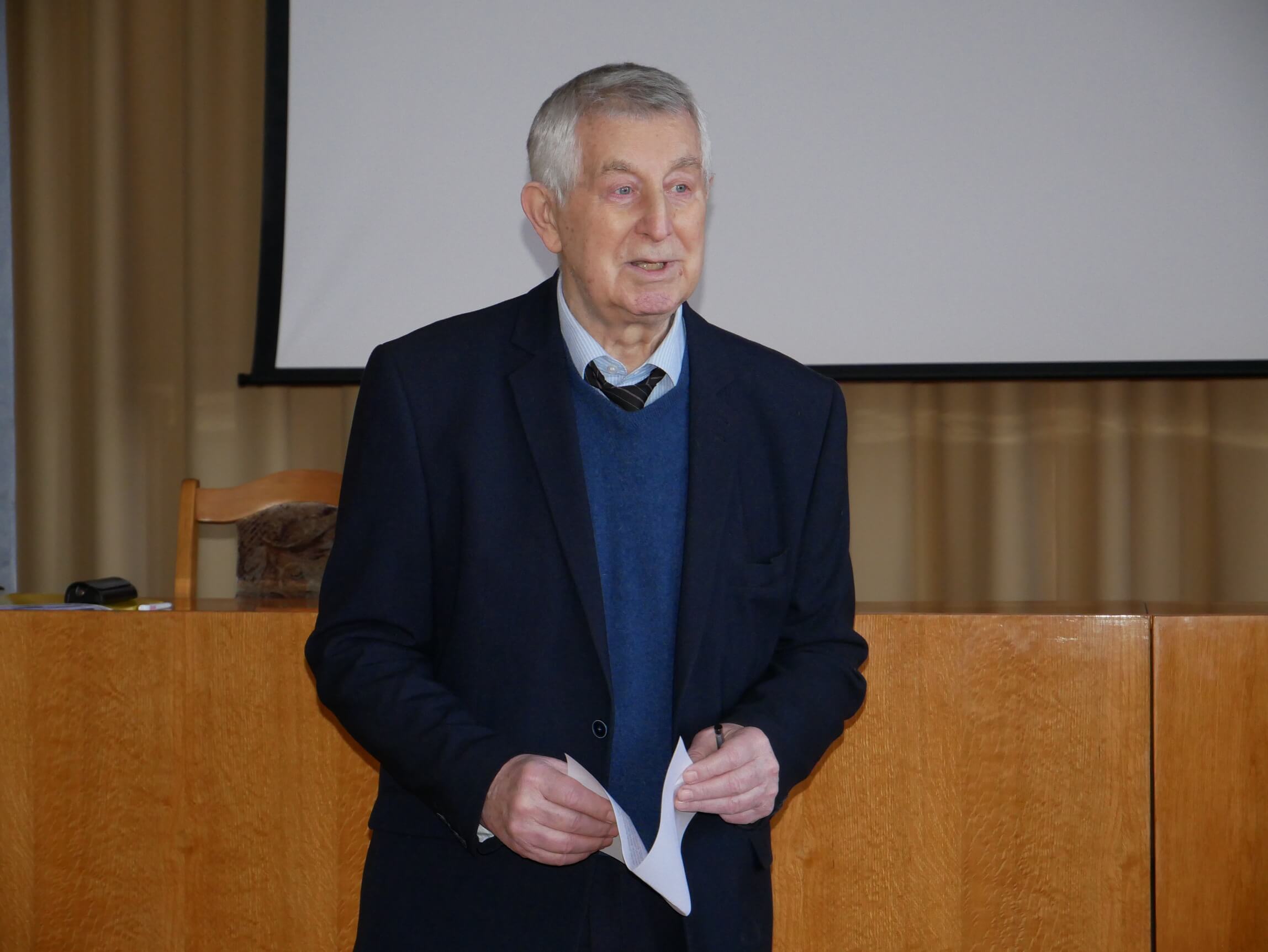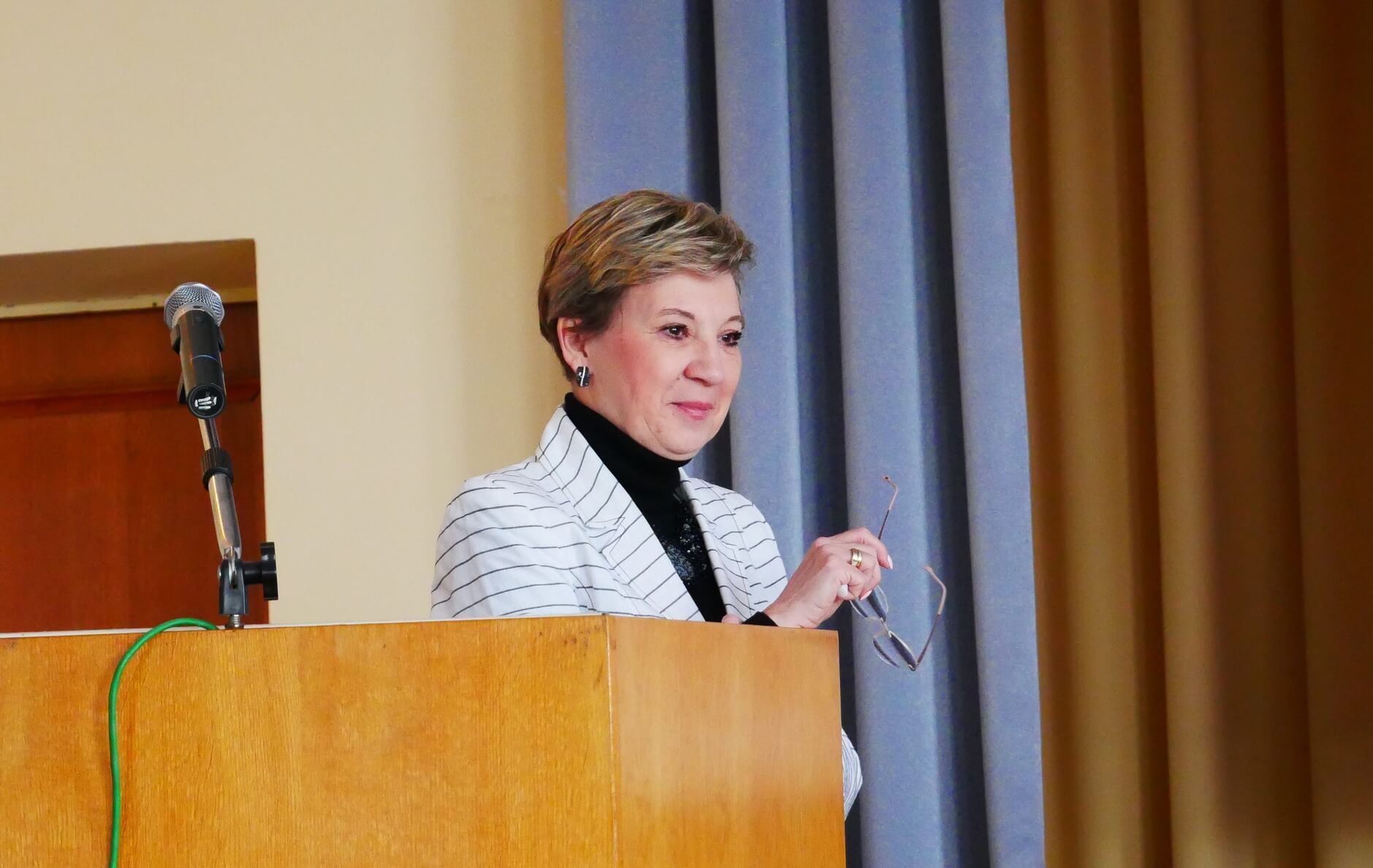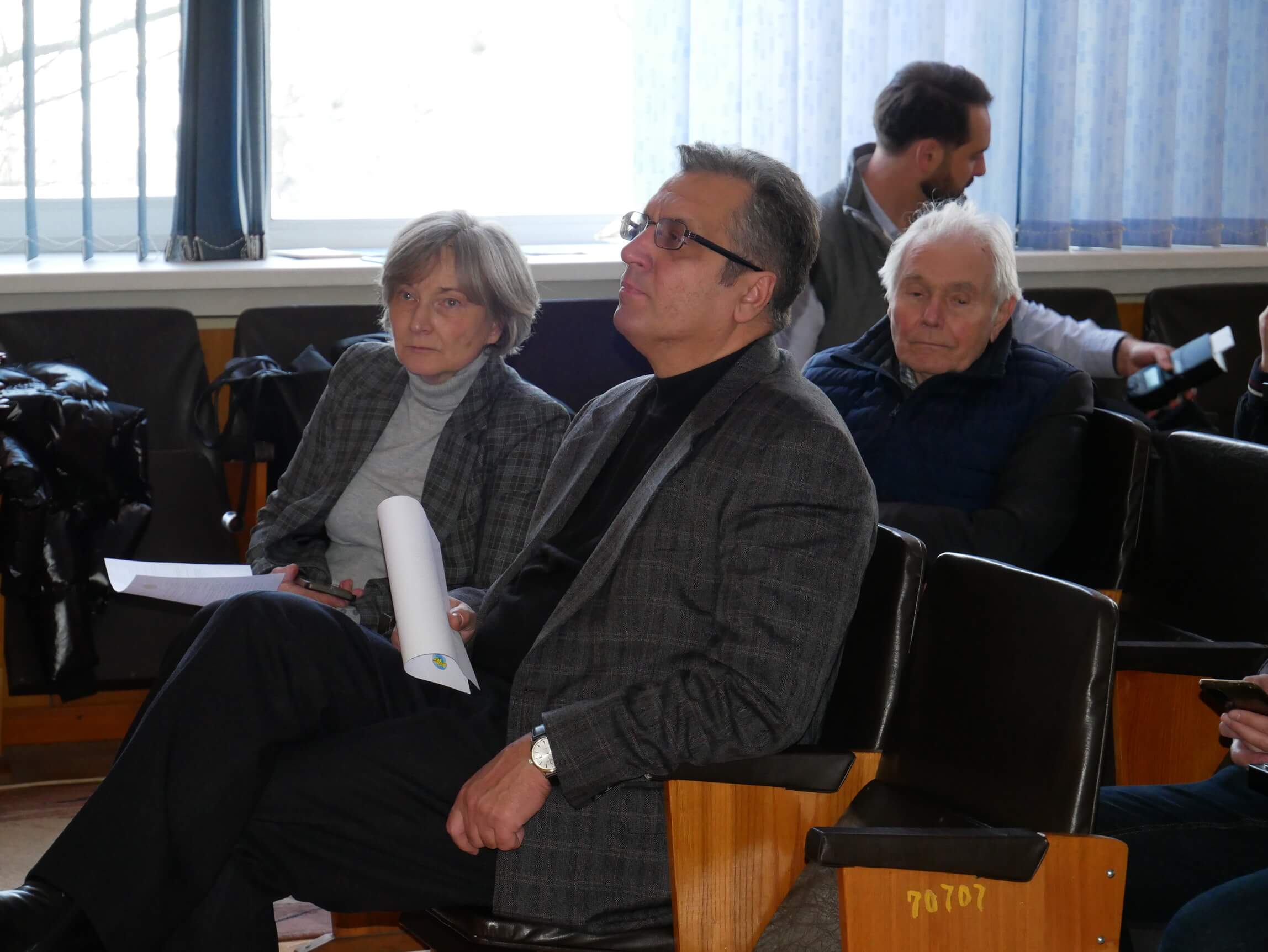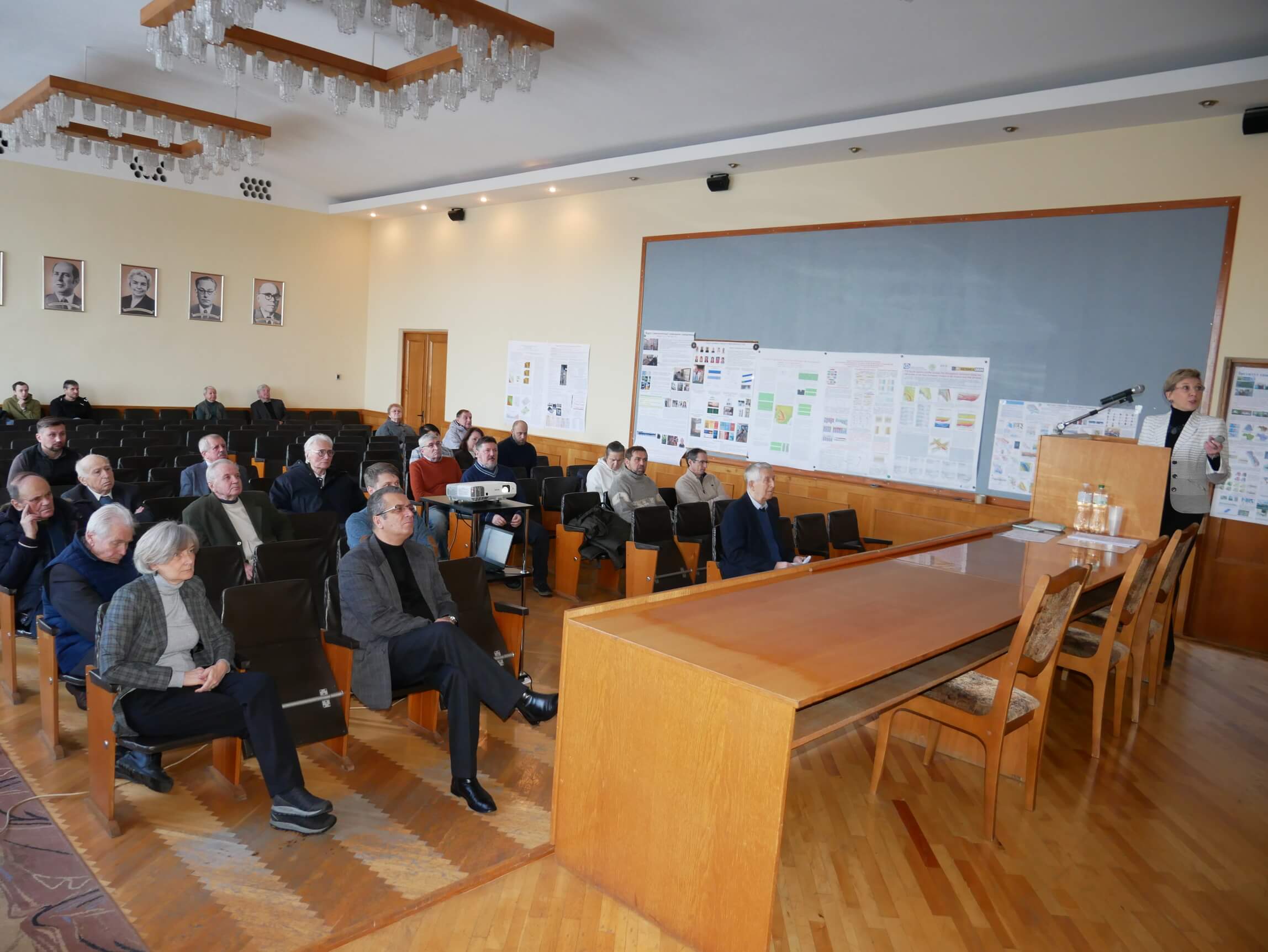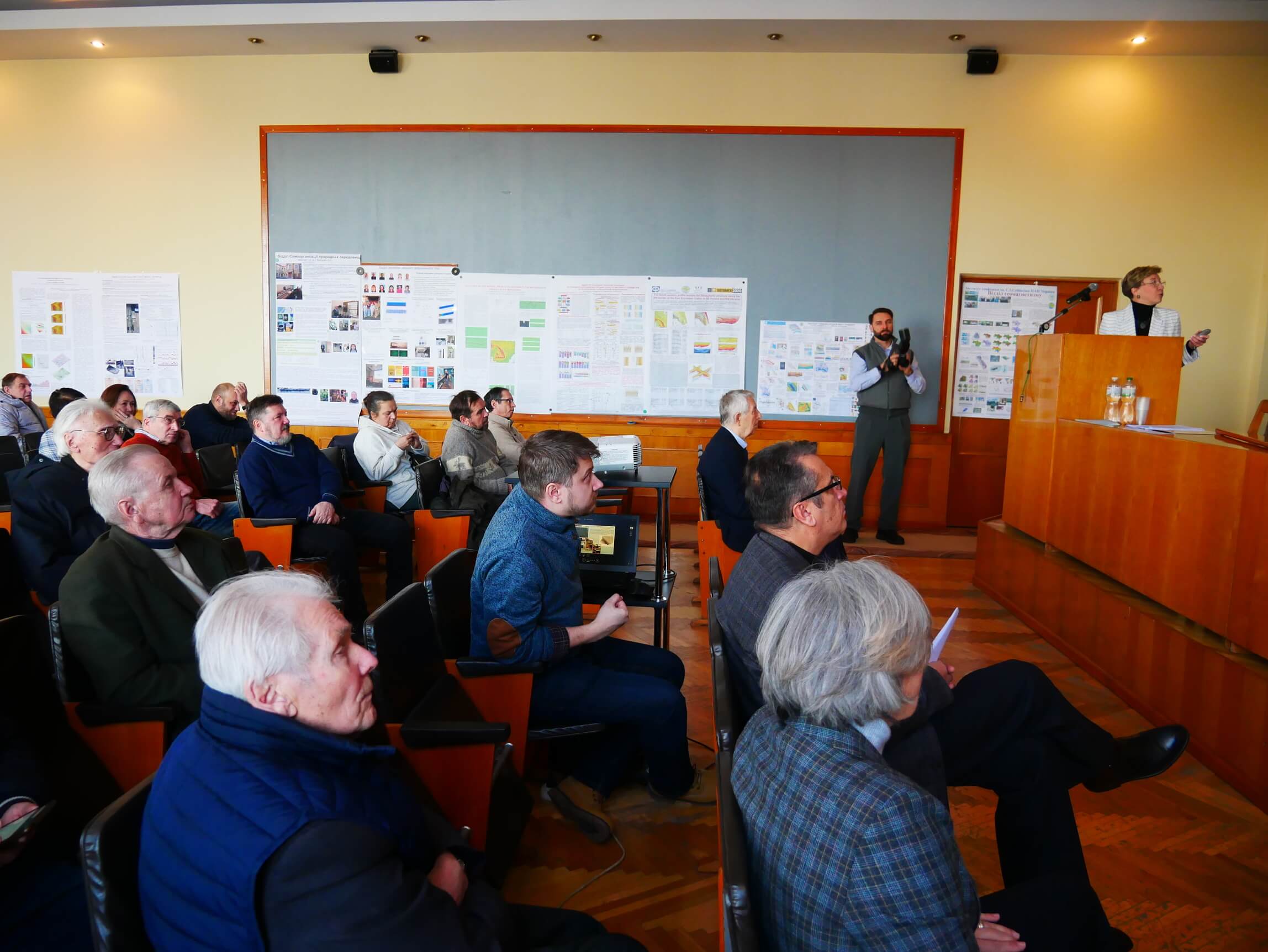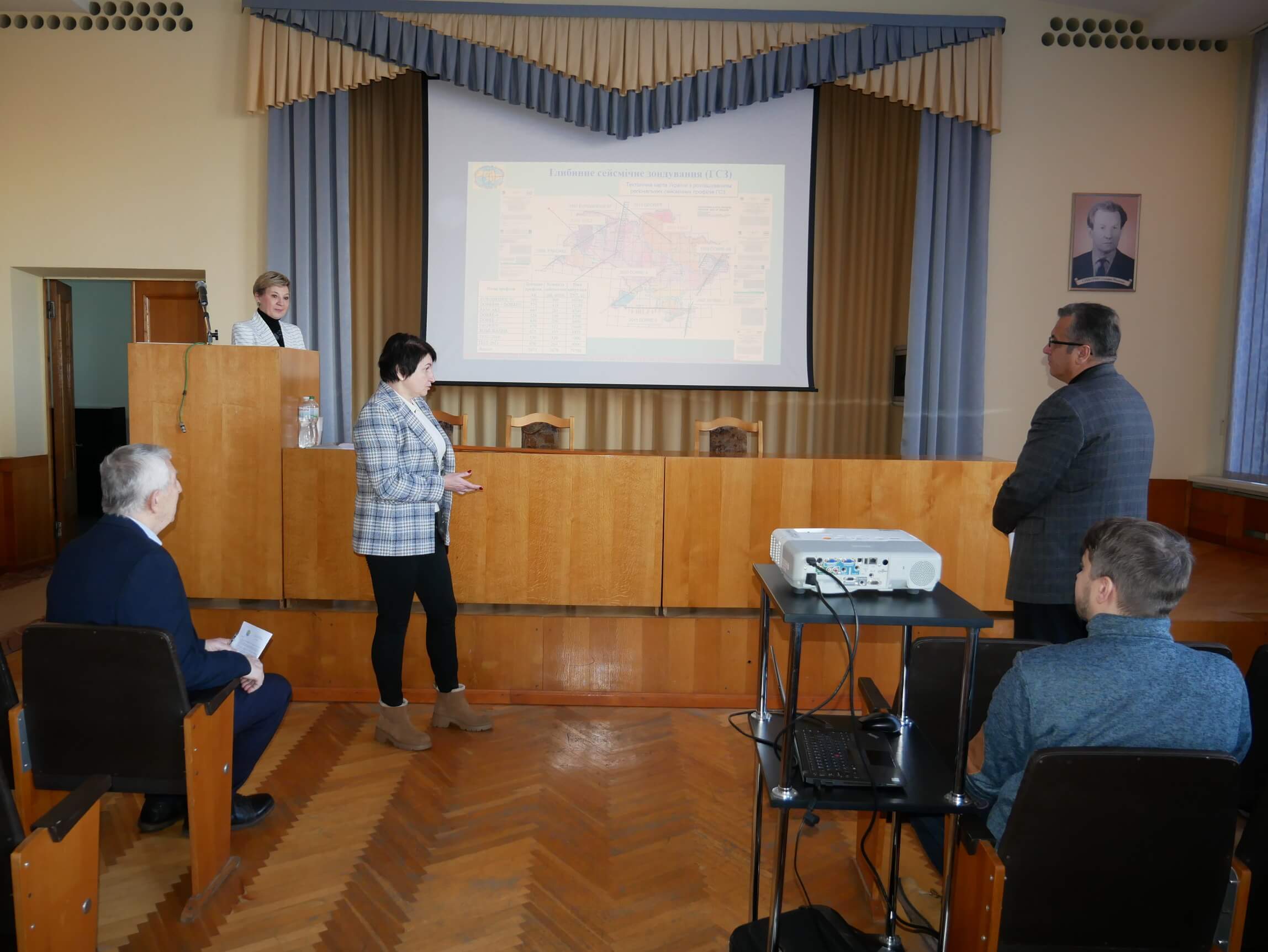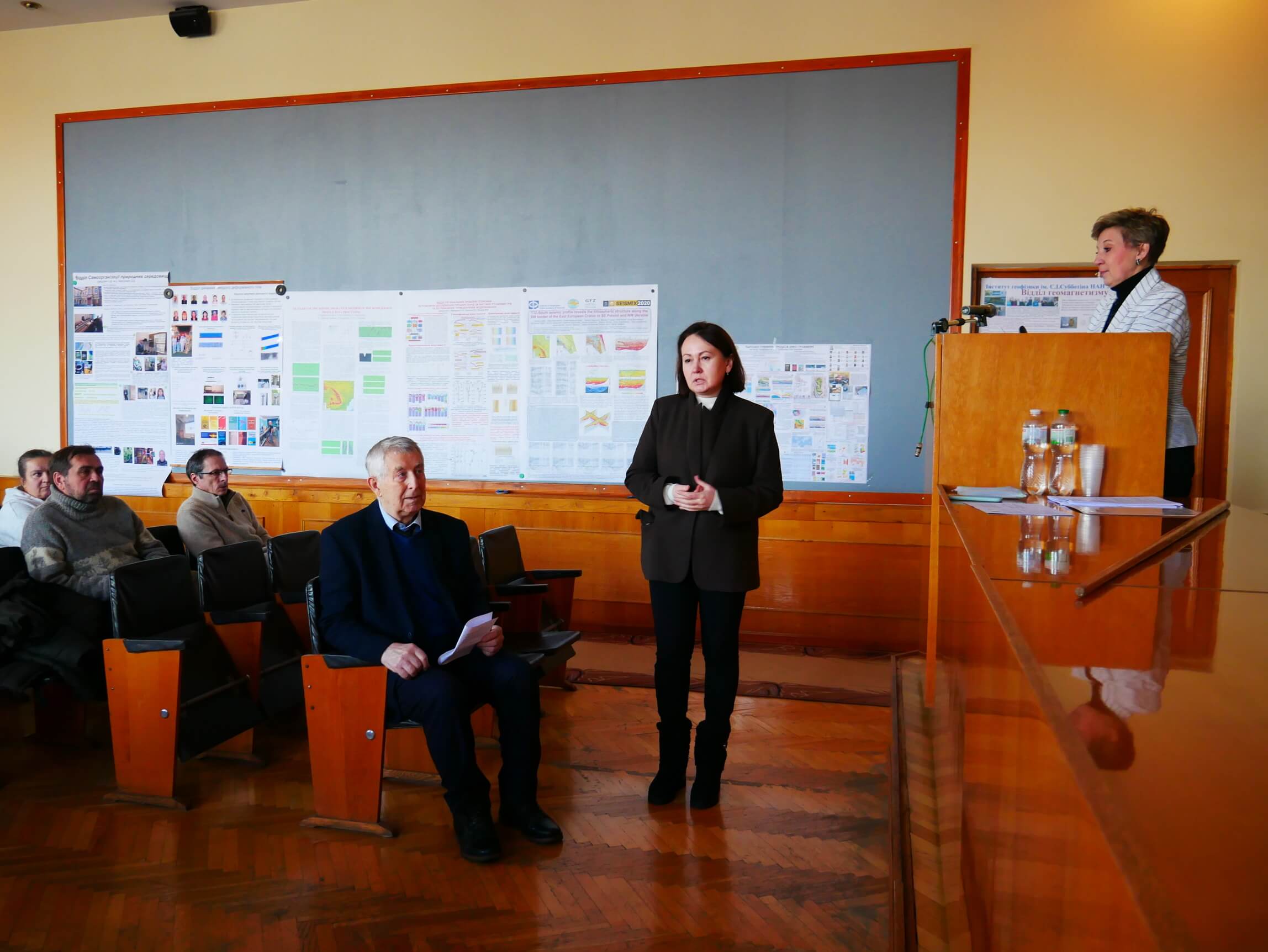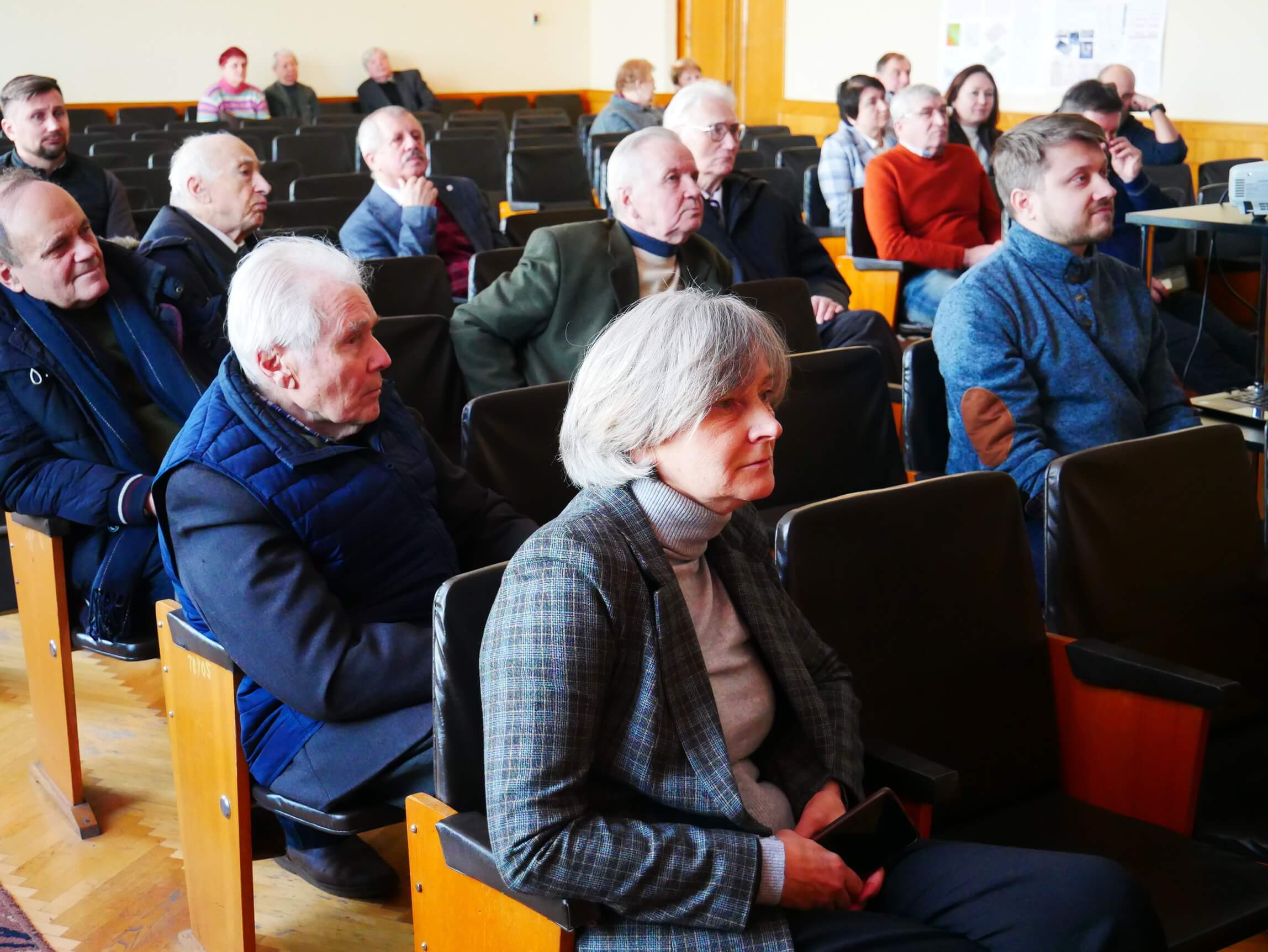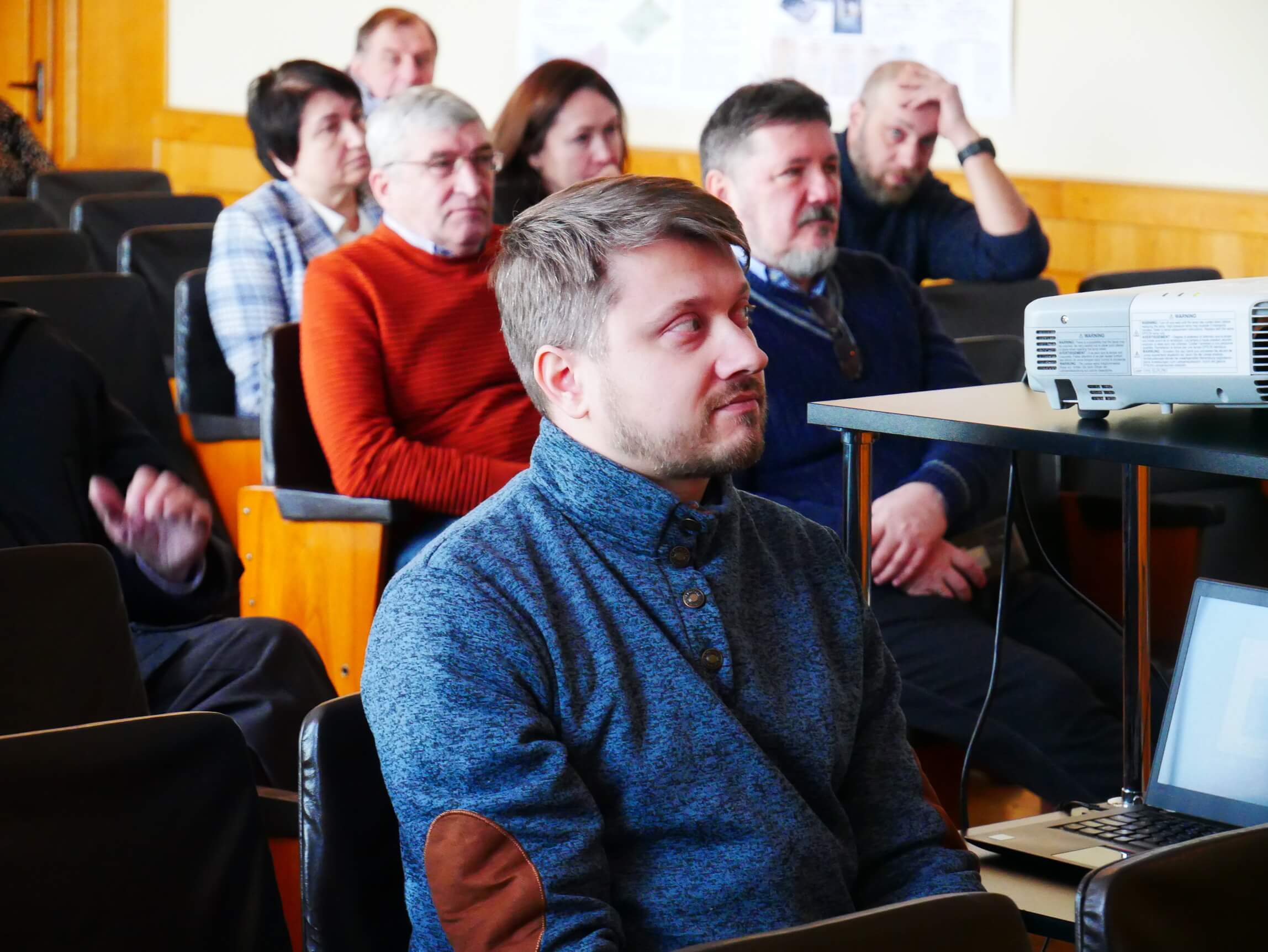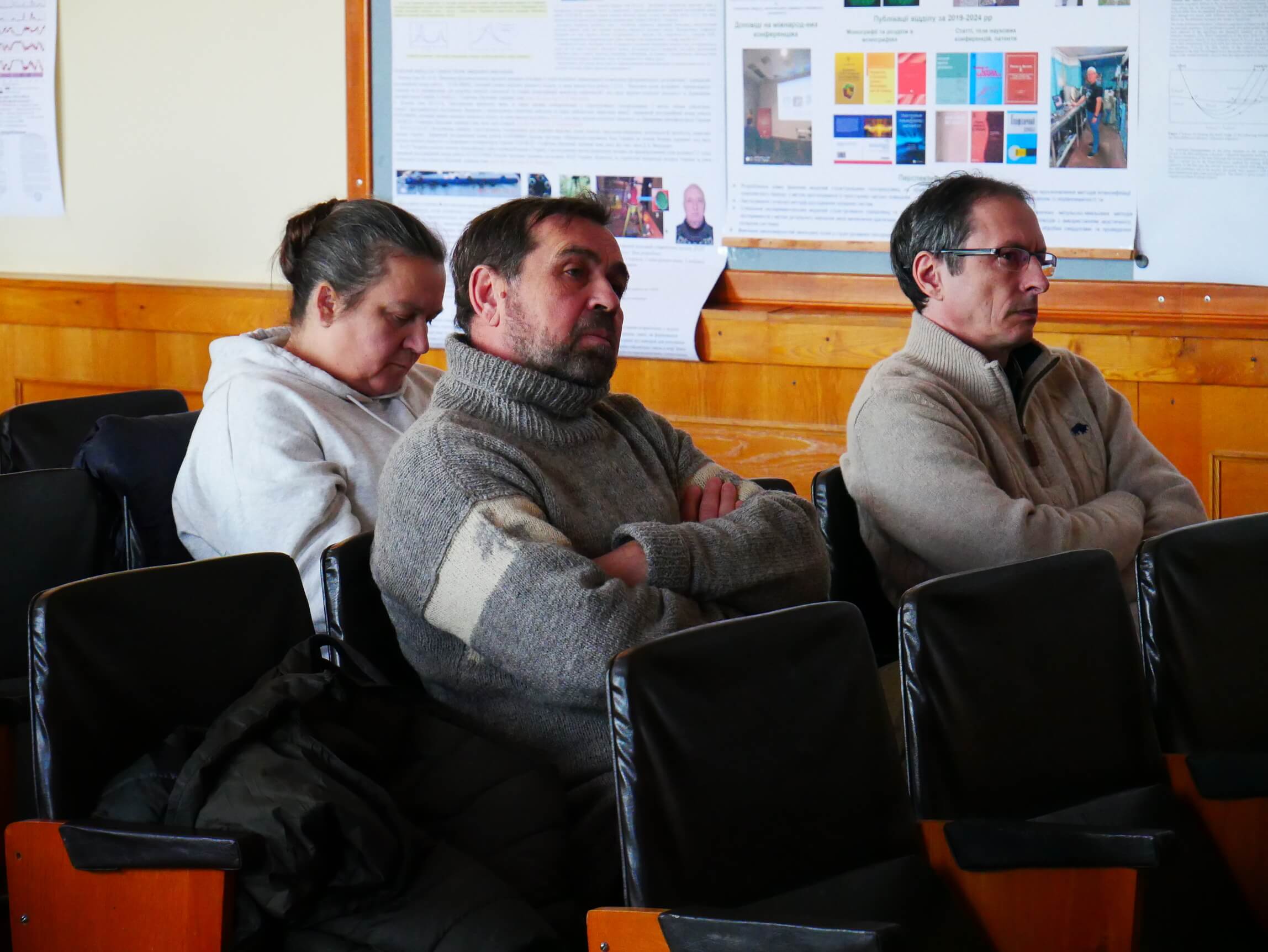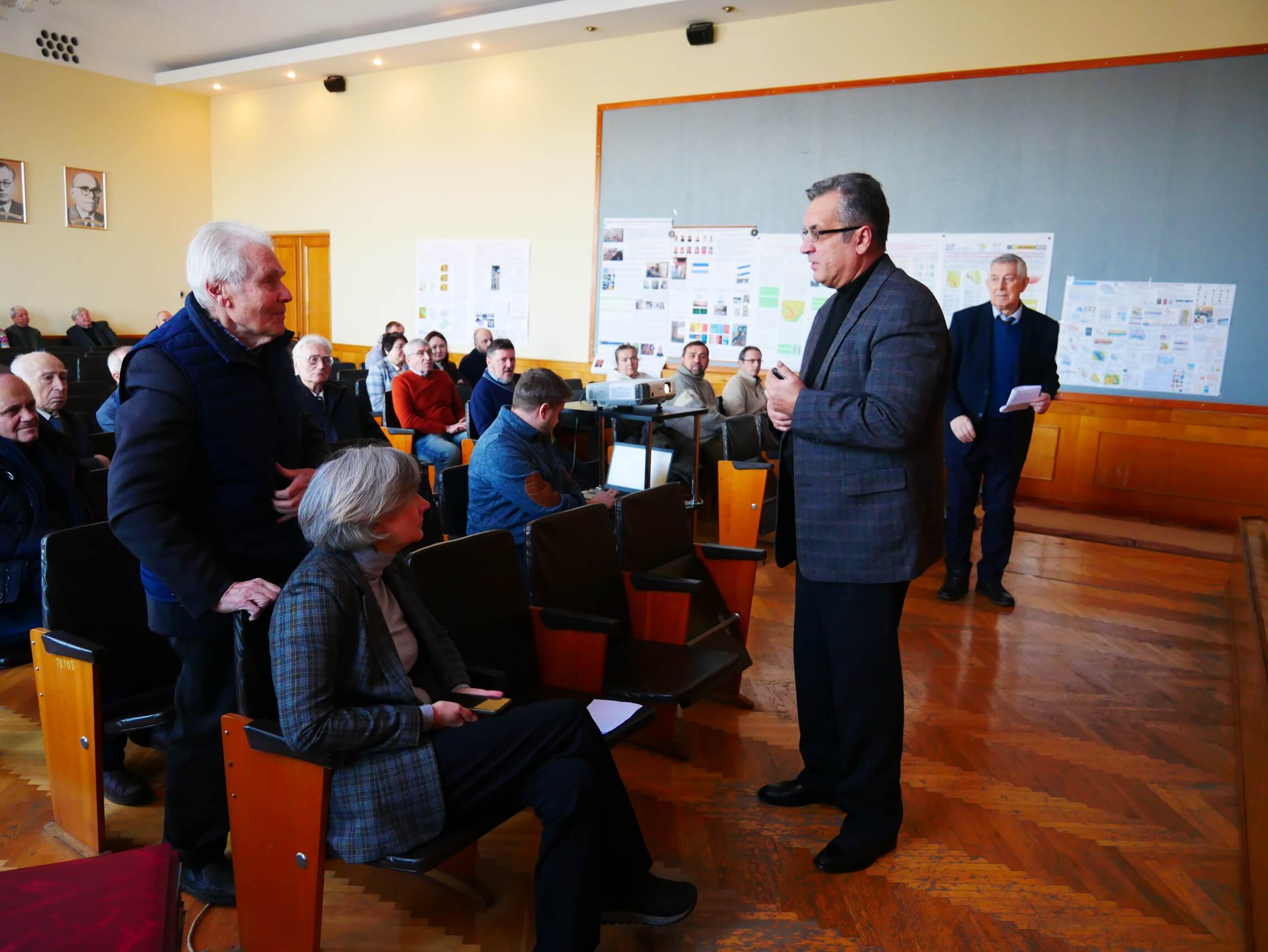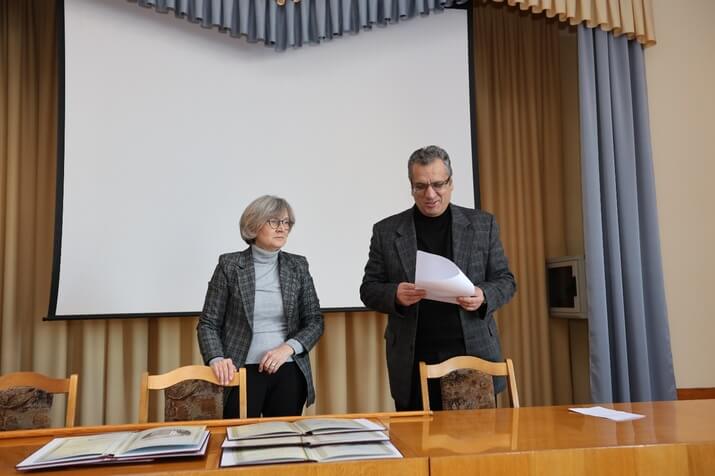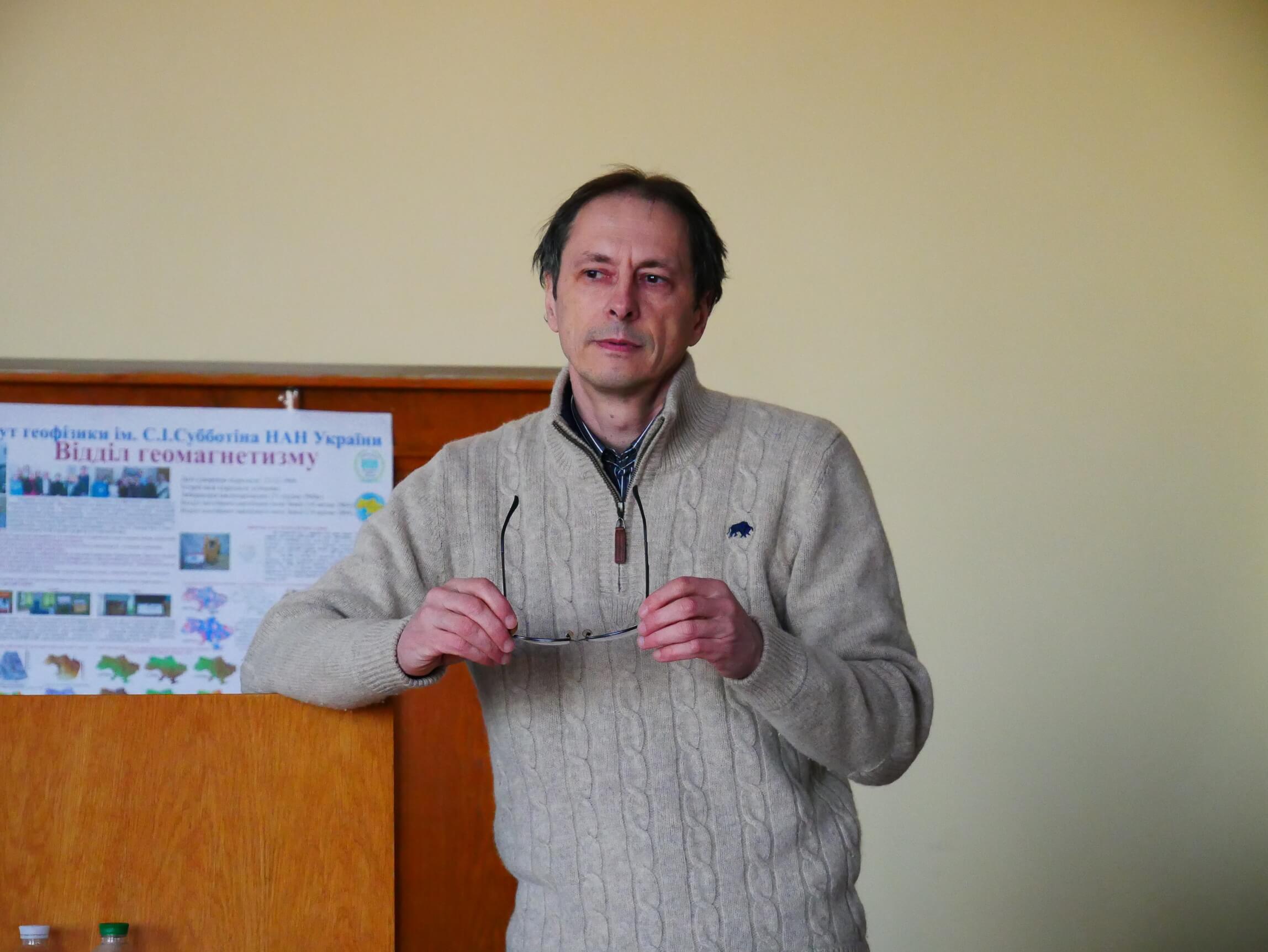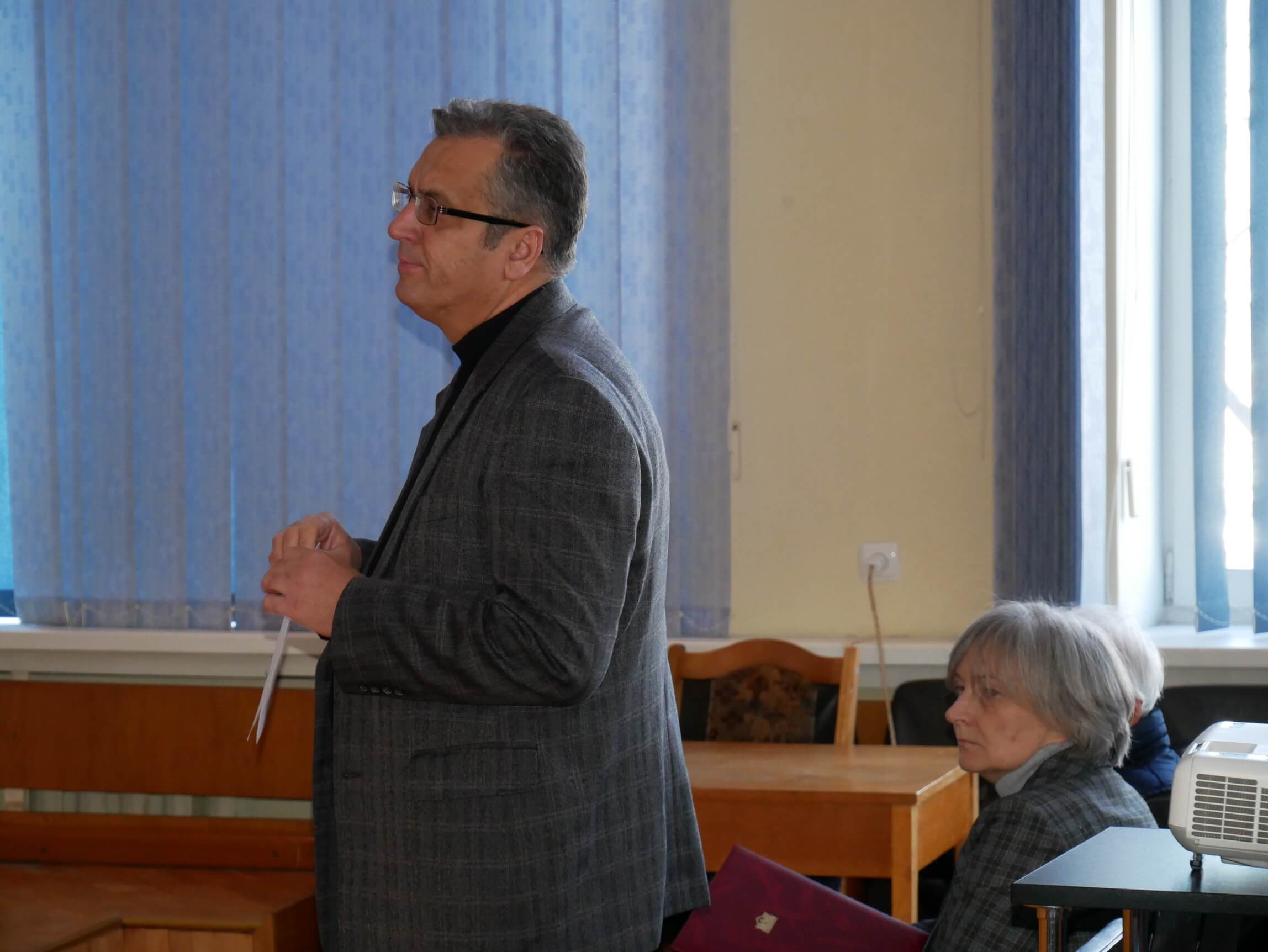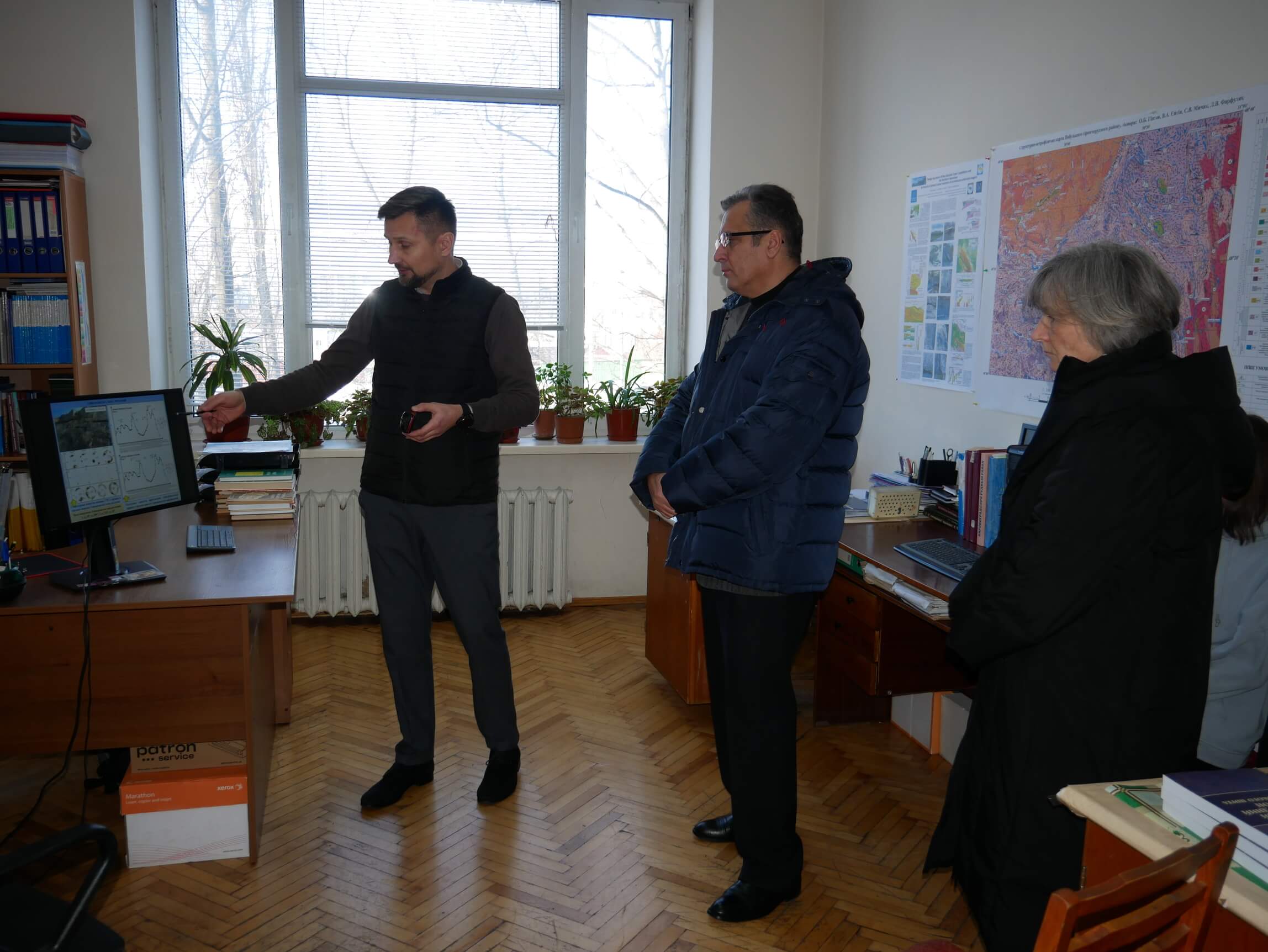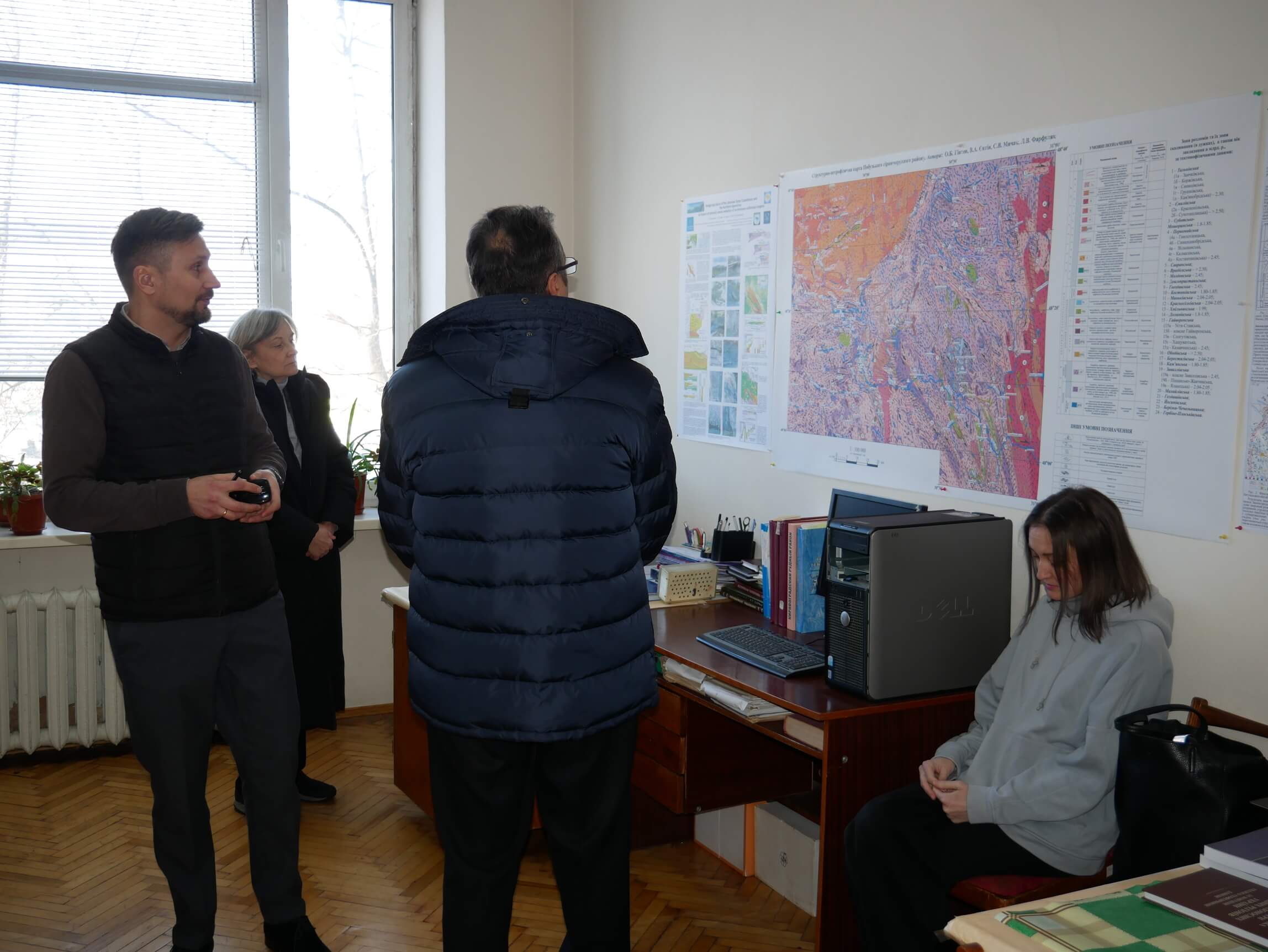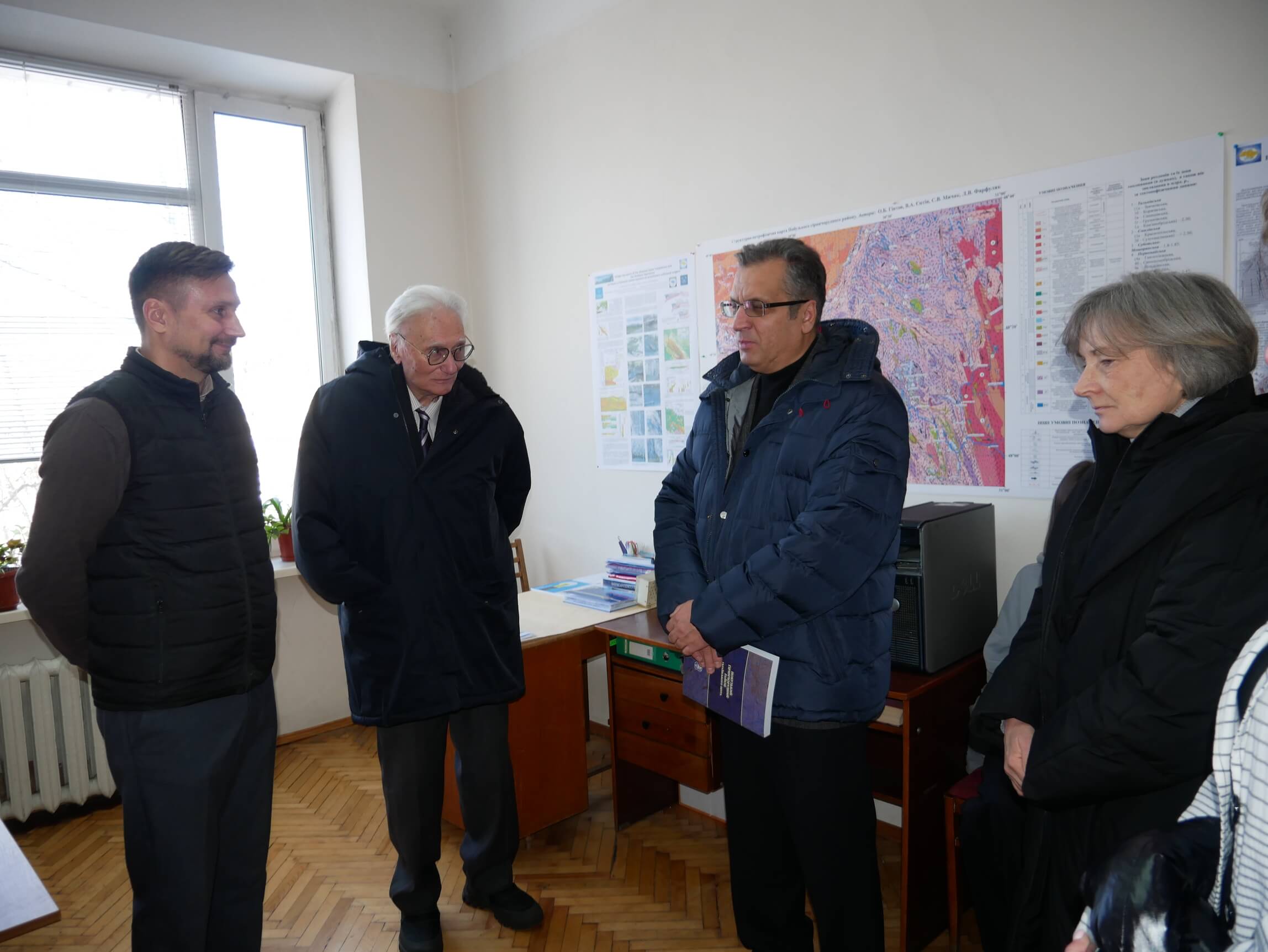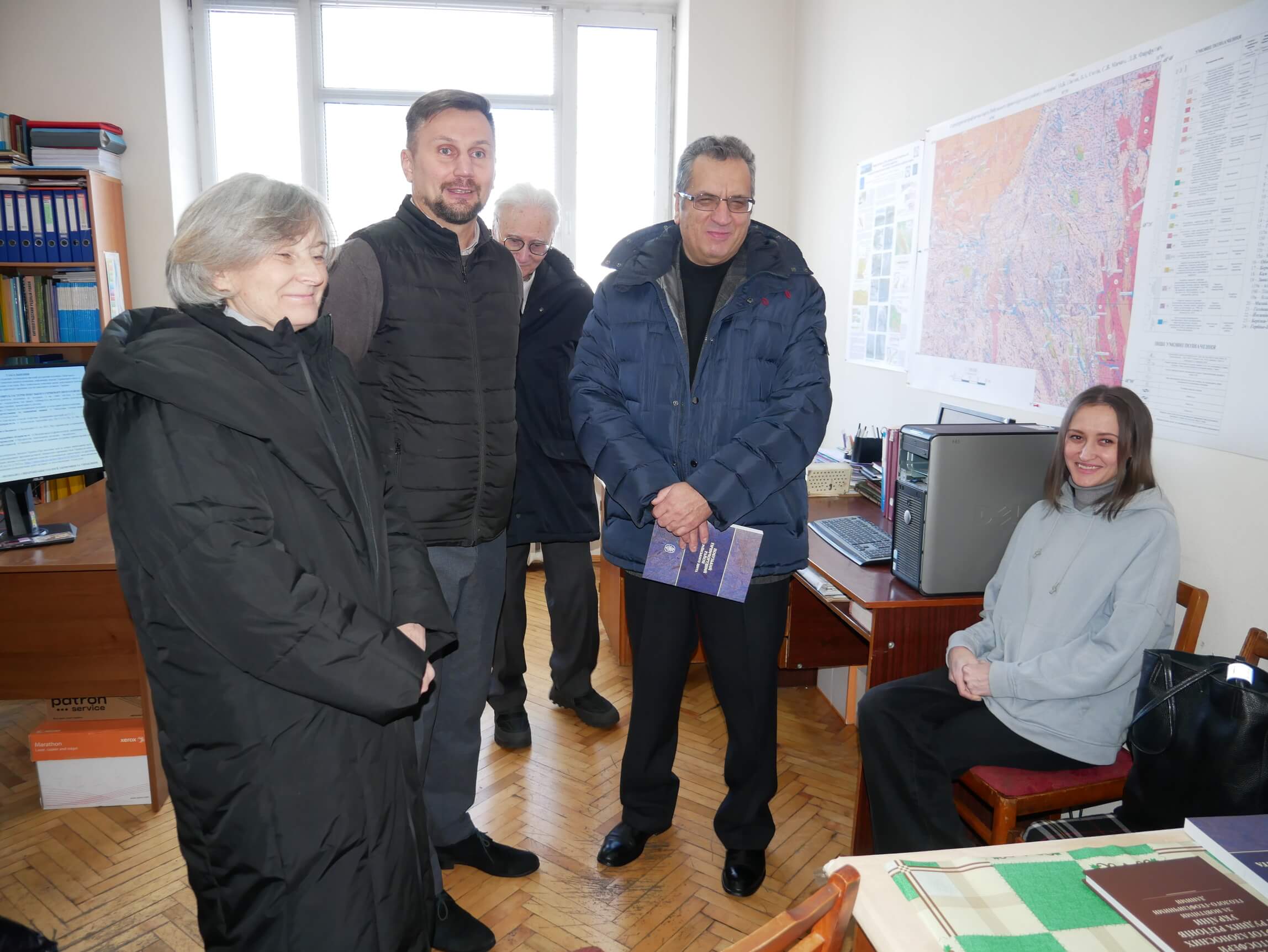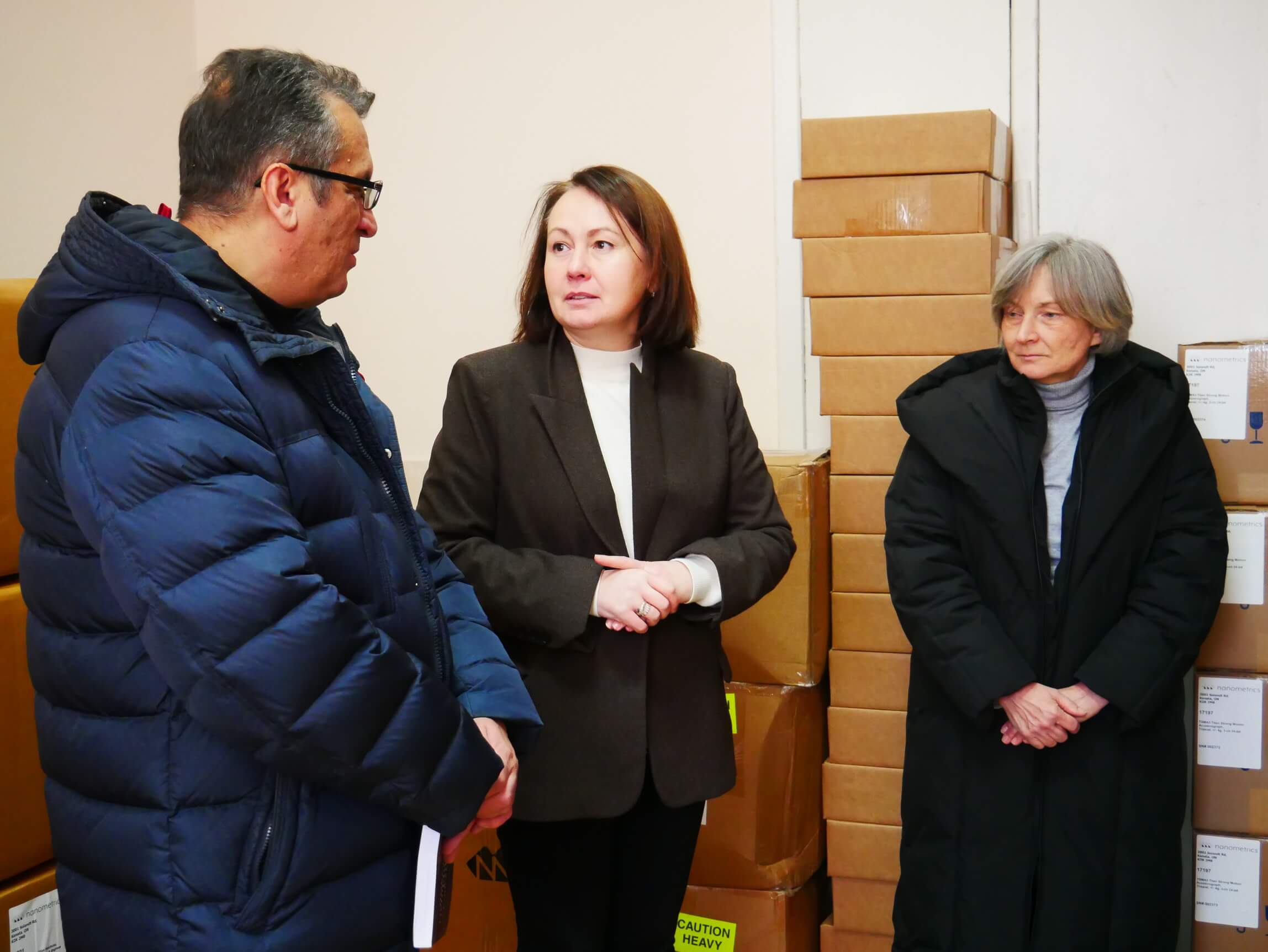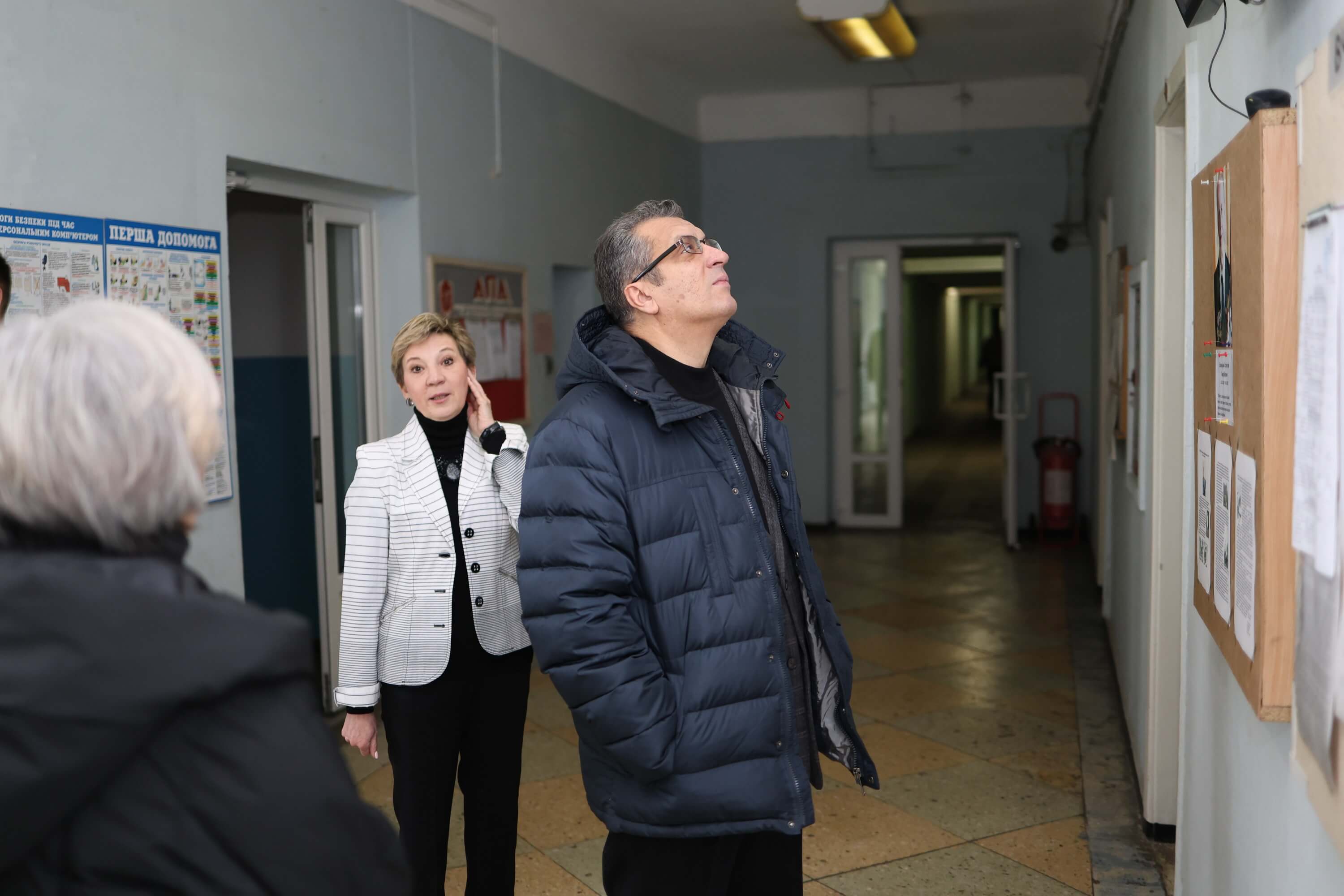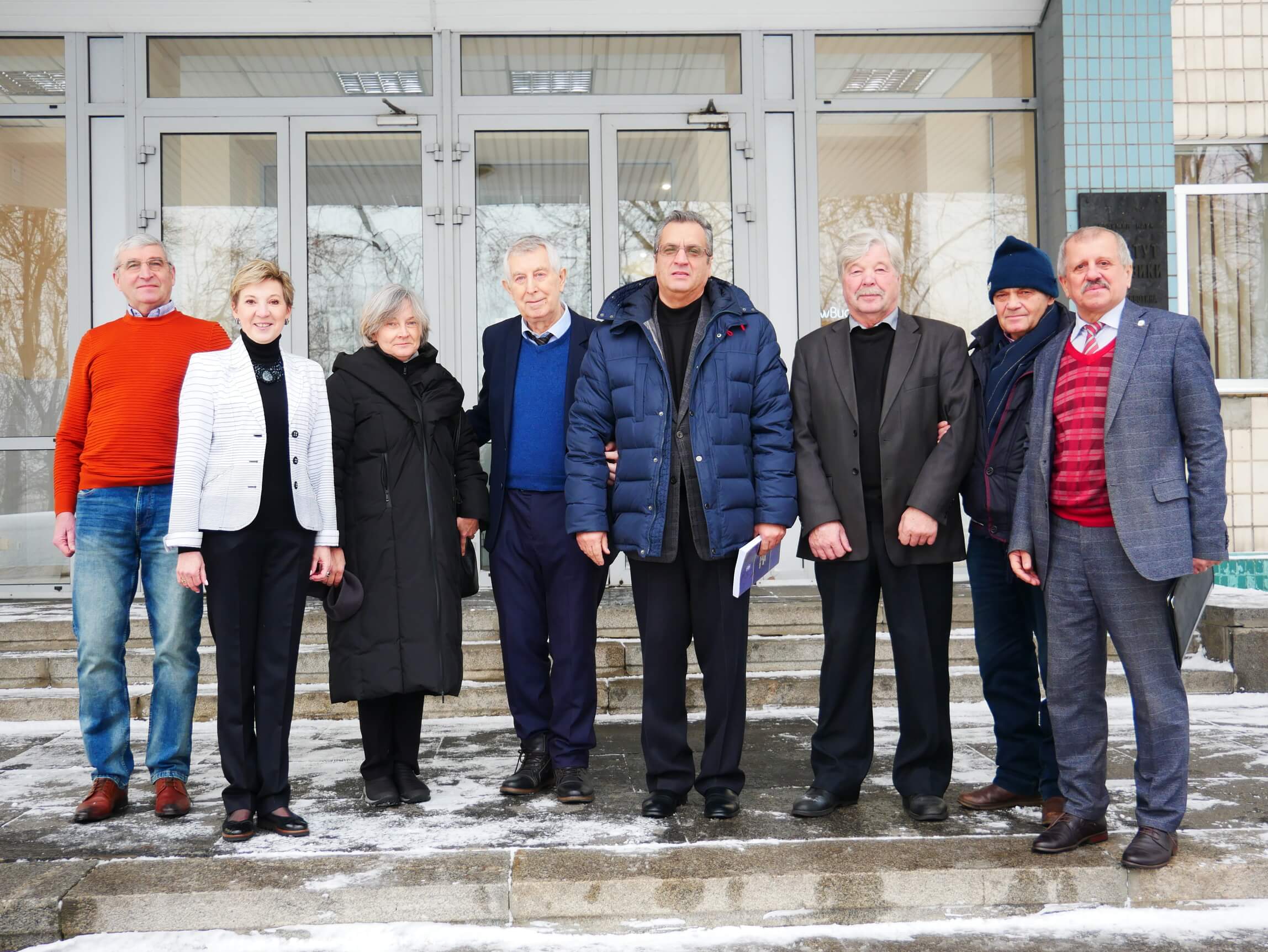
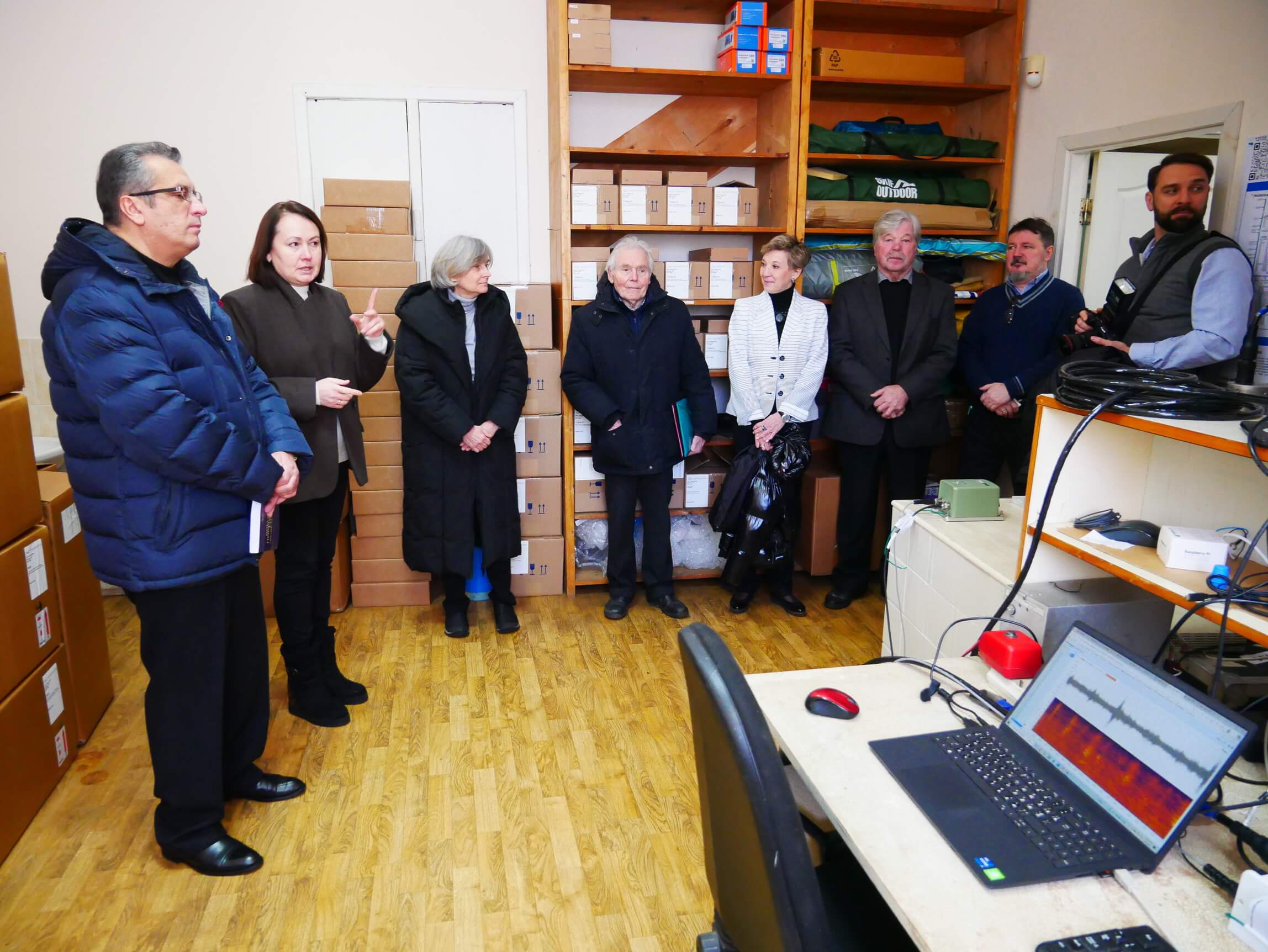
On December 29, 2025, the First Vice-President of the National Academy of Sciences of Ukraine, Head of the Section of Physical-Technical and Mathematical Sciences of the NAS of Ukraine, academician of the NAS of Ukraine Vyacheslav Bogdanov, and the academician-secretary of the Earth Sciences Department of the NAS of Ukraine, academician of the NAS of Ukraine Stella Shekhunova, paid a working visit to the S.I. Subbotin Institute of Geophysics of the NAS of Ukraine. The guests were accompanied by the scientific secretary of the Earth Sciences Department of the NAS of Ukraine, Candidate of Geological and Mineralogical Sciences Yaroslav Lutsiv.
During the visit, the Academy's leadership listened to a report from the institute's management and familiarized themselves with the latest equipment, laboratory complexes, and the seismological information and computing center created at the S.I. Subbotin Institute of Geophysics of the NAS of Ukraine.
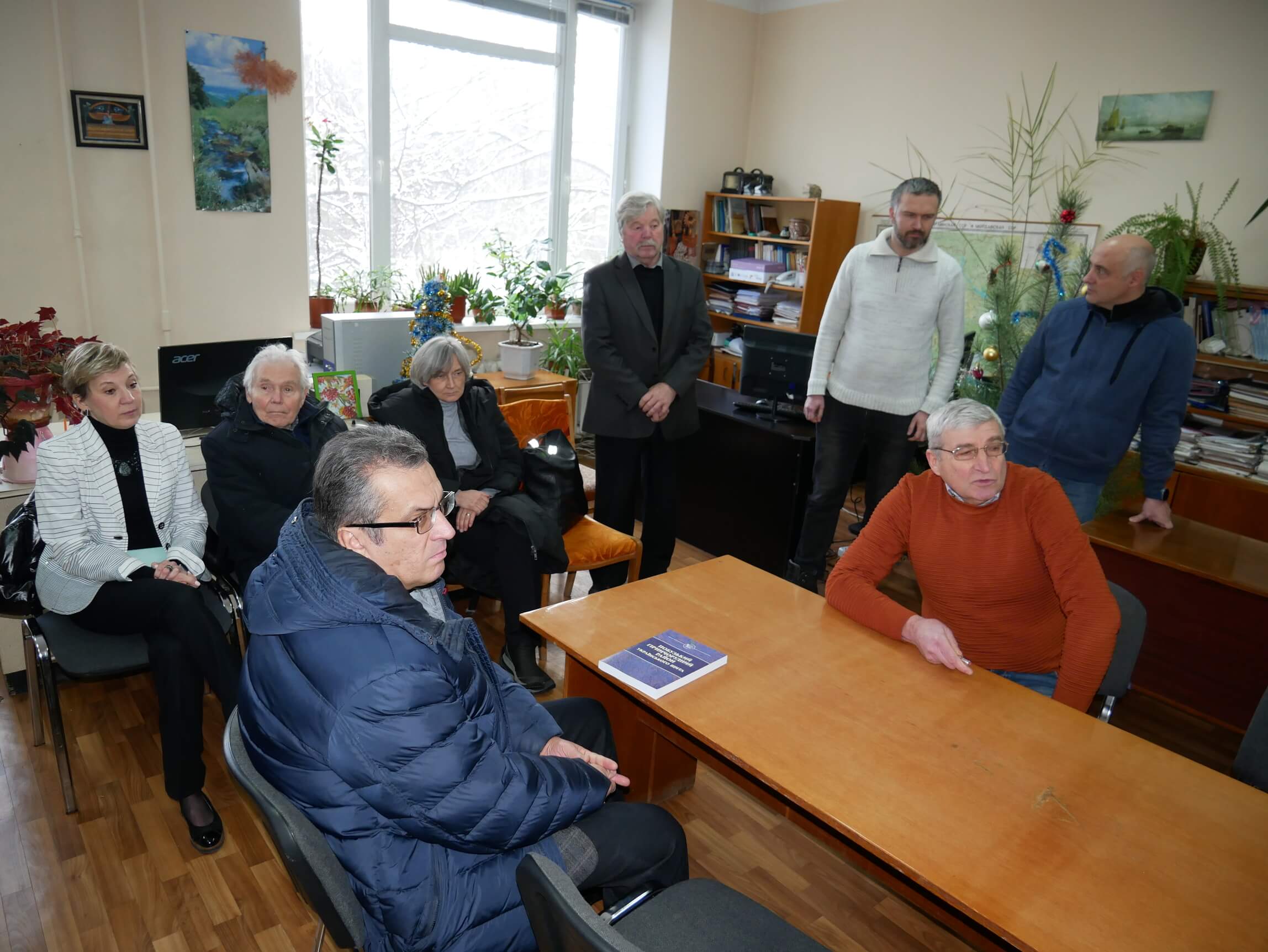
The director of the S.I. Subbotin Institute of Geophysics of the NAS of Ukraine, corresponding member of the NAS of Ukraine Oleksandr Kendzera, addressed the guests with an opening speech. He greeted those present and outlined the strategic priorities of the institute.
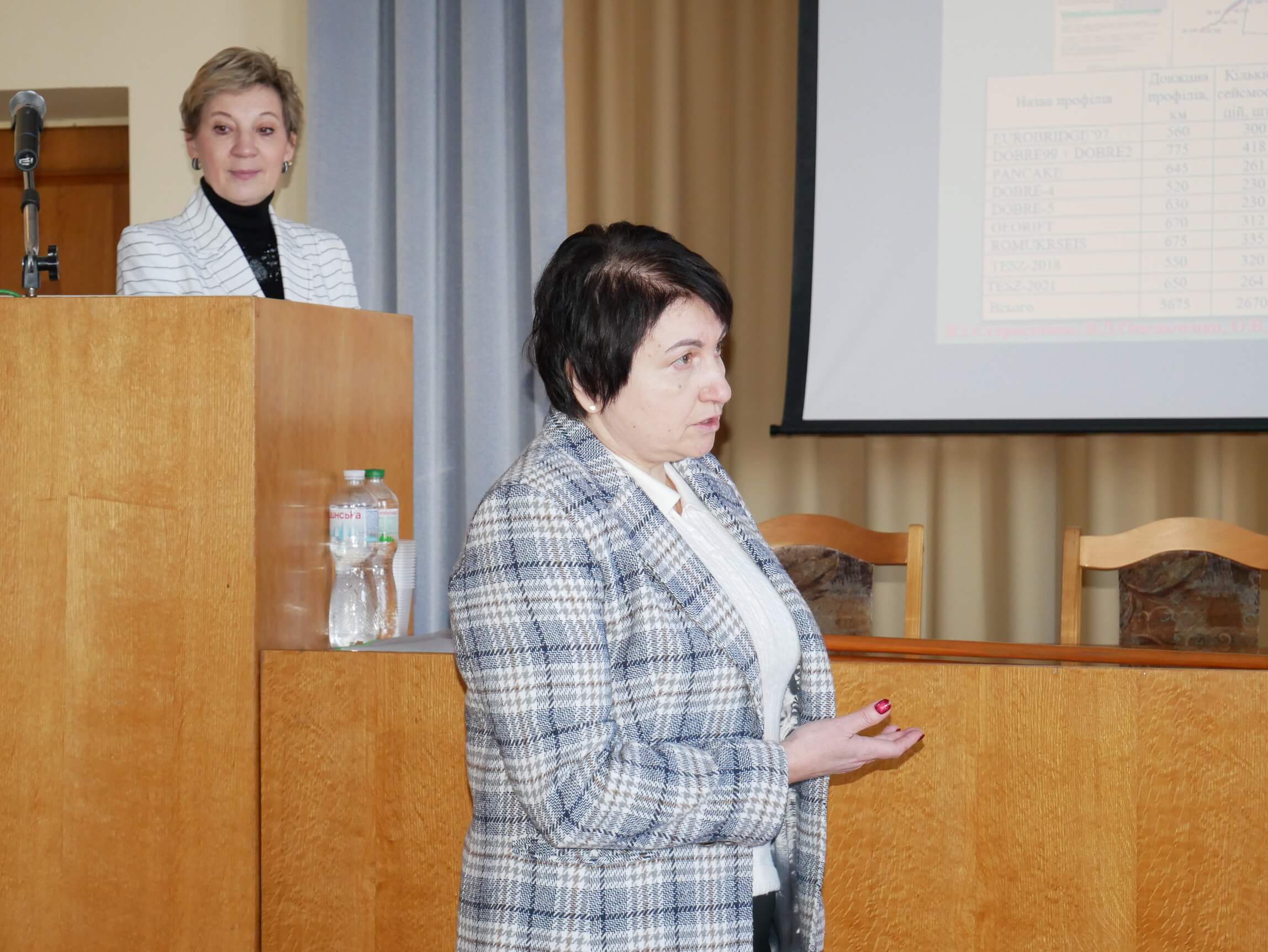
The Deputy Director for Scientific Work of the S.I. Subbotin Institute of Geophysics of the NAS of Ukraine, corresponding member of the NAS of Ukraine Olha Lehostaieva, delivered a comprehensive report covering all aspects of the institute's activities from 2021 to 2025. The speaker highlighted the work of scientific schools, organizational and personnel structure, as well as the scientific and pedagogical activity of the institute's staff.
Special attention was paid to the implementation of international and state scientific programs, in particular the participation of scientists from the S.I. Subbotin Institute of Geophysics of the NAS of Ukraine in the execution of the State Targeted Scientific and Technical Program for research in Antarctica under the direction "Geological and Geophysical Studies" in the area of the Ukrainian Antarctic Station "Akademik Vernadsky," aimed at studying the deep structure of the Earth's crust and constructing a geodynamic model of the region.
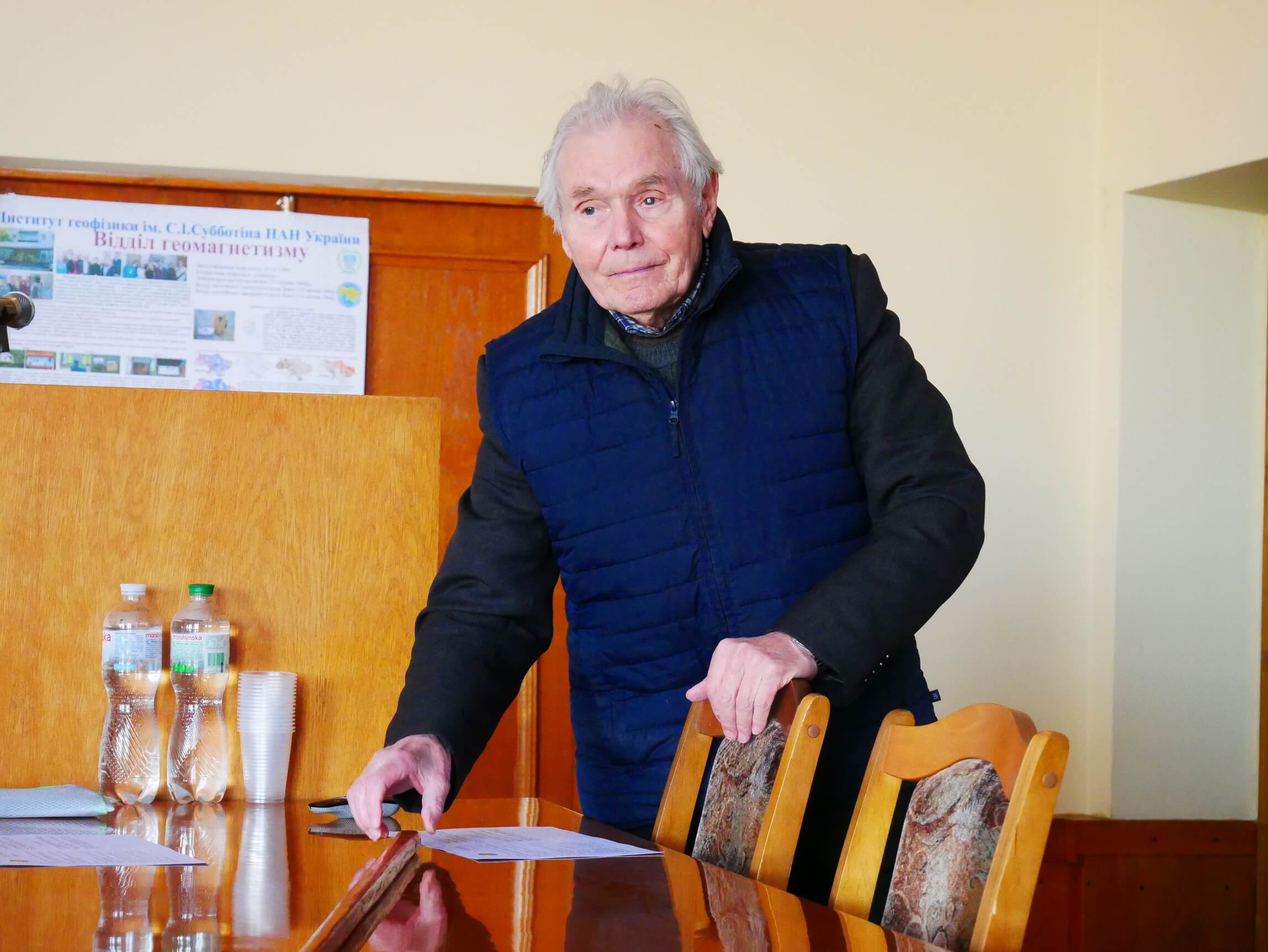
Olha Lehostaieva separately noted applied developments, cooperation with state authorities, and the active work of the institute's staff in popularizing science and informing society about natural and man-made hazardous phenomena, climate changes of the past millennium, and future challenges.
In 2025, the S.I. Subbotin Institute of Geophysics of the NAS of Ukraine passed state attestation in the scientific direction "Natural and Mathematical Sciences," as a result of which the institute was classified in group "A."
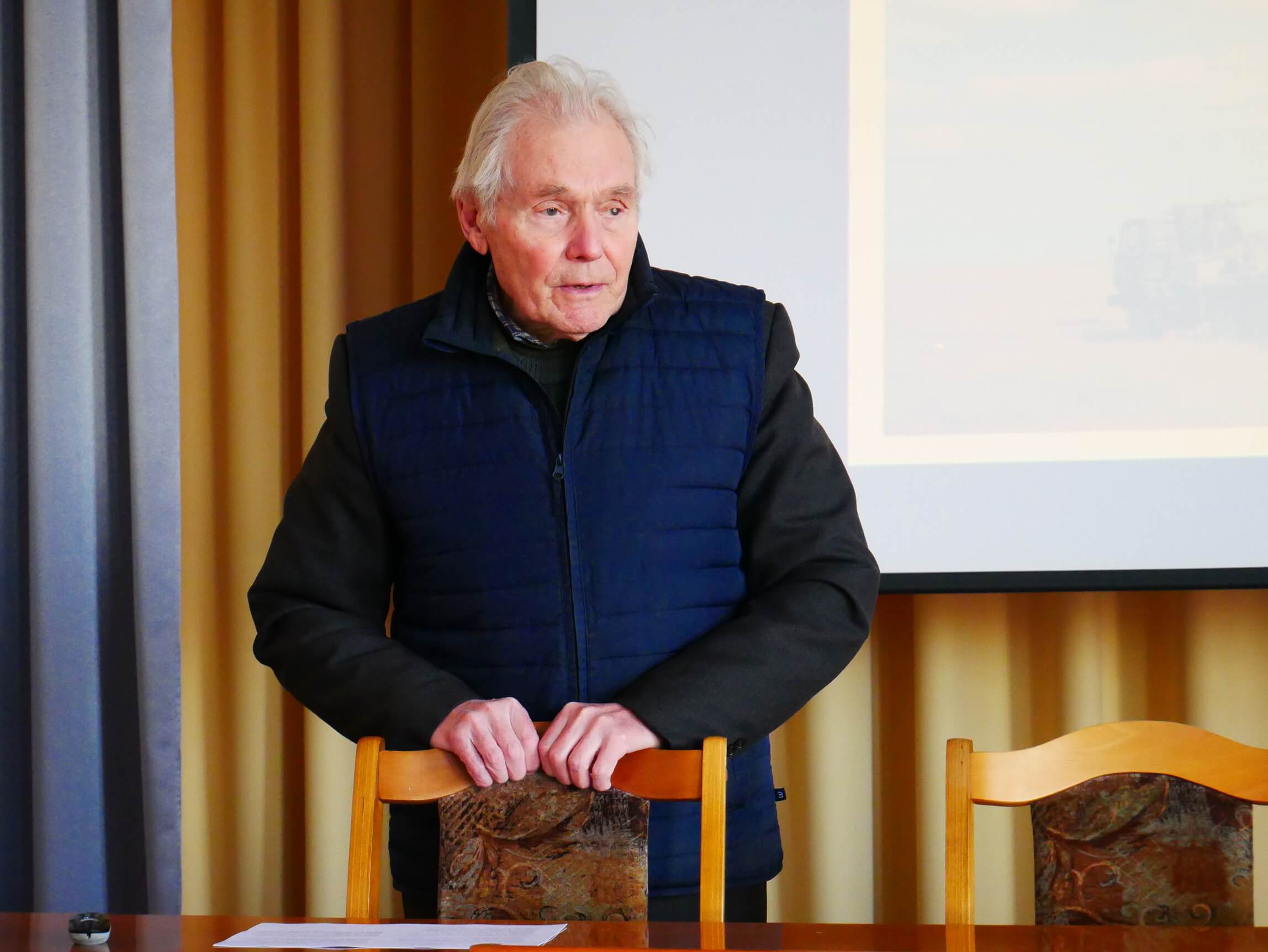
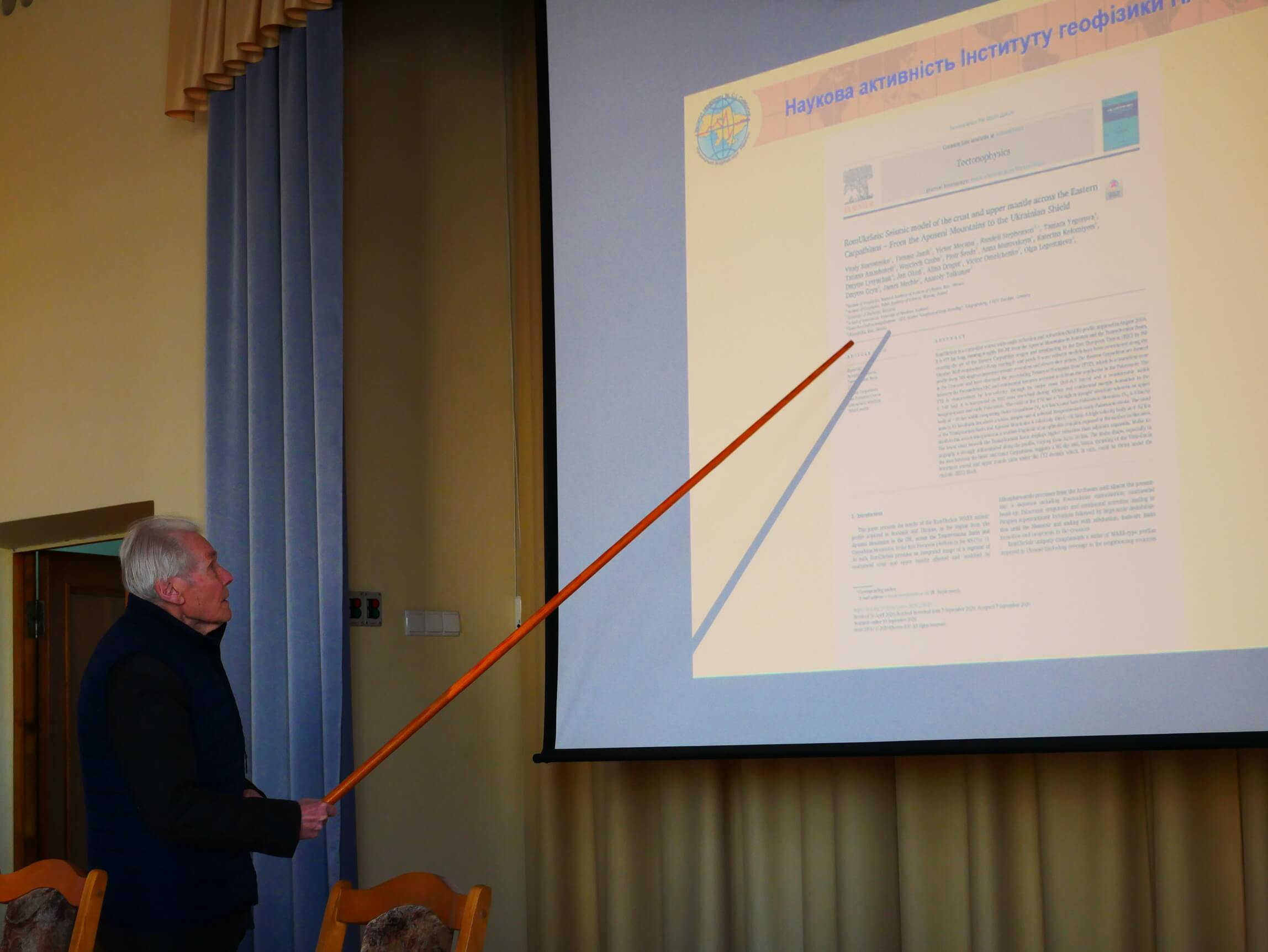
Advisor to the director of the S.I. Subbotin Institute of Geophysics of the NAS of Ukraine, academician of the NAS of Ukraine Vitaliy Starostenko, noted the high publication activity of the institute's staff in leading world journals, including the journal "Tectonophysics," and presented the landmark monograph "Anomalous Gas Volcanism in the Black Sea" (the book was published in 2025 by the international publisher "Springer").
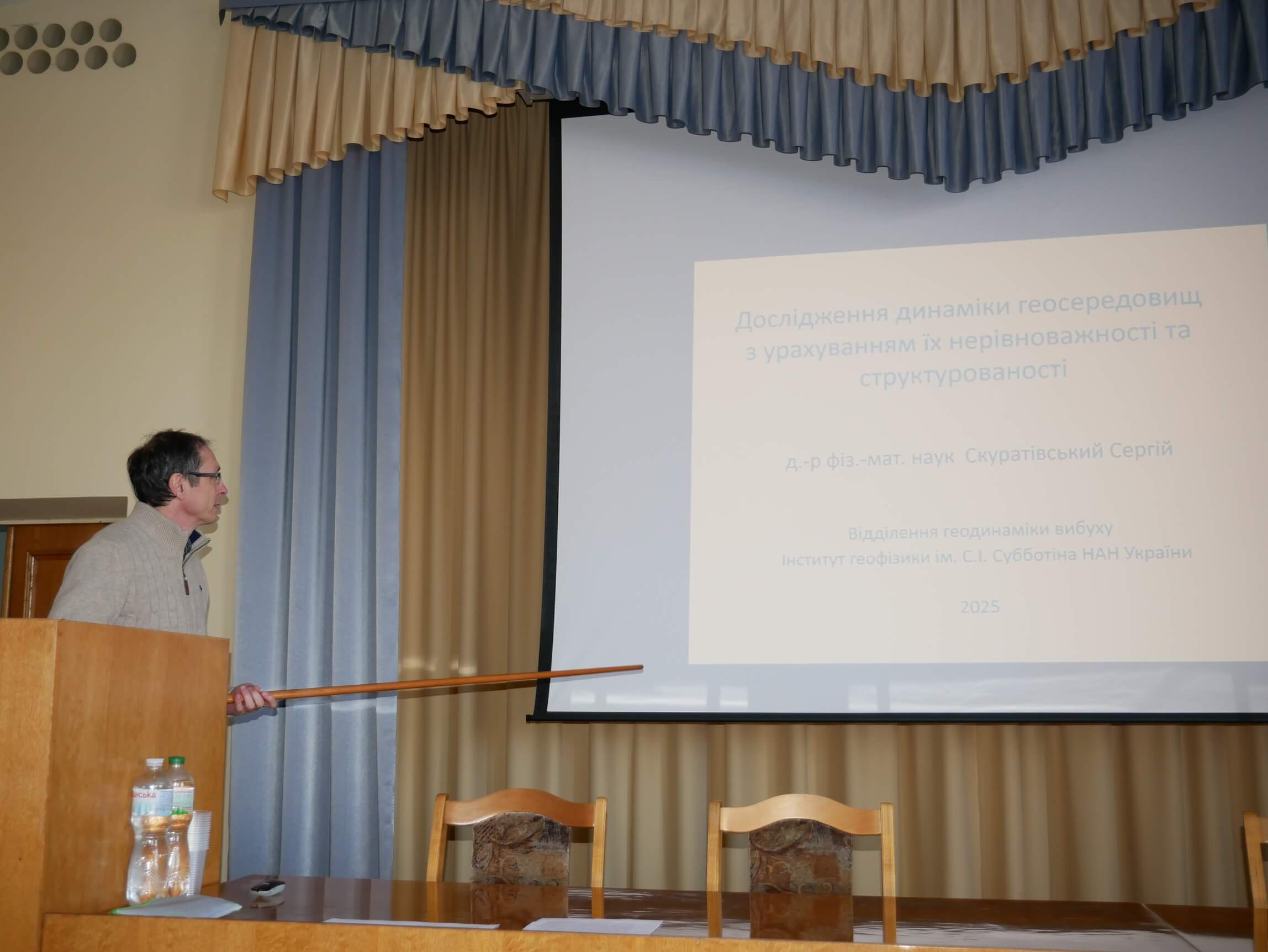
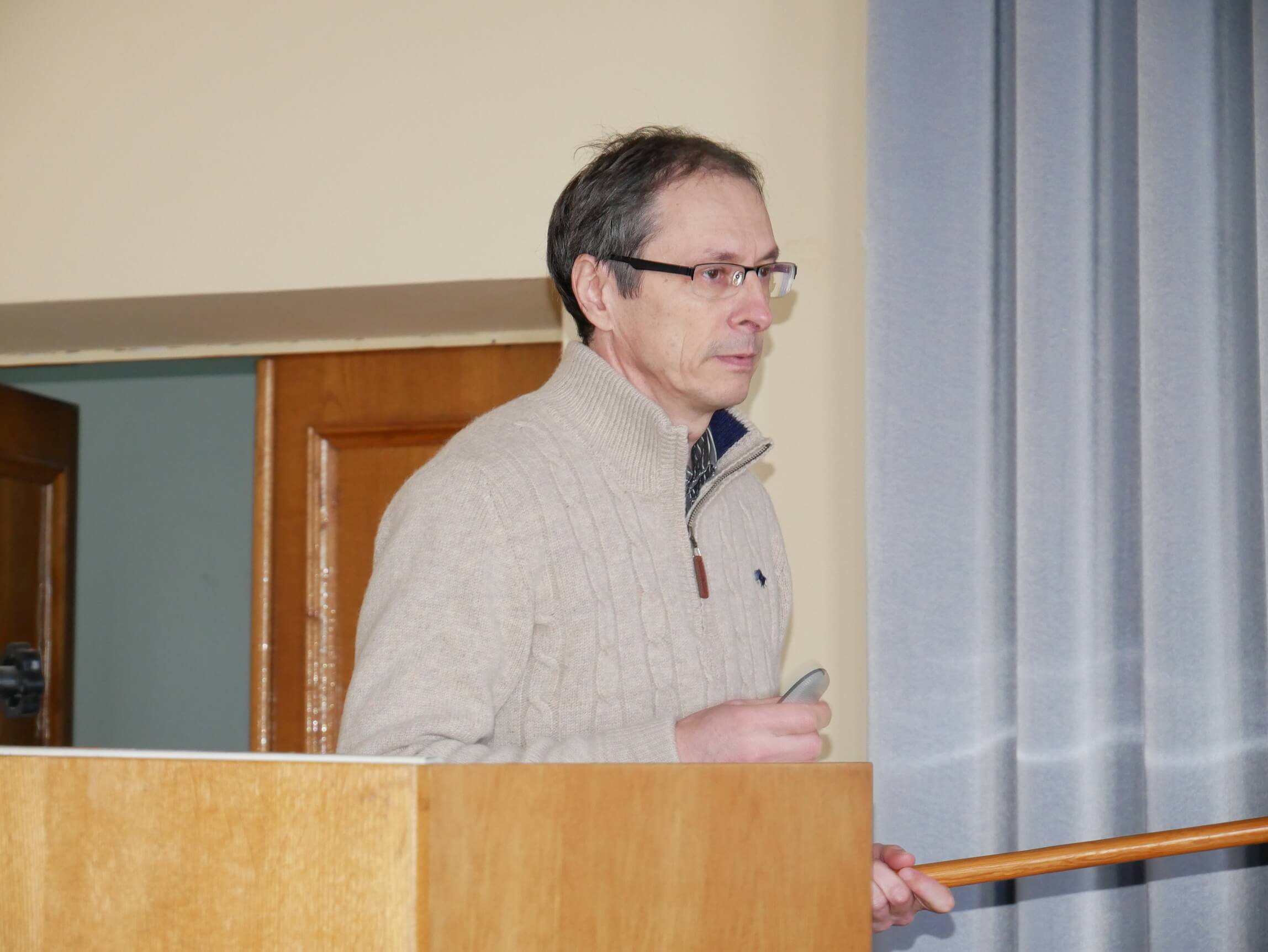
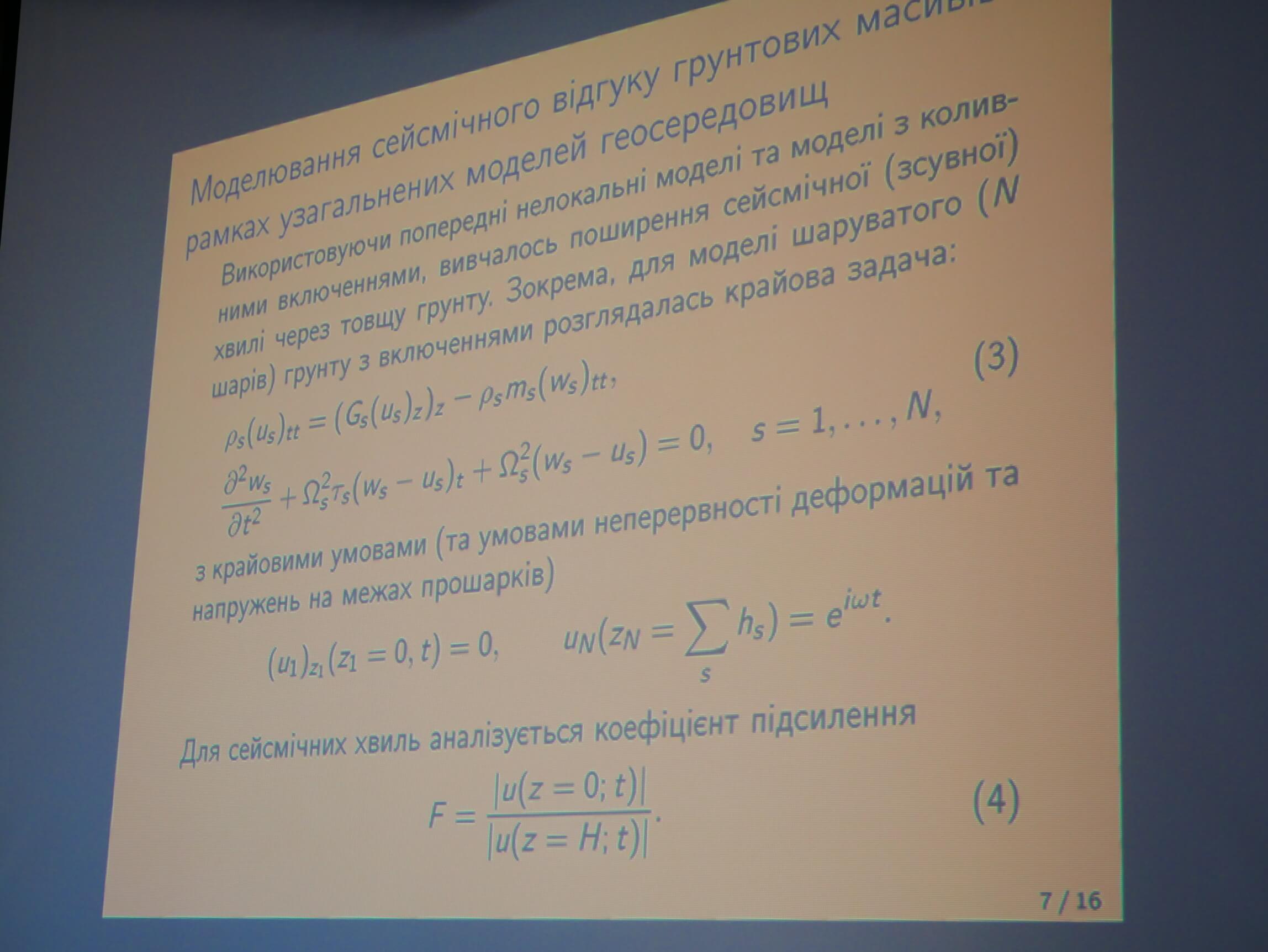
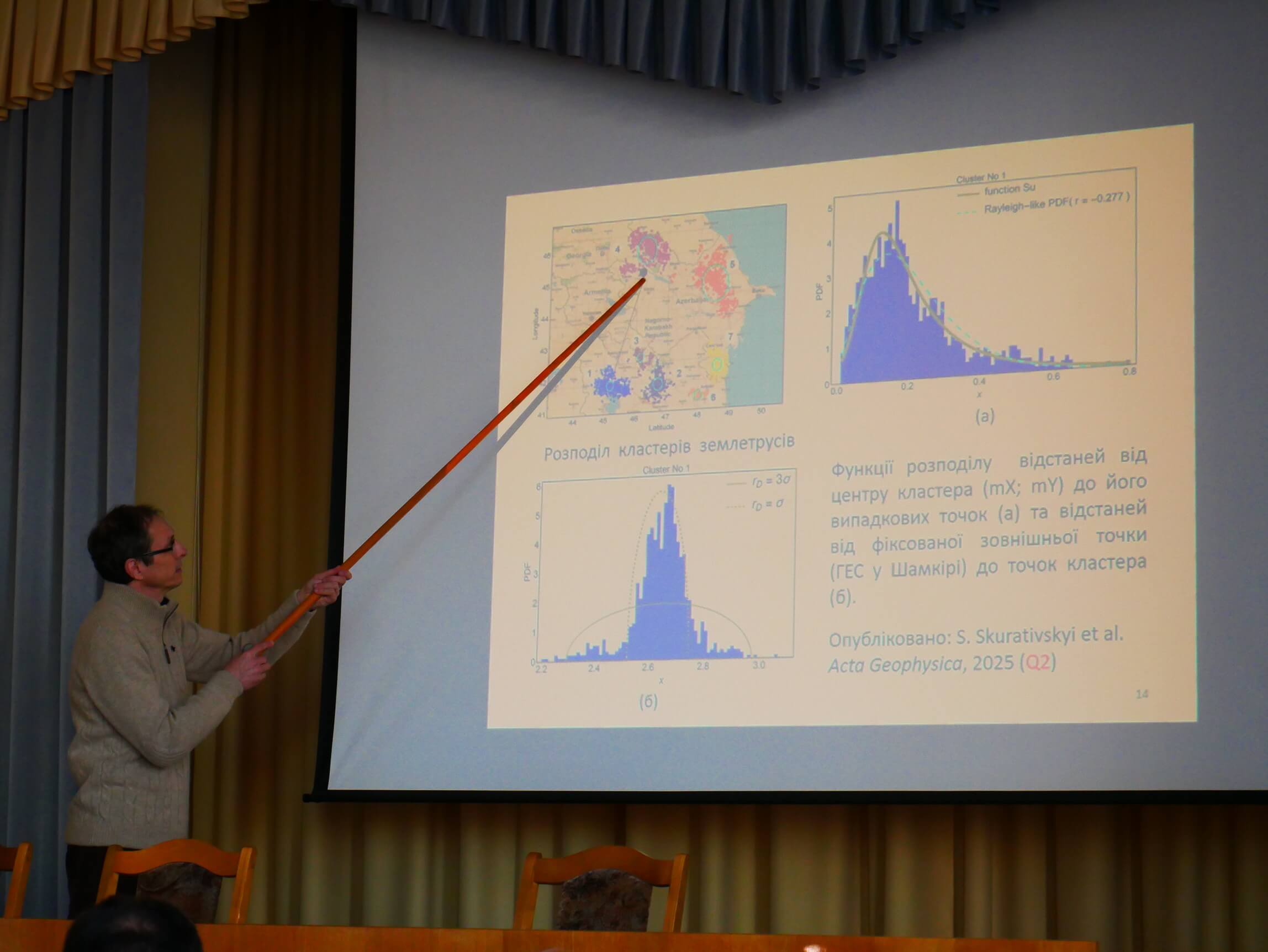
Leading Researcher of the Department of Self-Organization of Natural Environments of the Explosion Geodynamics Division, Doctor of Physical and Mathematical Sciences Serhiy Skurativskyi, spoke about the results of research in two key areas. The first concerns modeling the dynamics of geosystems considering their nonequilibrium, nonlinearity, and structuring, with a special focus on assessing the seismic response of complex soil systems. The second area involves the analysis of earthquake catalogs using cluster analysis methods for their spatial grouping and subsequent determination of statistical characteristics of the obtained clusters. The presented results are important for understanding the dynamic and statistical properties of geosystem behavior, solving current seismic safety problems, conducting seismic microzonation, and assessing seismic risks.
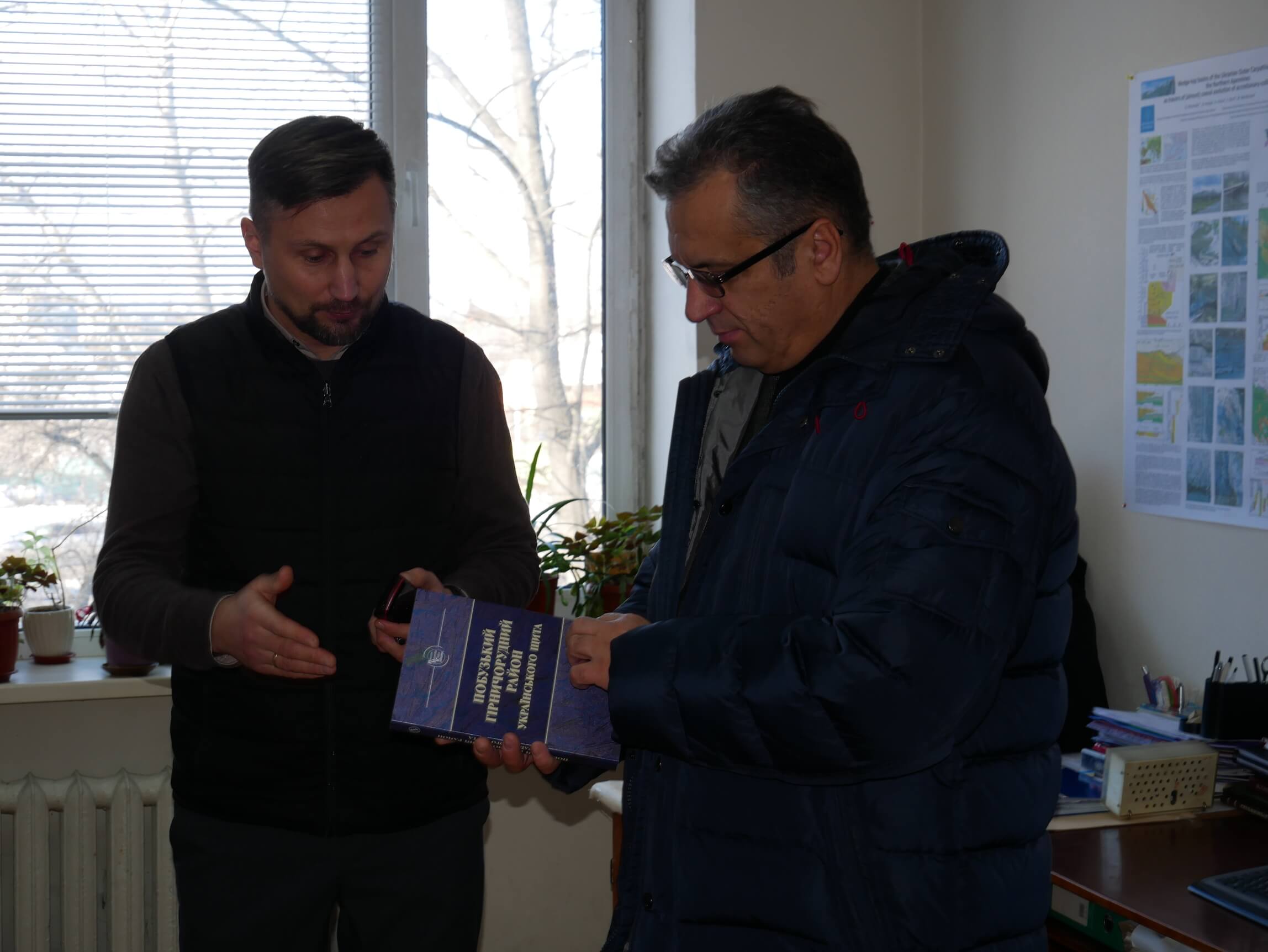
Head of the Department of Geodynamics and Geothermy, Doctor of Geological Sciences Serhiy Mychak, highlighted the results of long-term studies of the Pobuzkyi mining district of the Ukrainian Shield. Comprehensive geological and geophysical surveys carried out using tectonophysical, magnetometric, geoelectric, paleomagnetic, gravimetric, and seismic methods made it possible to significantly refine the deep structure of the central part of the Holovanivsk shear zone.
A detailed analysis of fracturing and structural-textural elements of rocks helped reconstruct stress fields and clarify the multi-stage deformation history of the area, dominated by shear and transpressional regimes. Detected anomalies of the geomagnetic field, electrical conductivity, and density are directly related to zones of intensive tectonic reworking and ore mineralization.
Based on the obtained results, the feasibility of forming a unified mining and industrial agglomeration with the allocation of the Haivoron-Zavallivskyi and Pervomaisk-Holovanivskyi clusters was substantiated. The cluster approach allows developing deposits not individually but as a single system with shared infrastructure, power supply, and processing, which reduces extraction costs, makes poor and complex ores profitable, and increases the investment attractiveness of the region. The combination of graphite, rare earth, nickel-cobalt, chromite, and iron ore objects forms the basis for complete value-added chains.
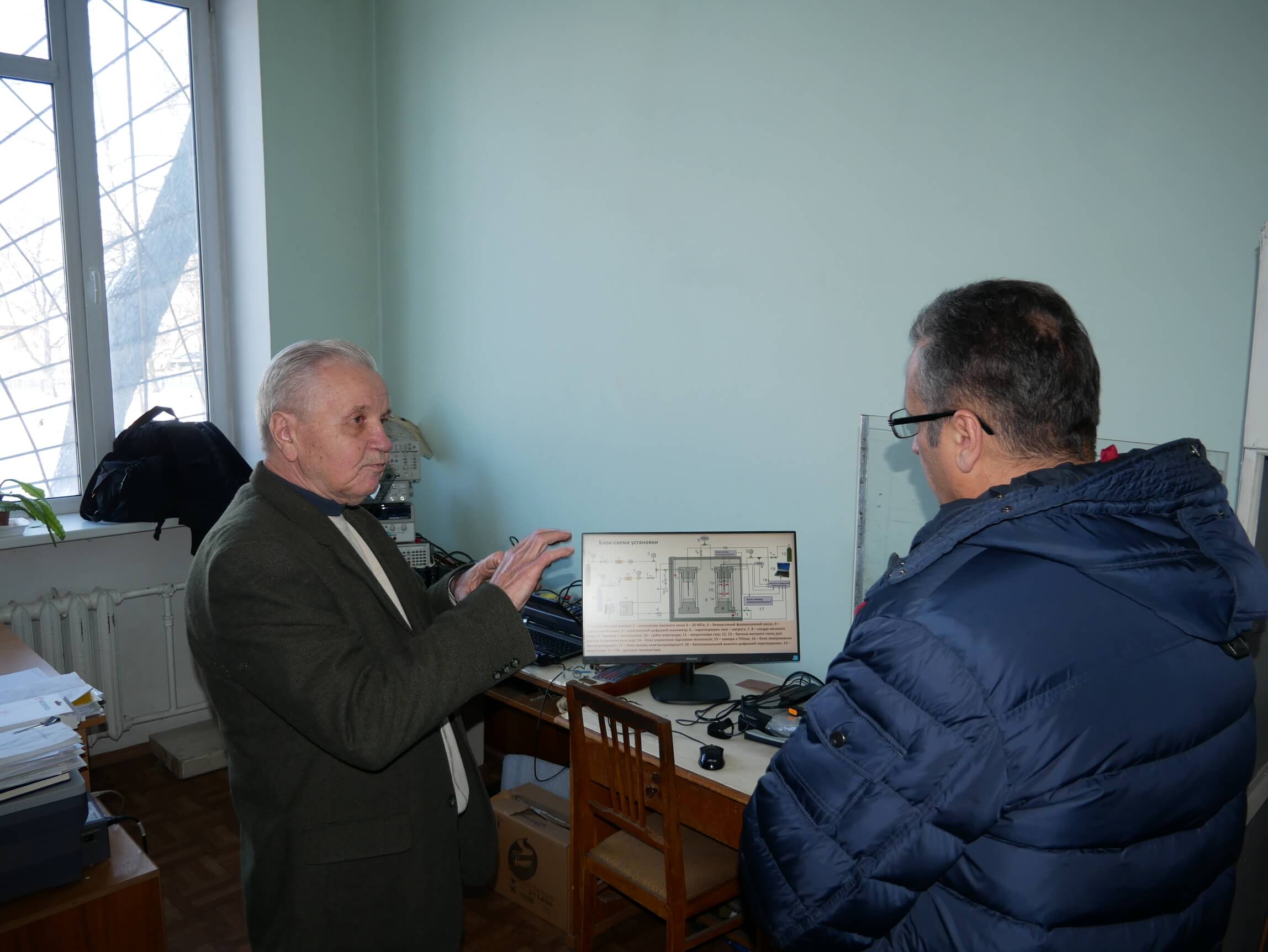
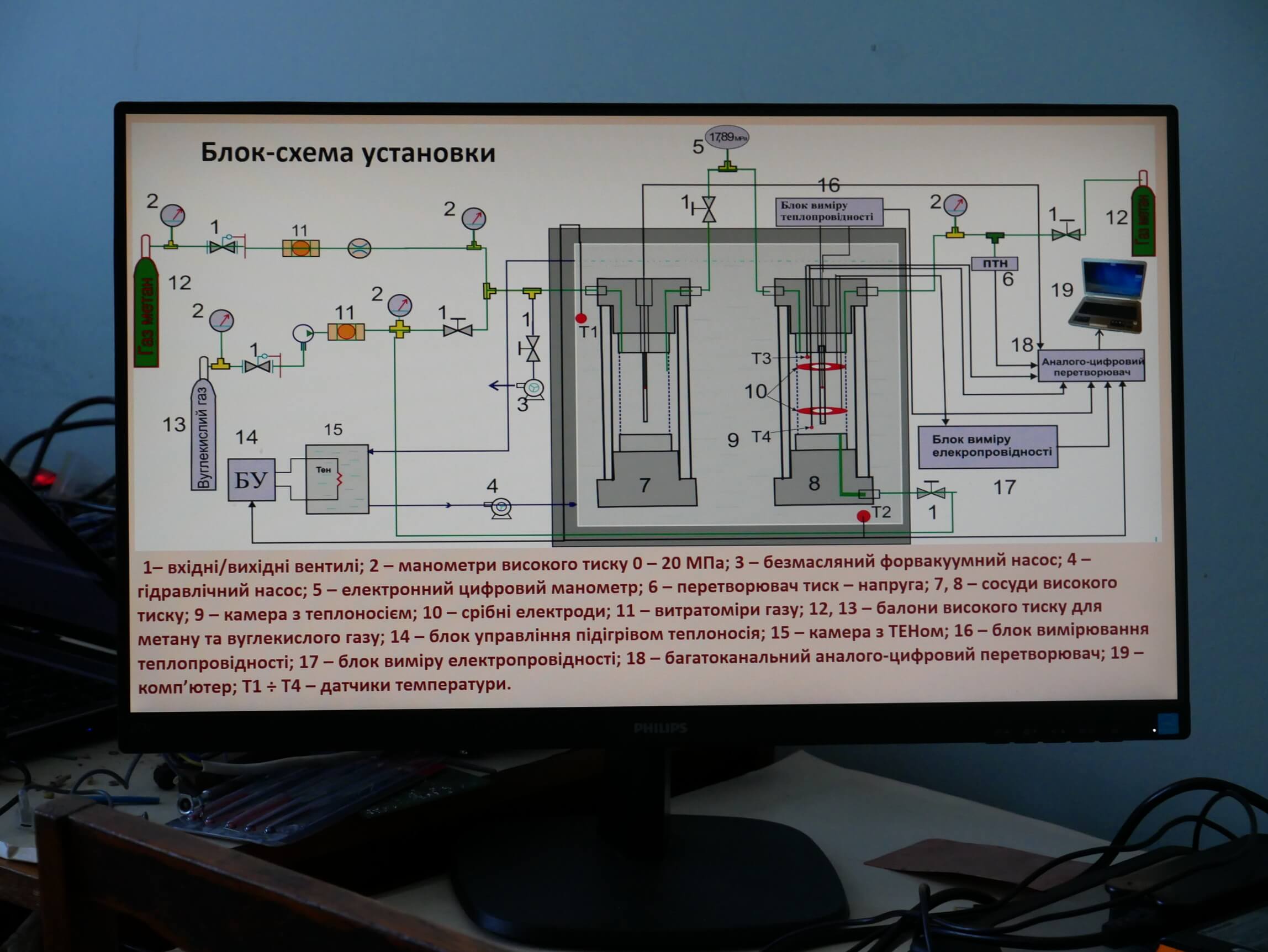
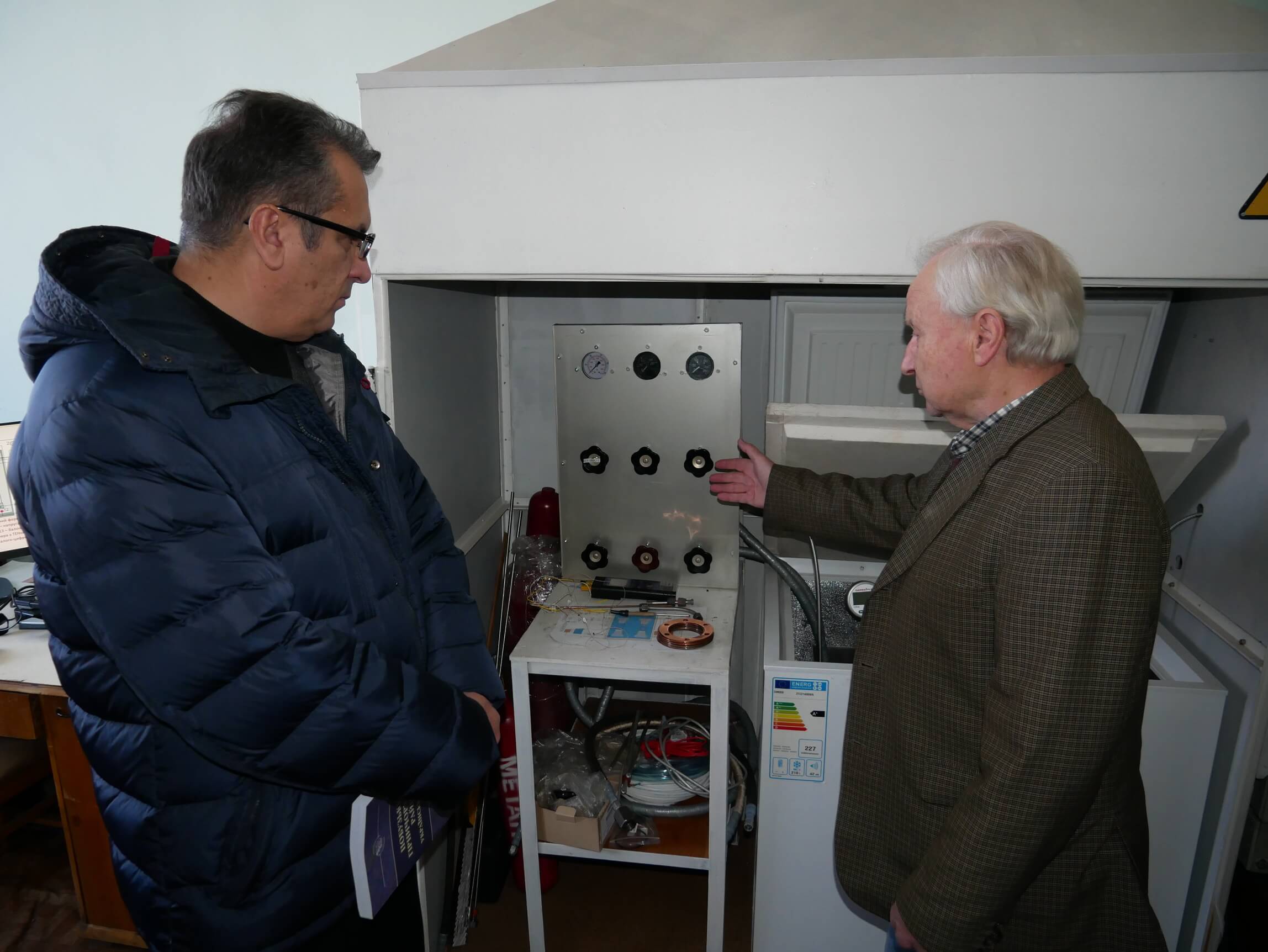
Chief Researcher of the Department of Regional Geophysics Problems, corresponding member of the NAS of Ukraine Volodymyr Kobolev, demonstrated an experimental laboratory modular complex that is in the final stage of fabrication. The complex is designed for the formation and study of physical properties of artificially formed gas hydrate-bearing bottom sediments (GHBS).
Experimental studies of artificial methane hydrates aim to determine the kinetics of their formation and measure physical properties in pure form. At the same time, the physical properties of GHBS themselves remain poorly studied, which significantly complicates their detection using geophysical methods. The development and creation of a complex for forming artificial methane gas hydrates in various lithological-granulometric matrices (sandstones, argillites, siltstones, etc.) will increase the efficiency of exploration work and optimize deposit development technologies.
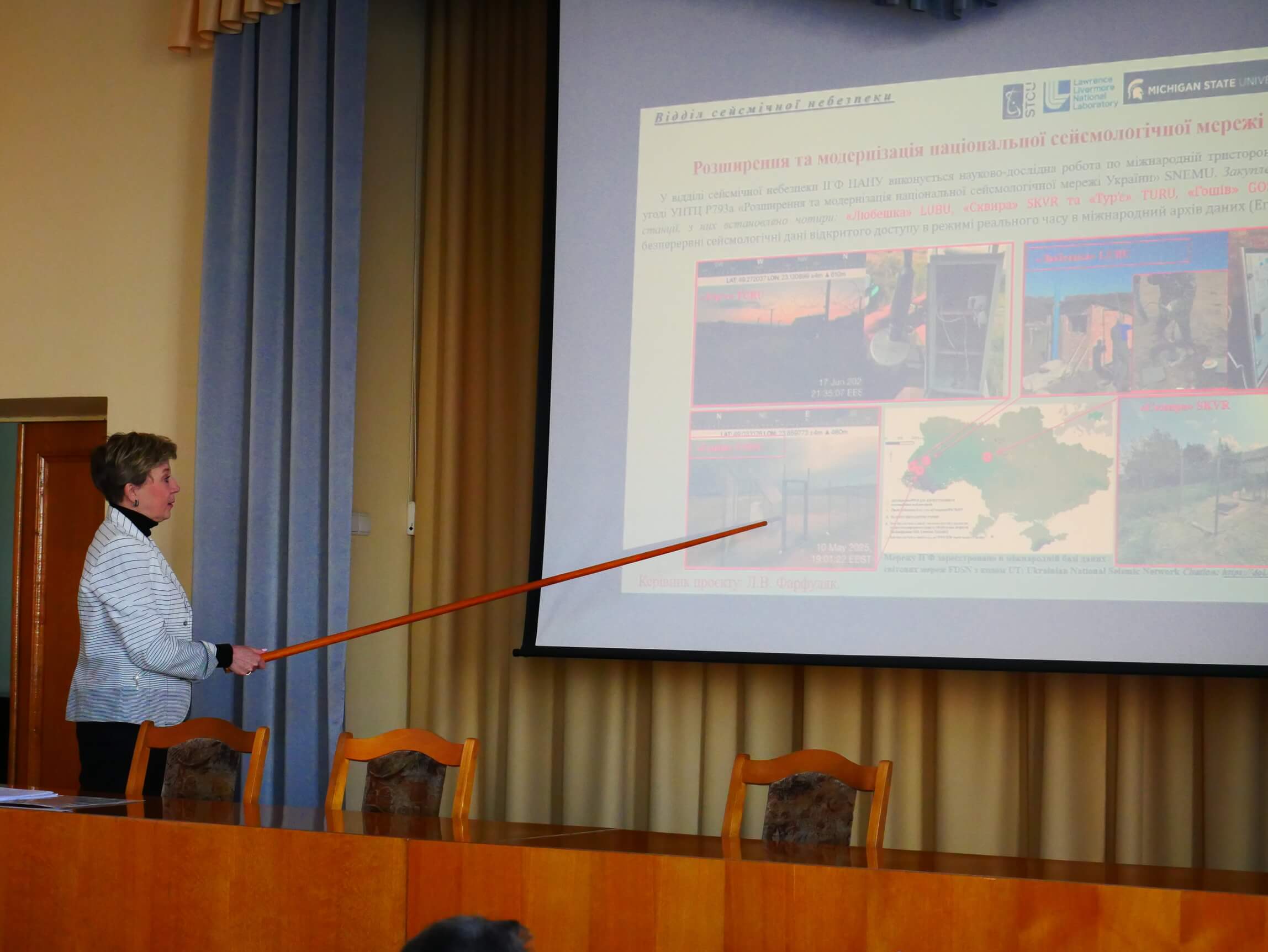
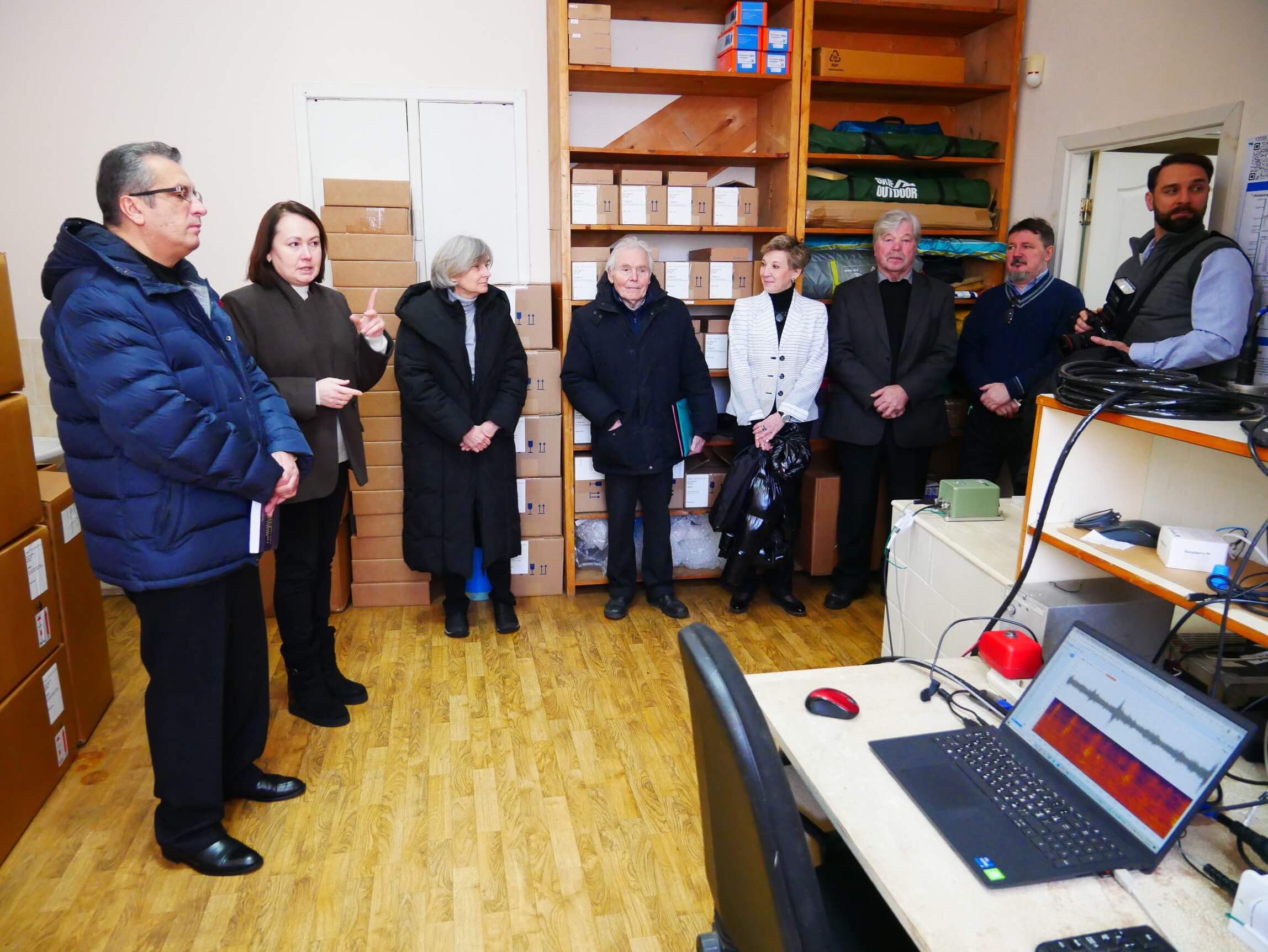
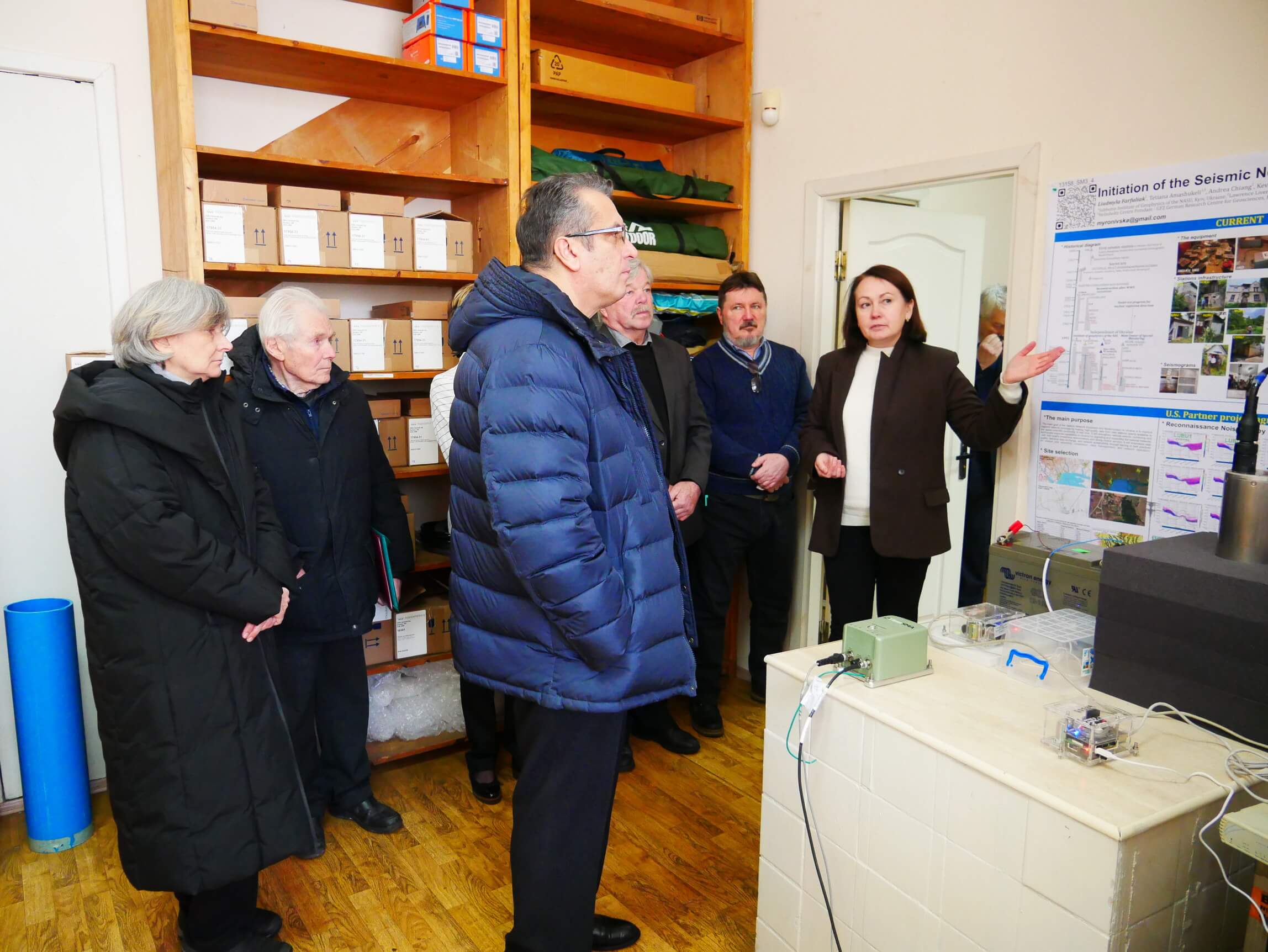
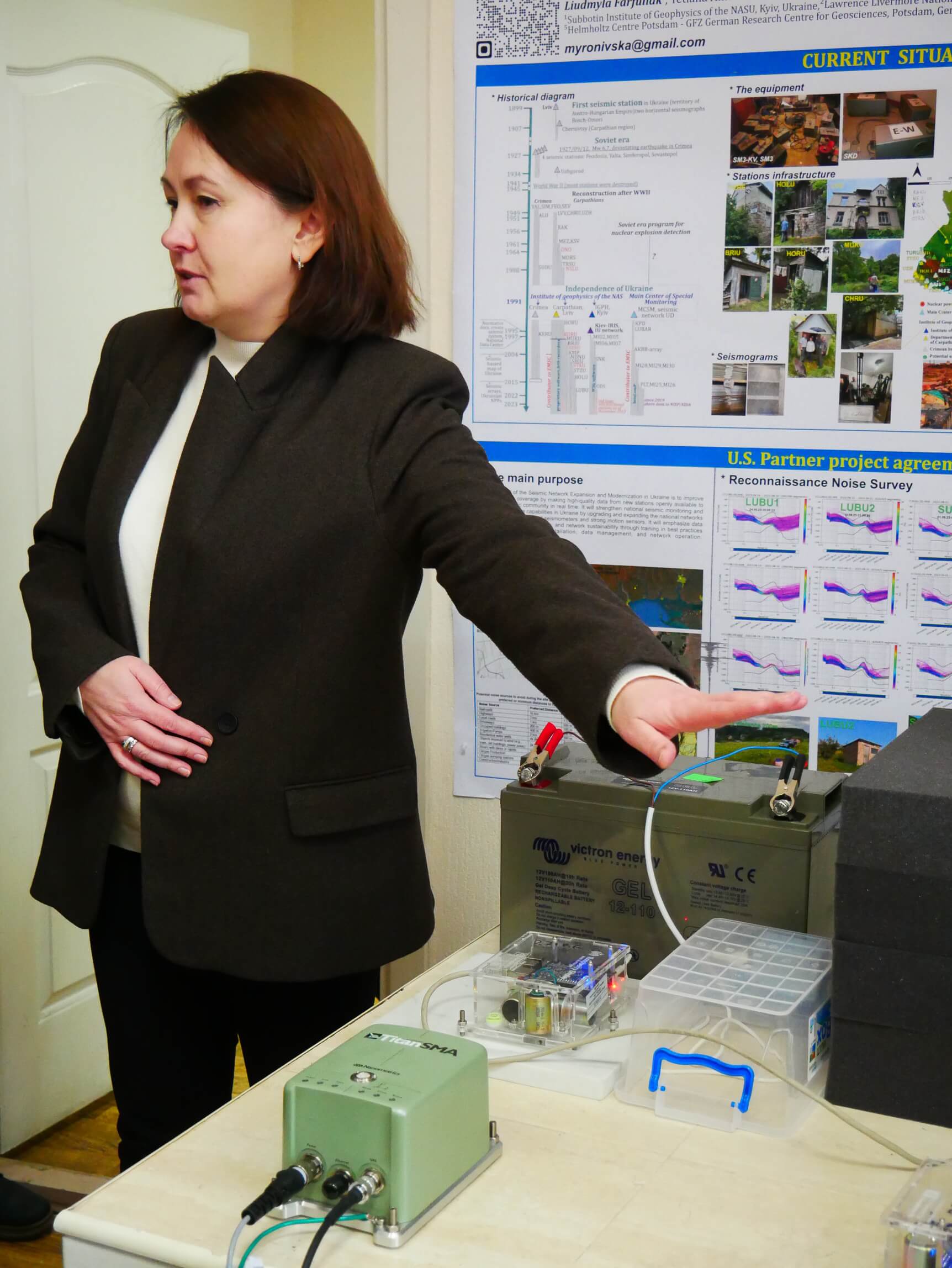
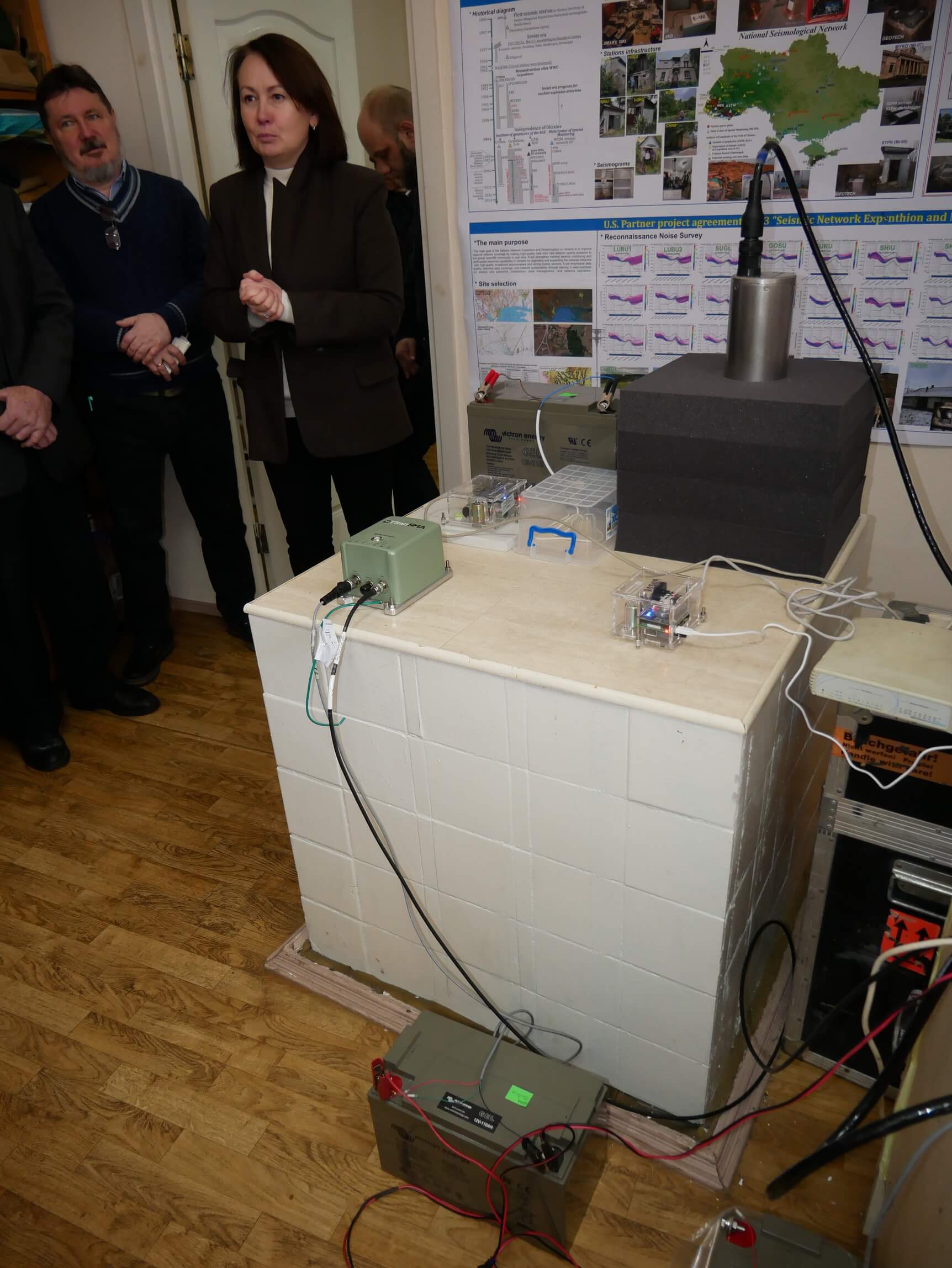
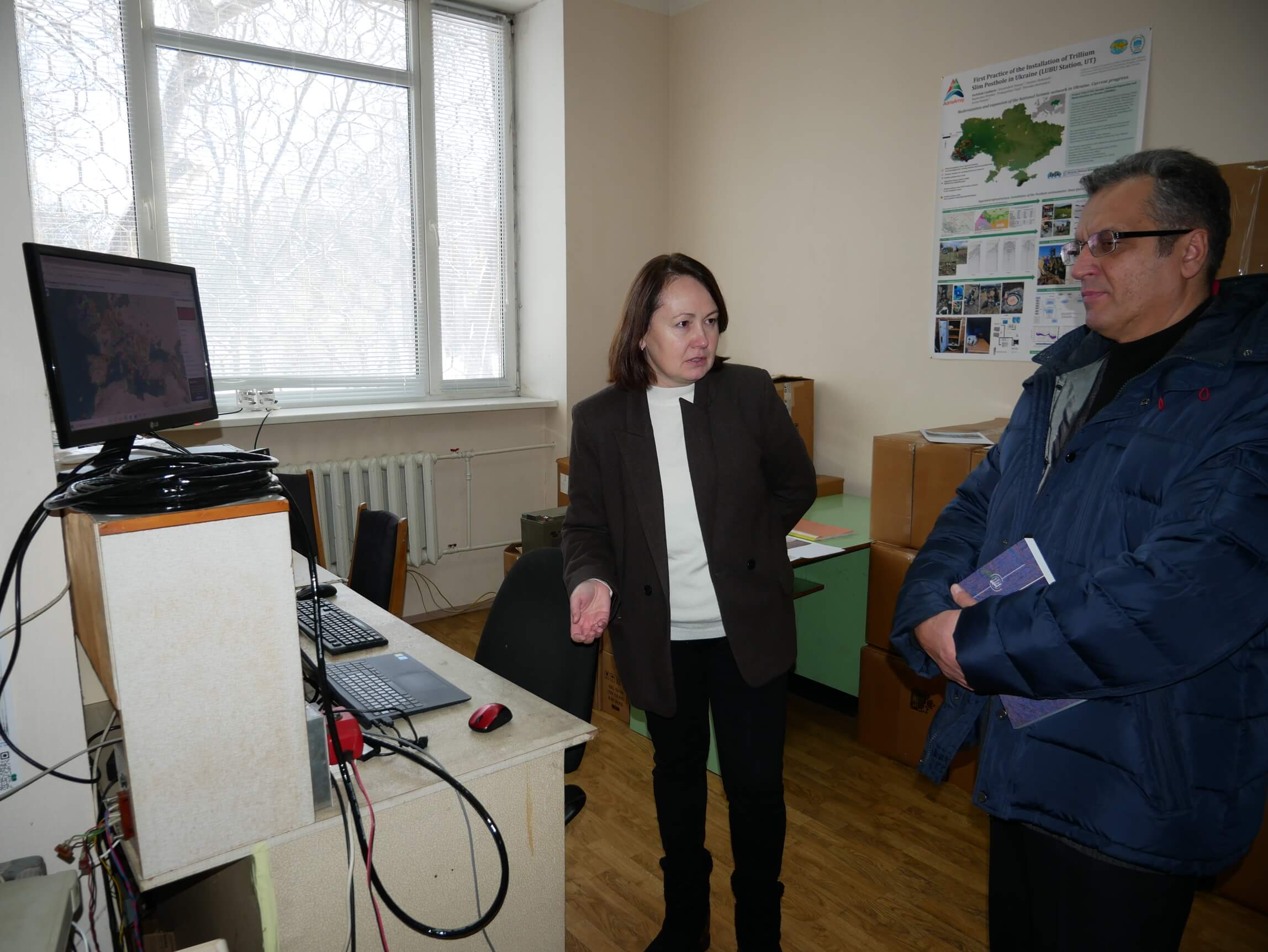
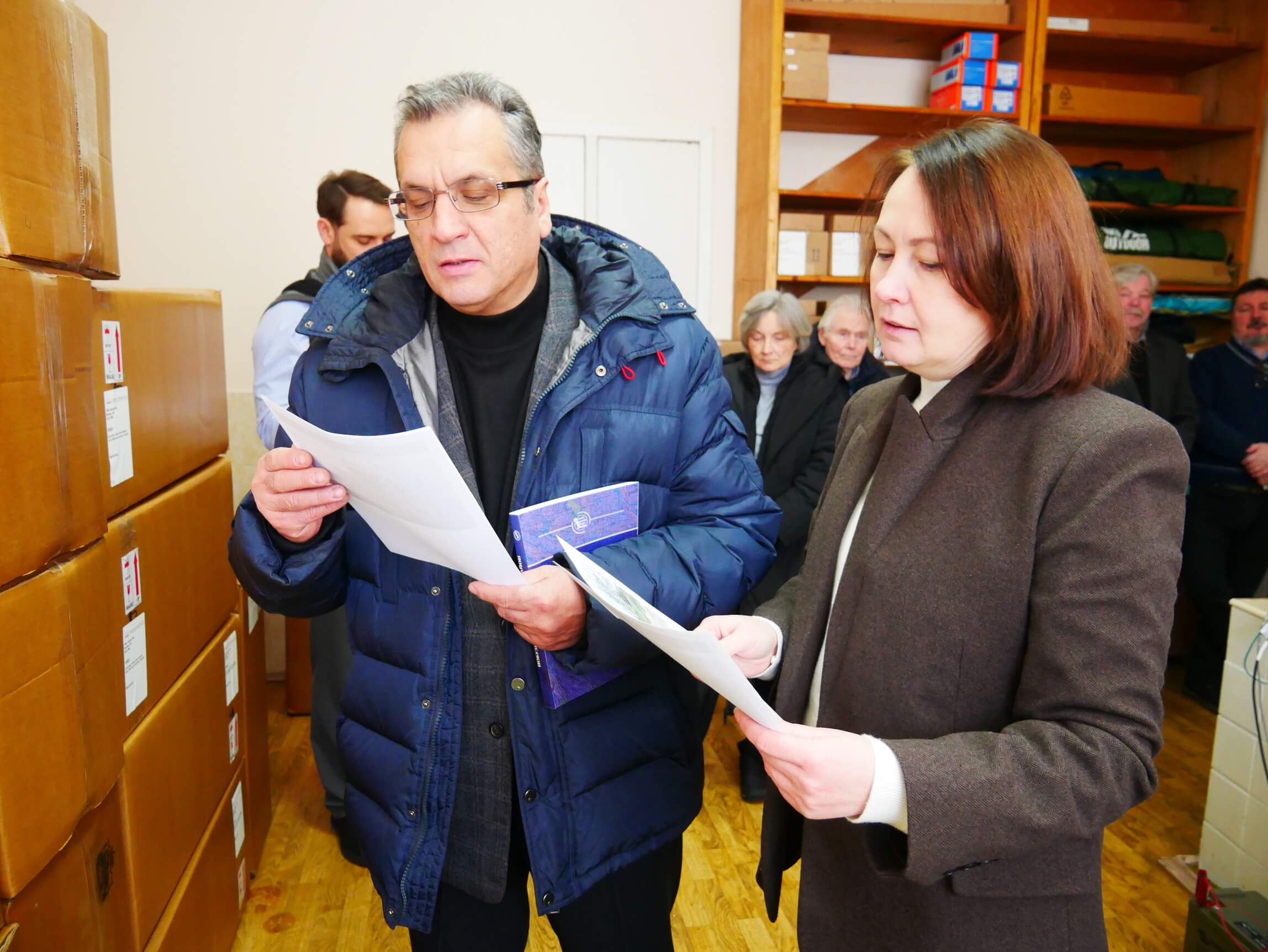
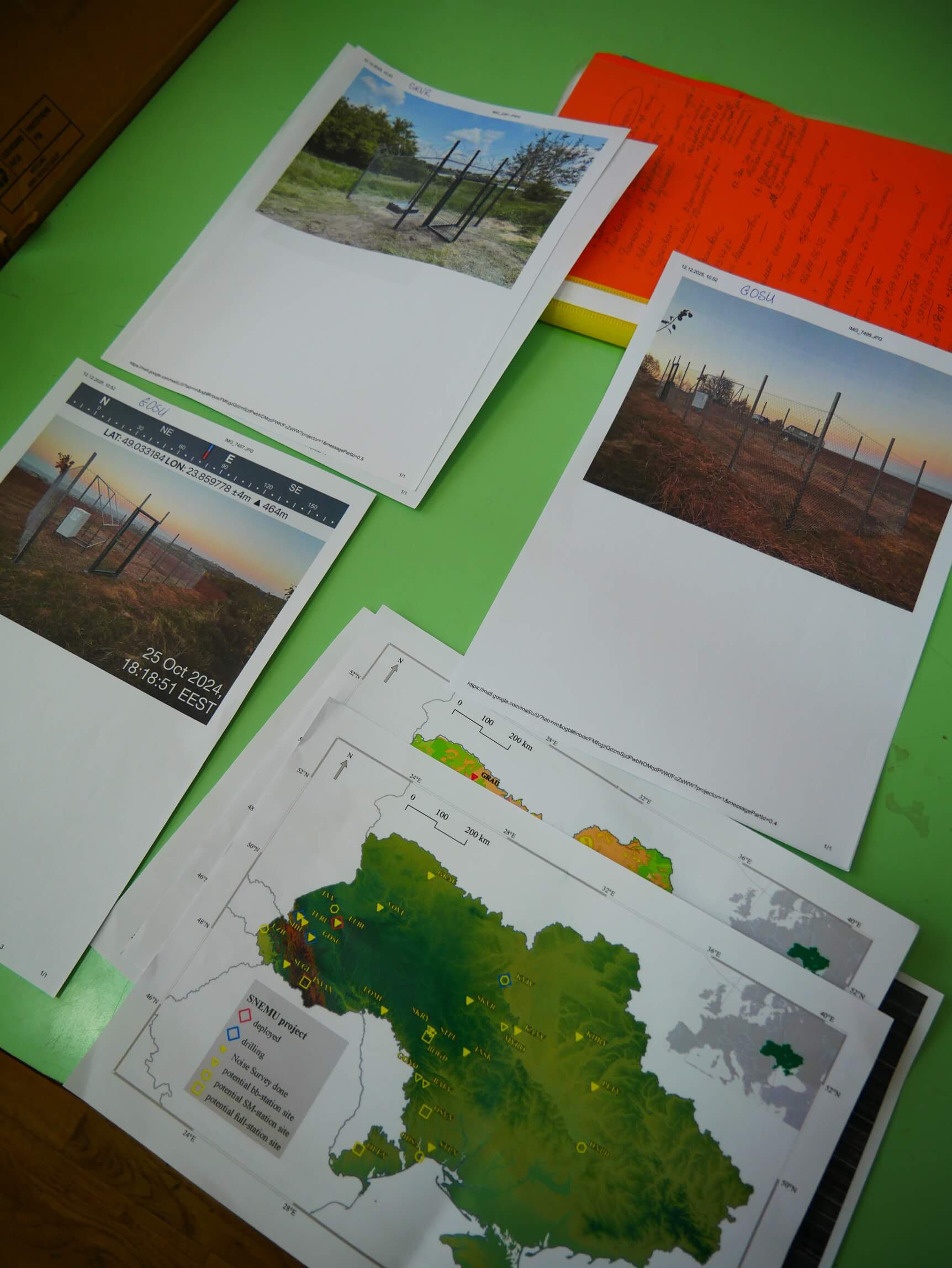
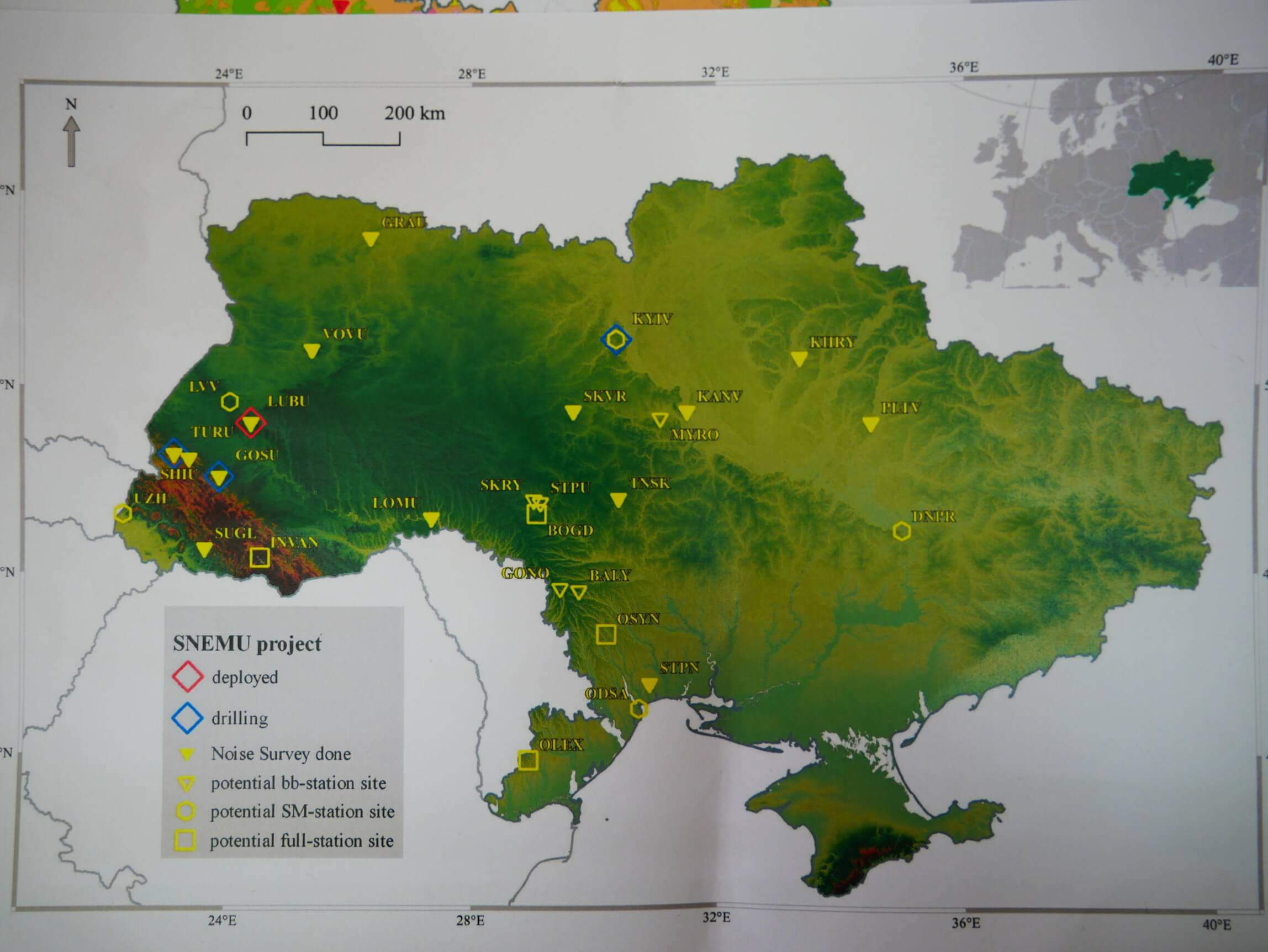
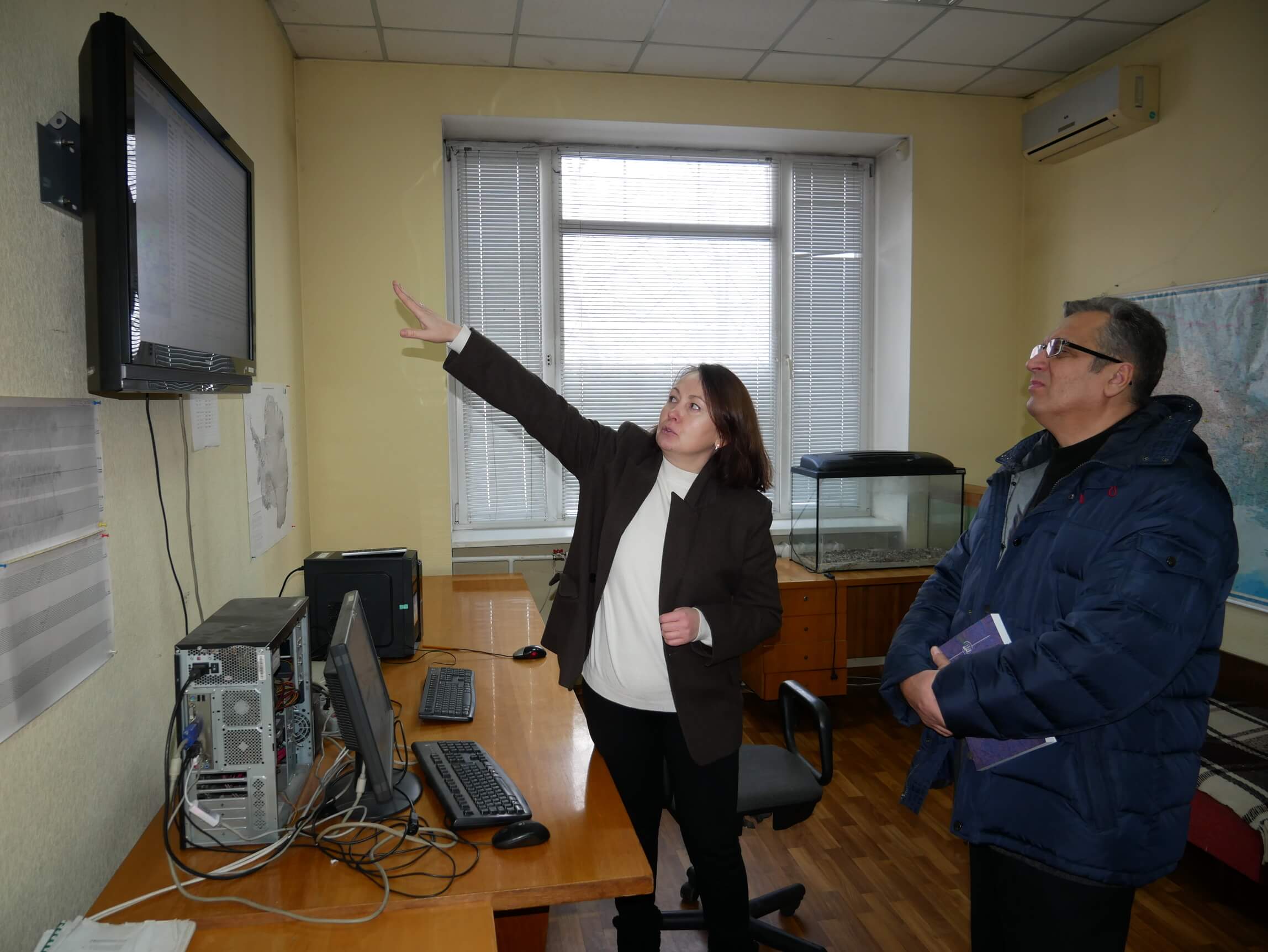
Senior Researcher of the Department of Seismic Hazard, Candidate of Geological Sciences Lyudmyla Farfuliak, shared the results of establishing the operation of regime seismic stations and the accumulation, storage, and processing of seismological data in real time.
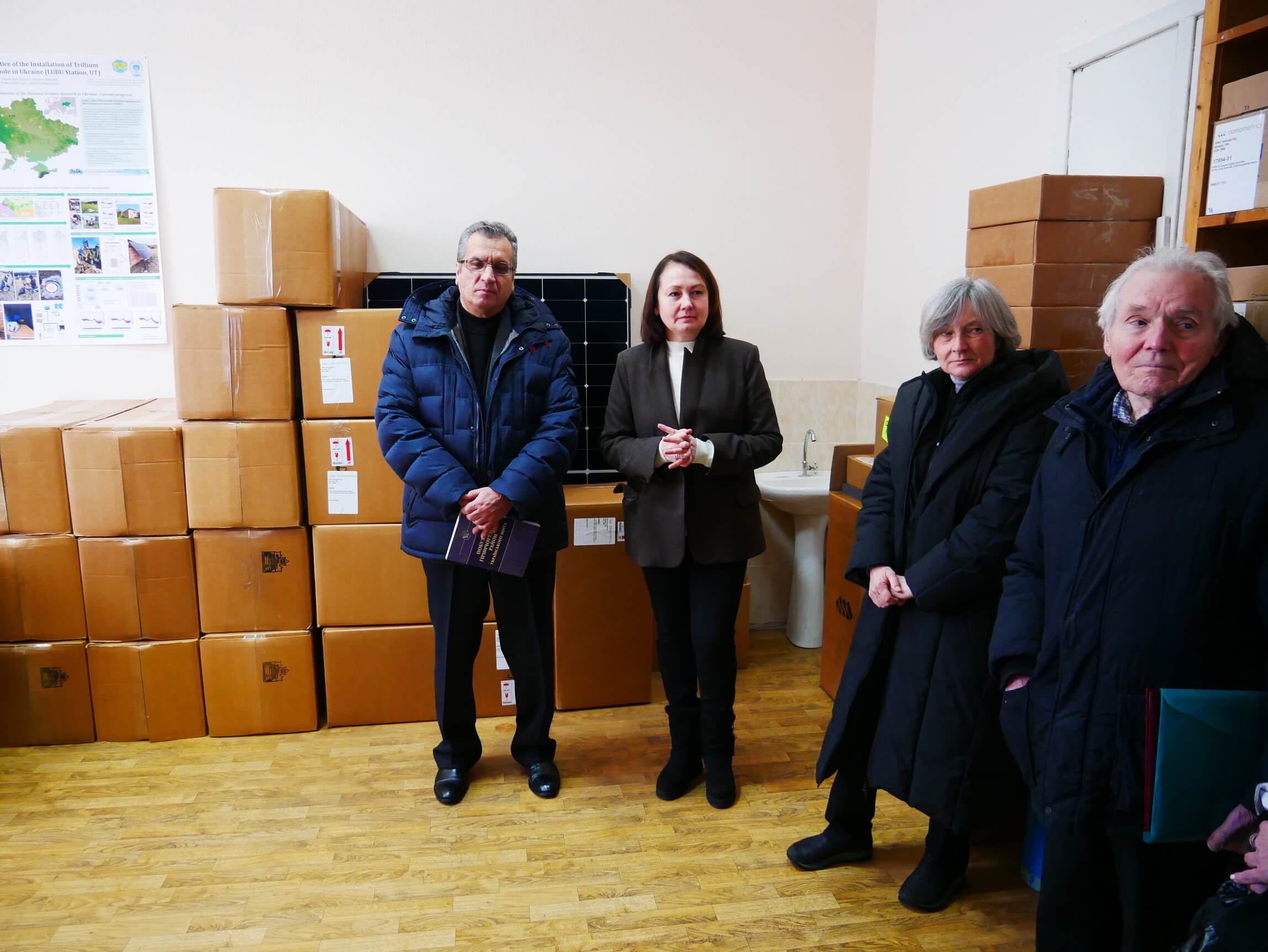
According to the international tripartite partnership agreement SNEMU "Seismic network expansion and modernization in Ukraine," the seismic hazard department is modernizing and expanding the network of stations as part of the National Seismic Observation System. The work is carried out with the support of the U.S. Department of Nuclear Safety in cooperation with the Lawrence Livermore National Laboratory, Michigan State University (MSU), the EarthScope consortium, and the Ukrainian Scientific and Technological Center. The main goal of the project is the modernization and expansion of the national seismic observation system of Ukraine through the network of the S.I. Subbotin Institute of Geophysics of the NAS of Ukraine by installing permanent broadband seismic stations to record natural endogenous processes, including earthquakes. Under the agreement, 21 broadband seismometers, 5 accelerographs, 5 accelerometers, and other accompanying equipment were purchased and transferred to the institute's balance.
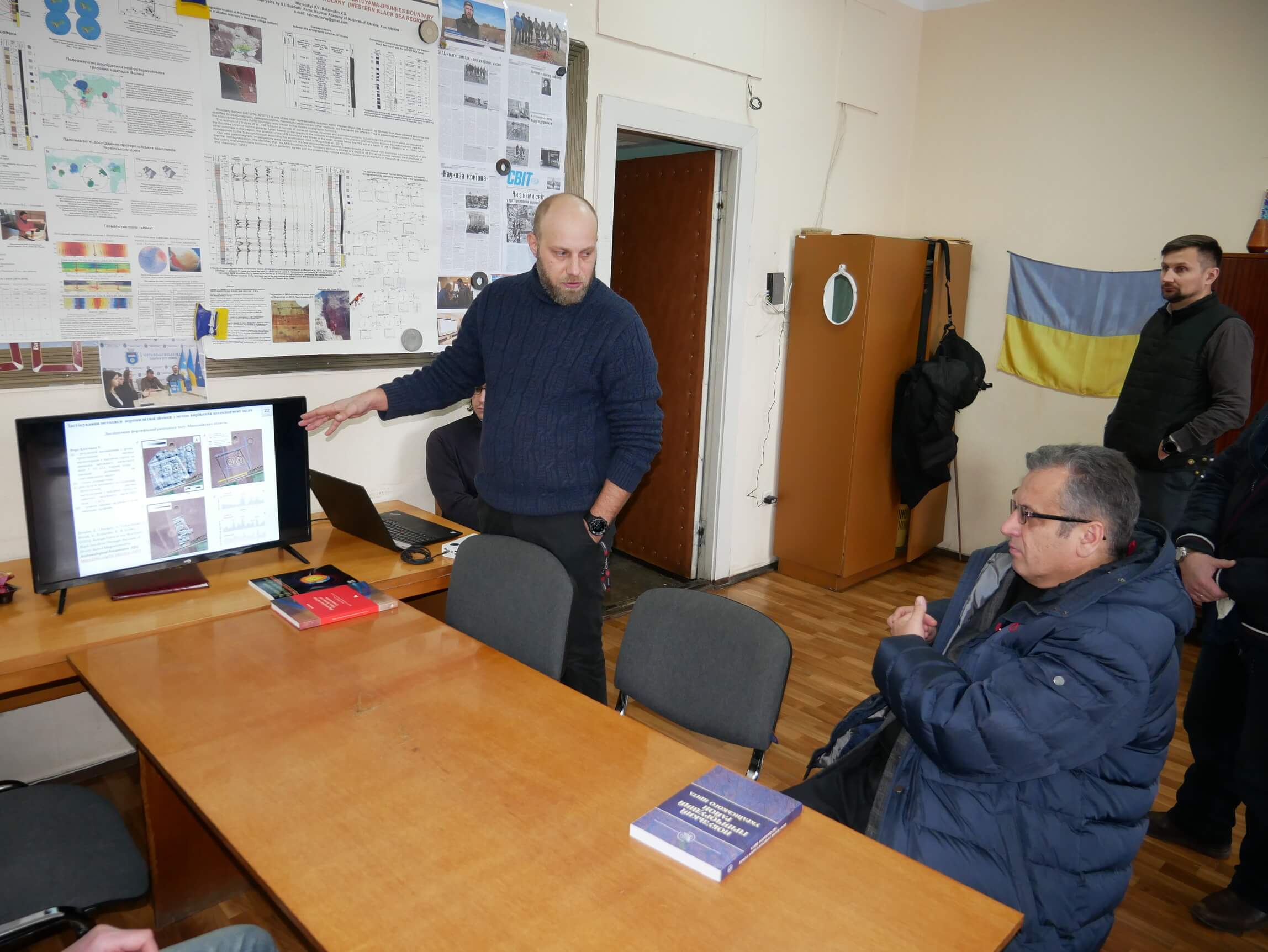
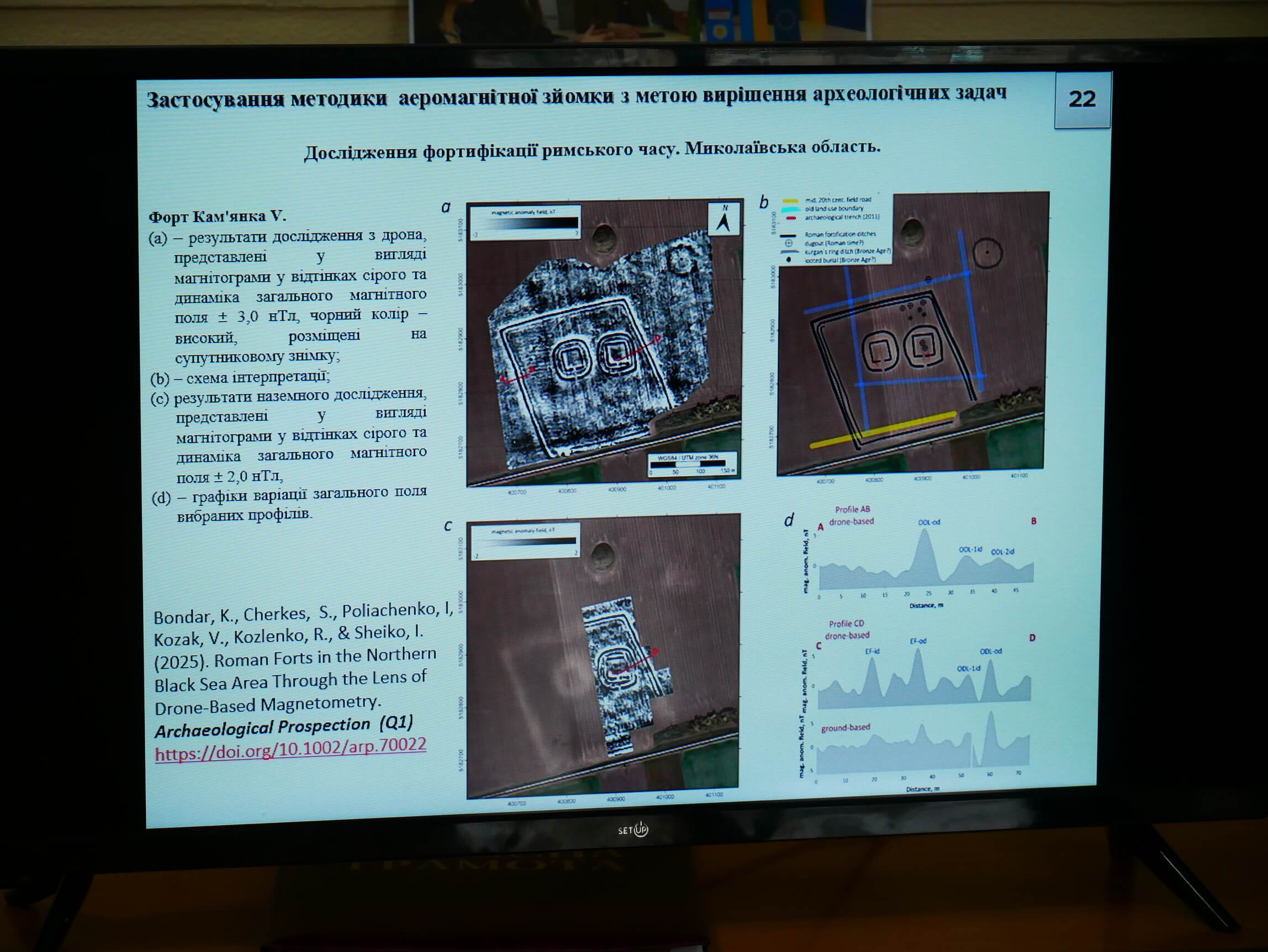
Head of the Department of Petromagnetism, corresponding member of the NAS of Ukraine Volodymyr Bakhmutov, and senior researcher of this department, Candidate of Geological Sciences Yevhen Polyachenko, told the guests from the Academy Presidium how the Collective Use Center for Magnetometric Equipment (based at the "Demidiv" magnetic station) operates. Scientific research is carried out in the areas of applying rock magnetism and paleomagnetism methods to solve problems of magnetotectonics, magnetostratigraphy, and paleogeographic reconstructions.
The institute, together with the Charitable Foundation "Progress Foundation" (Wrocław, Poland) and other scientific institutions, is carrying out work on the topic "Identification and classification of unexploded ordnance for Ukraine (MinesEye)" under the NATO program "Science for Peace and Security." The topic of humanitarian demining, including remote detection and identification of unexploded ordnance, has been initiated and is developing. The guests were also presented with the development of mathematical methods for automated identification and classification of various types of ordnance.
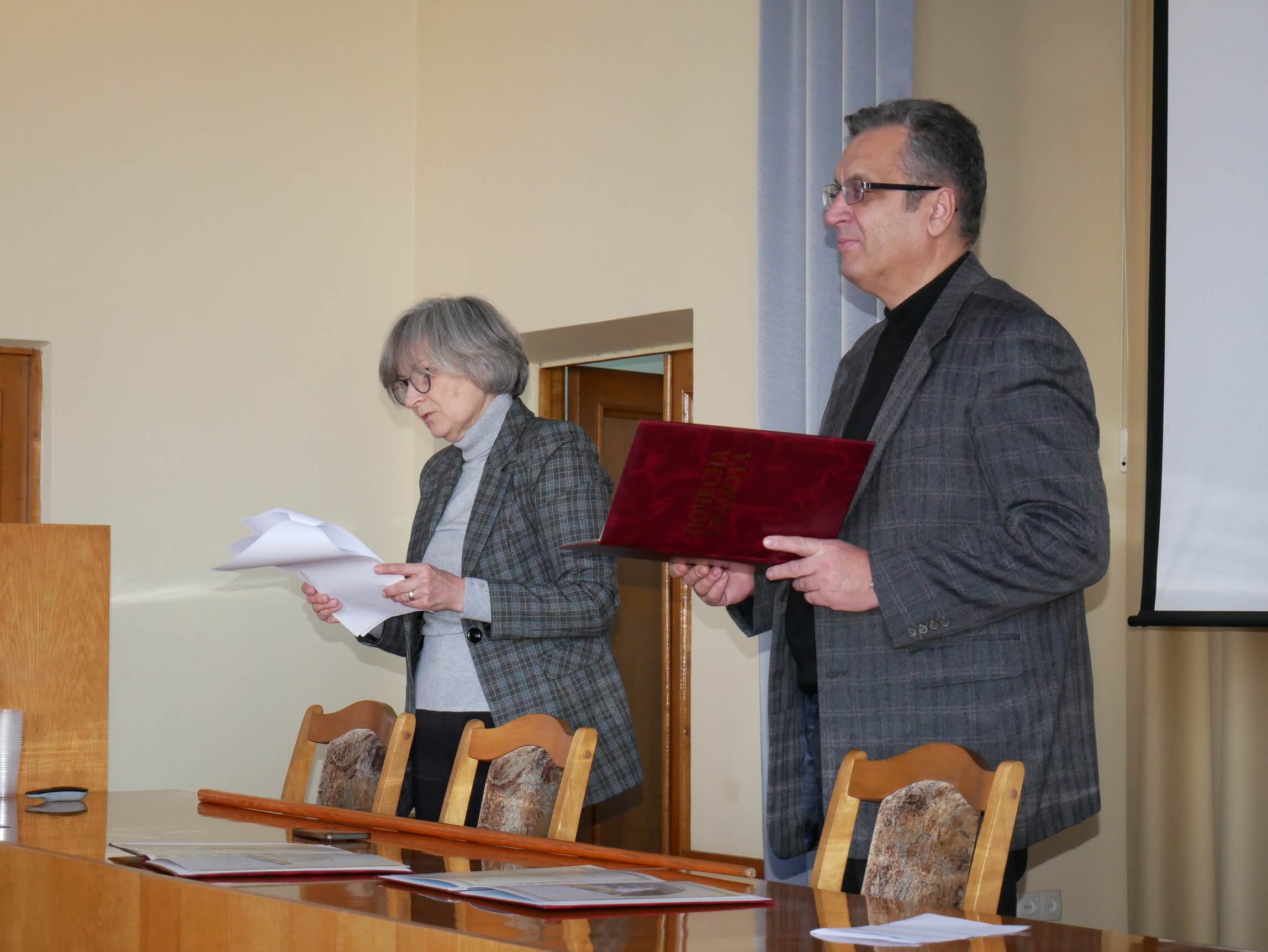
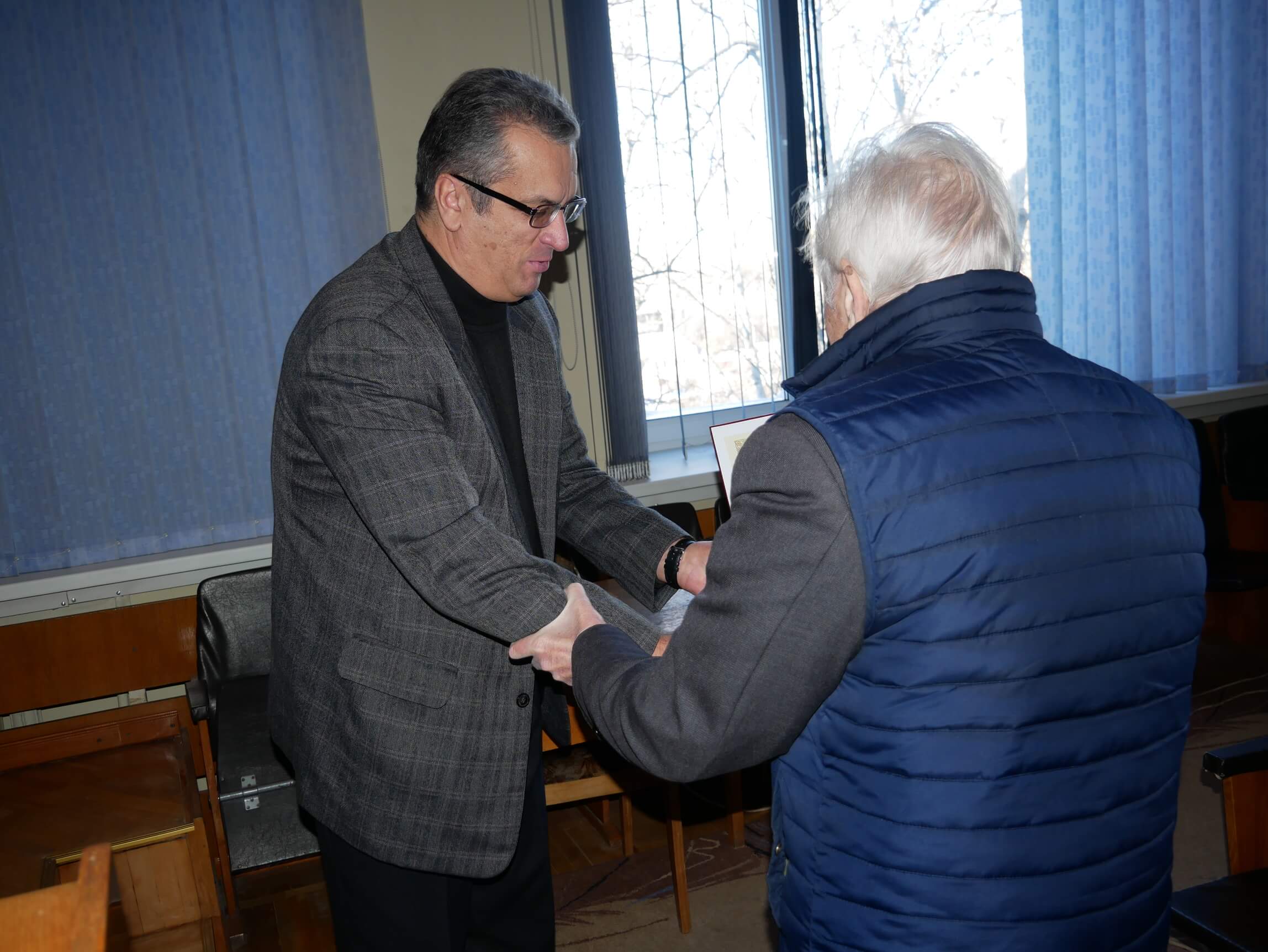
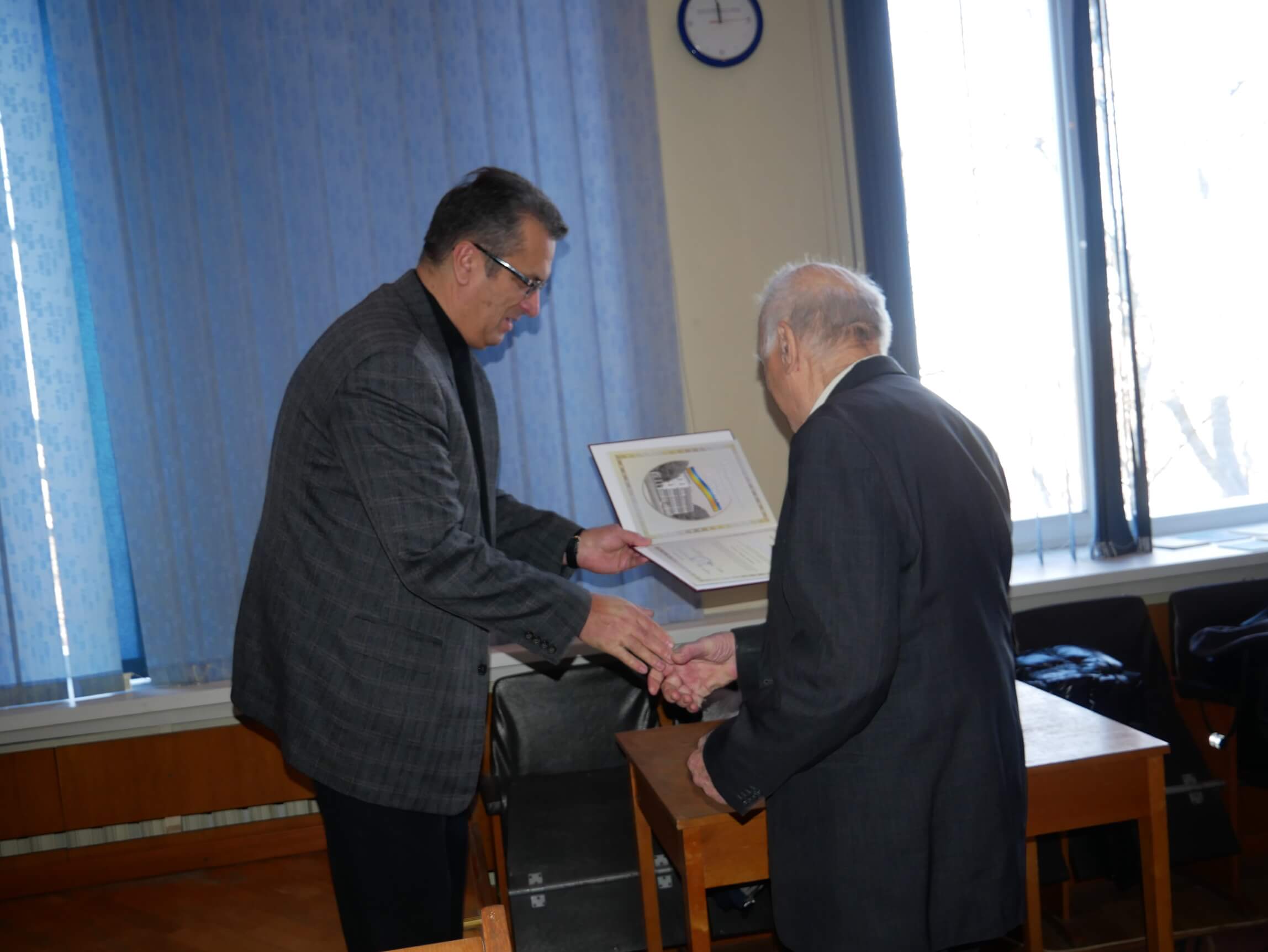
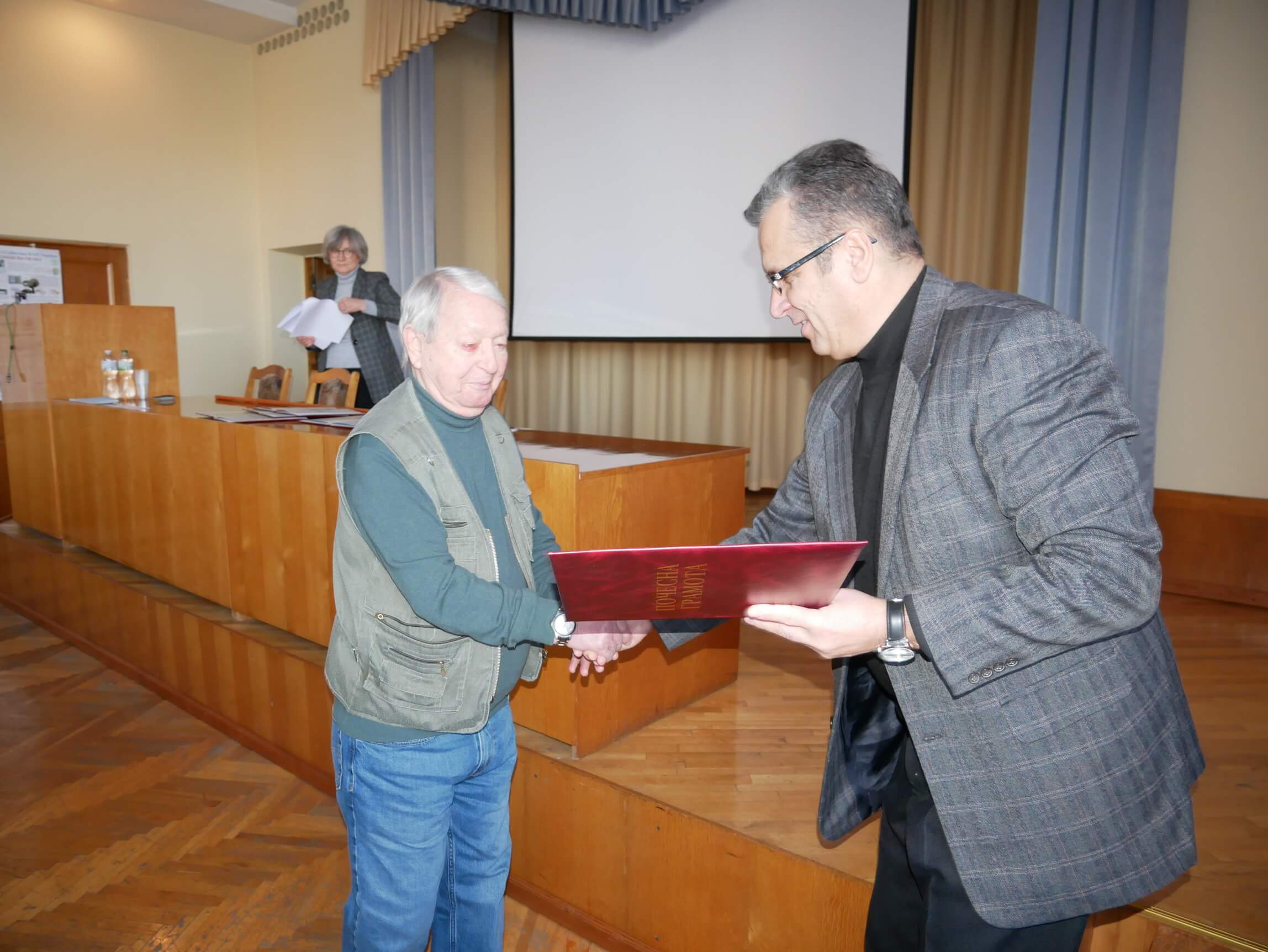
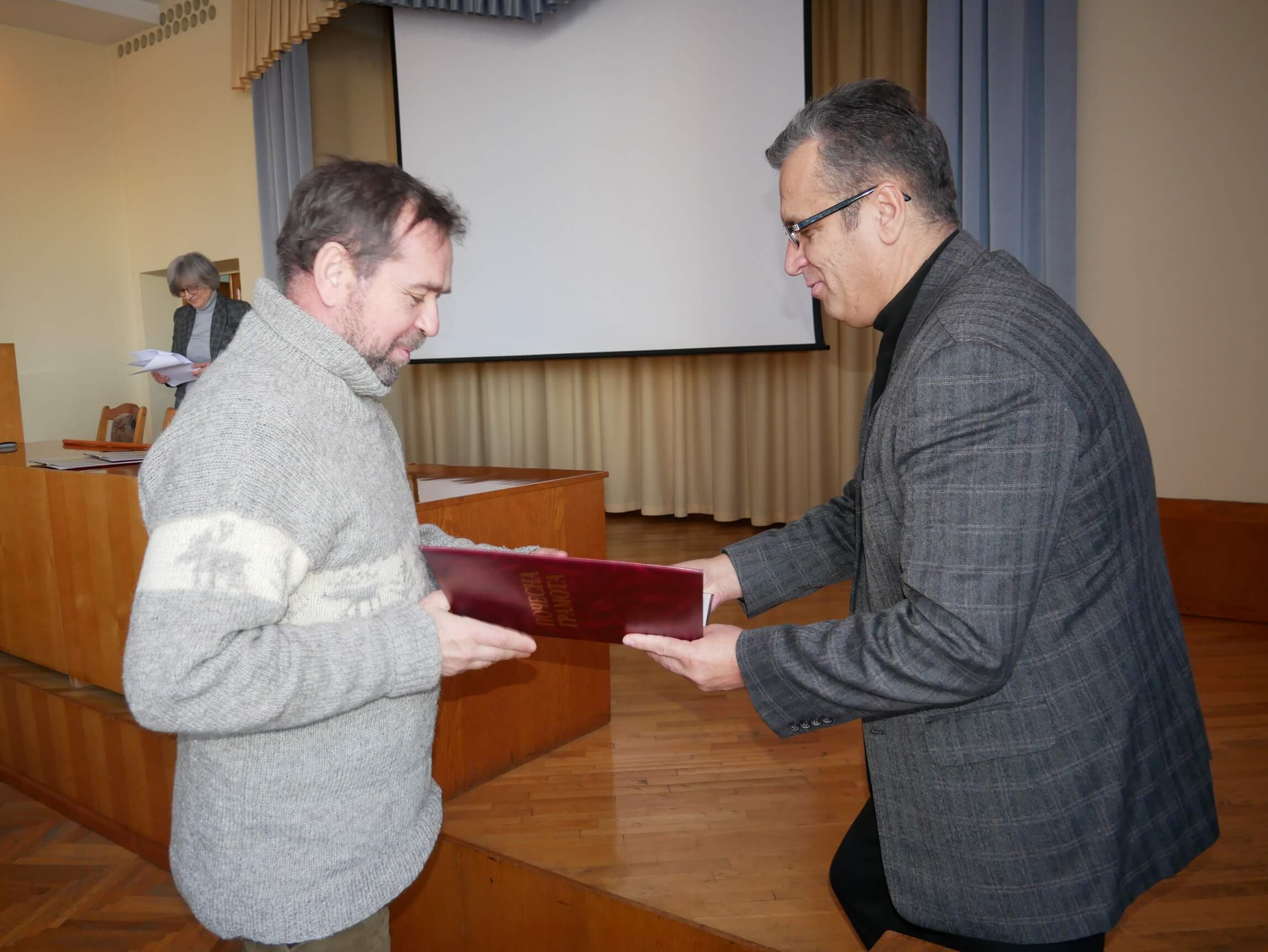
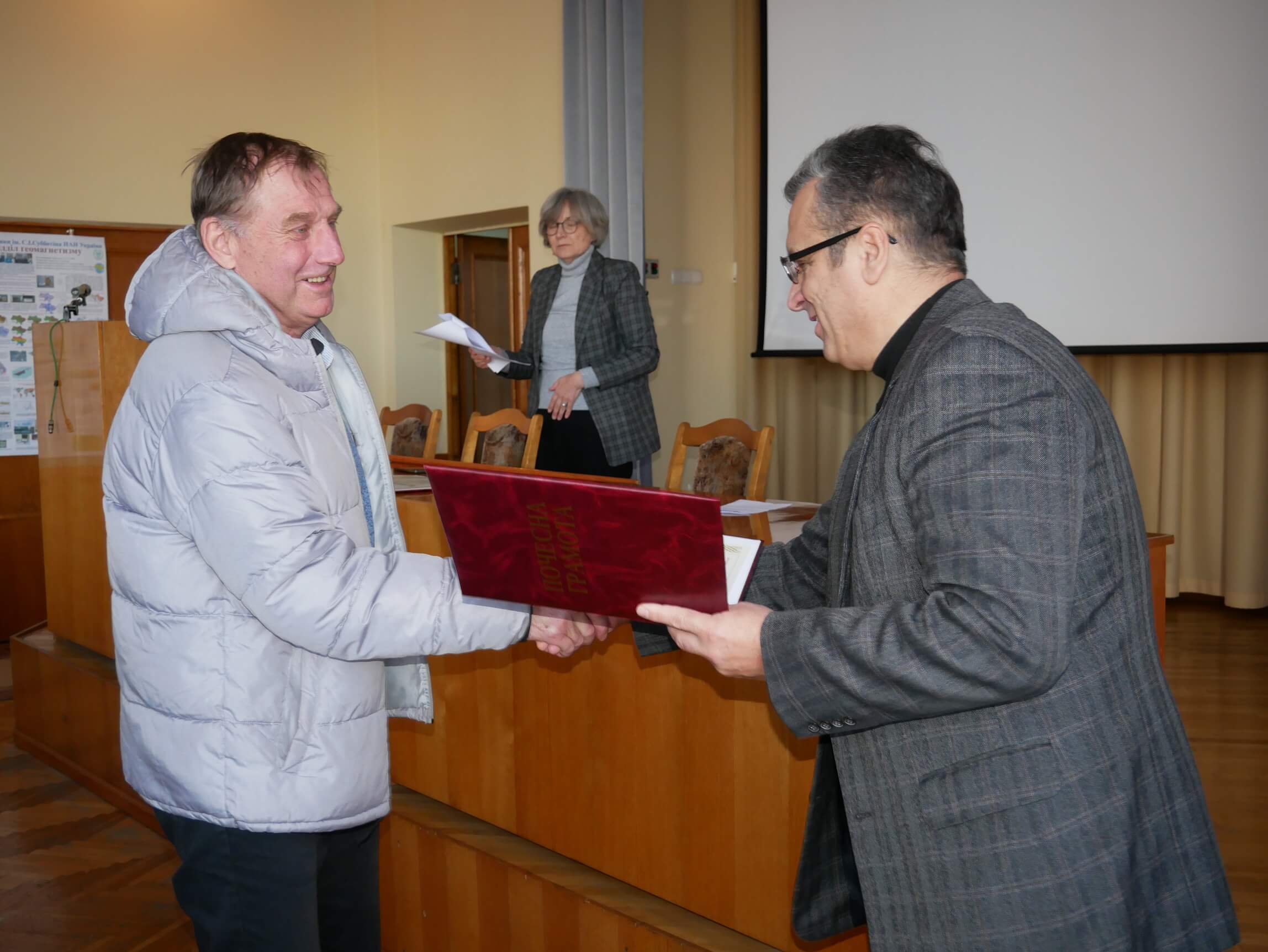
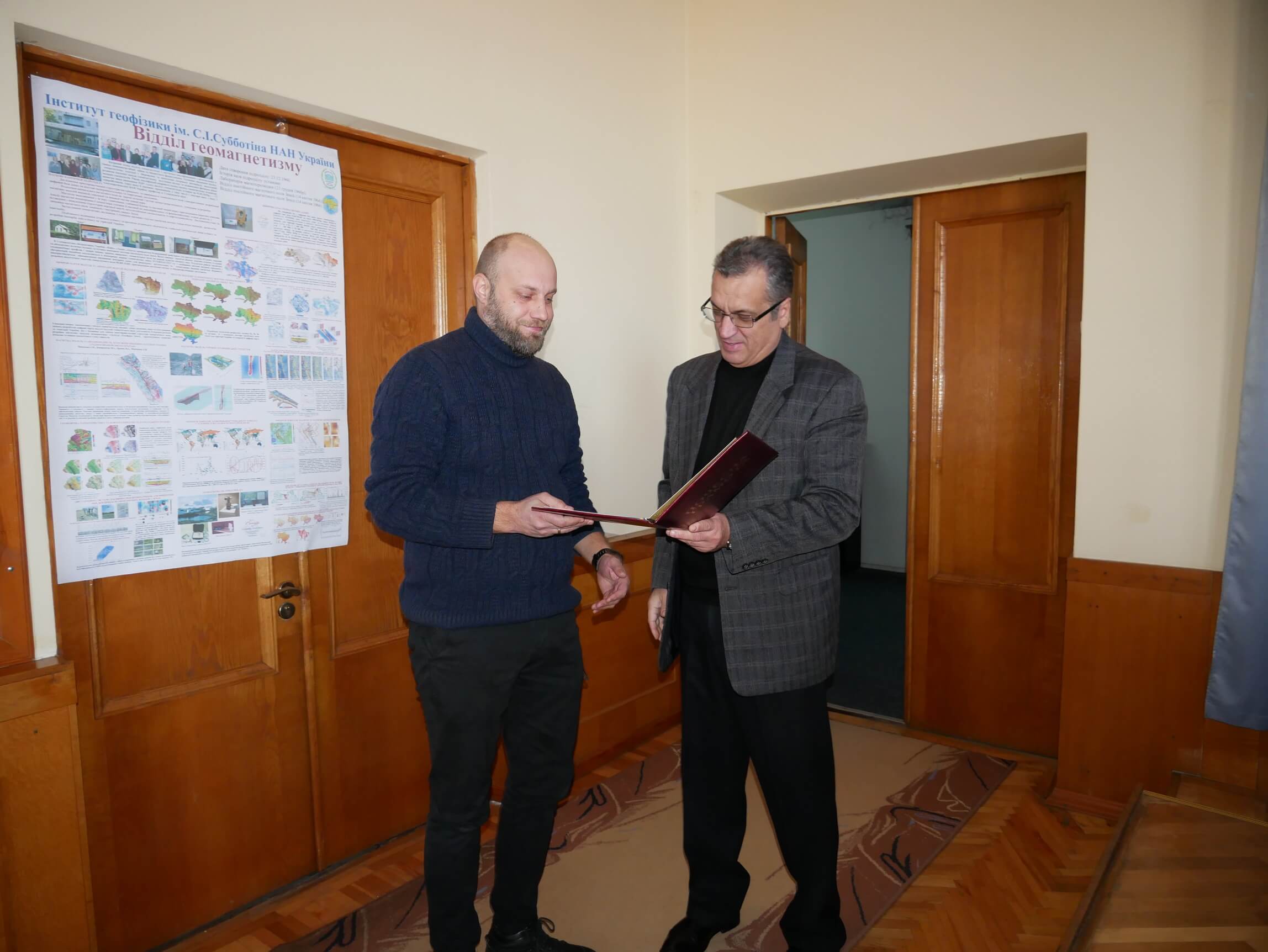
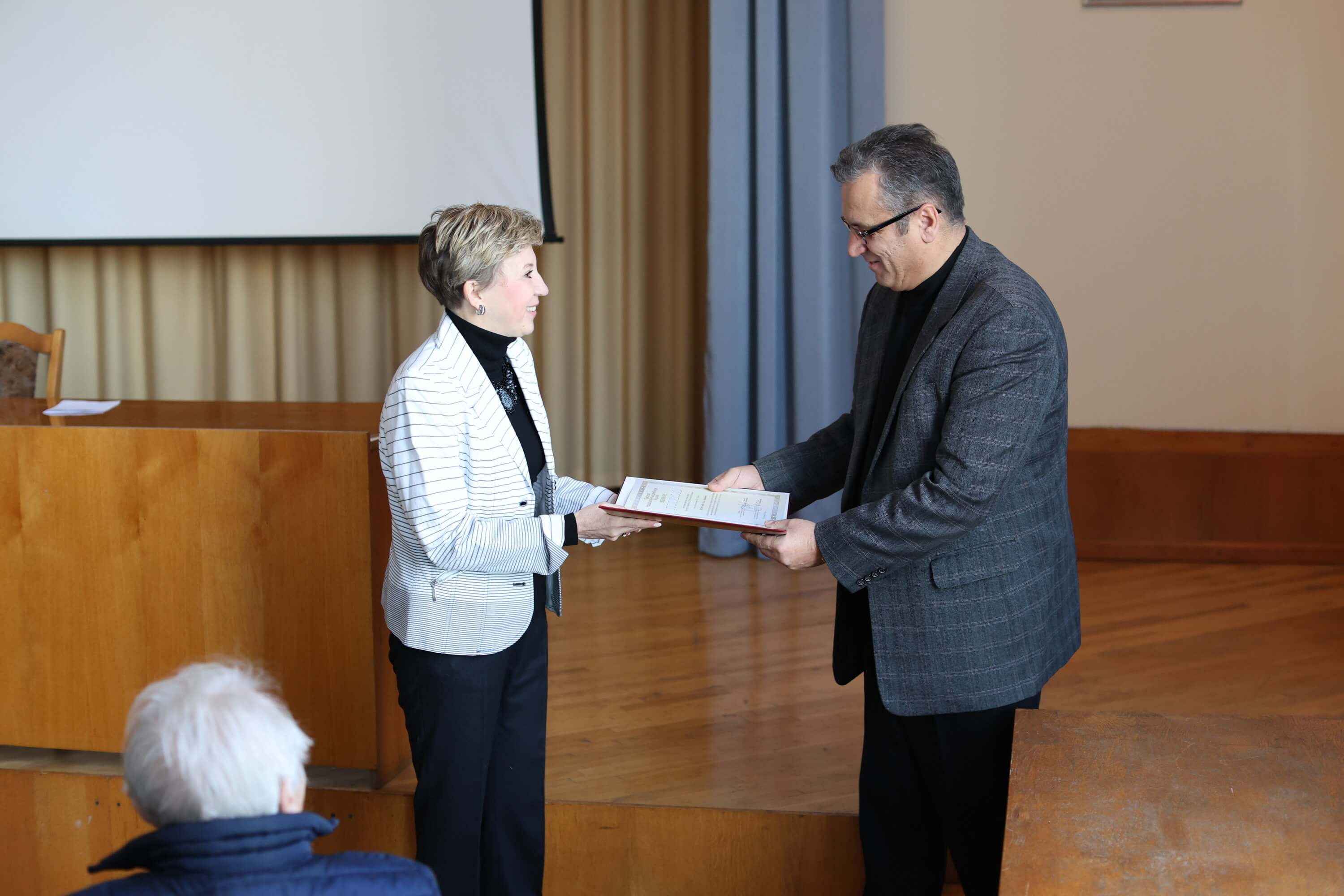
The First Vice-President of the NAS of Ukraine, academician of the NAS of Ukraine Vyacheslav Bogdanov, congratulated the staff of the S.I. Subbotin Institute of Geophysics of the NAS of Ukraine on the 65th anniversary of the institute and presented the institute's scientists with awards from the National Academy of Sciences of Ukraine – distinctions, honorary diplomas, and letters of appreciation for many years of fruitful work and significant scientific achievements in the field of Earth sciences.
At the end of the meeting, the Academy's leadership noted the strategic importance of the developments of the S.I. Subbotin Institute of Geophysics of the NAS of Ukraine for the restoration of Ukraine. These developments meet world standards, enjoy considerable interest from the academic community, and align with global and national scientific priorities.
According to information from the S.I. Subbotin Institute of Geophysics of the NAS of Ukraine
Photo: press service of the NAS of Ukraine and the S.I. Subbotin Institute of Geophysics of the NAS of Ukraine