


On January 6, 2026, the Institute of Physics of the NAS of Ukraine was visited on a working visit by the First Vice-President of the NAS of Ukraine, Head of the Section of Physical-Technical and Mathematical Sciences, Academician of the NAS of Ukraine Vyacheslav Bogdanov, Academician-Secretary of the Department of Physics and Astronomy of the NAS of Ukraine, Academician of the NAS of Ukraine Mykhailo Bondar, and Scientific Secretary of the Section, Doctor of Technical Sciences Serhiy Bespalov.
During the visit, the guests were accompanied by the Deputy Director for Scientific Work of the Institute of Physics of the NAS of Ukraine, Doctor of Physical and Mathematical Sciences Andriy Dobrovolskyi, and the Acting Scientific Secretary of the Institute, Candidate of Technical Sciences Oleksandr Mamuta.
Academician of the NAS of Ukraine Mykhailo Bondar, who is also the Director of the Institute of Physics of the NAS of Ukraine, acquainted his colleagues from the NAS Presidium with the structure of the institution, its personnel potential, and modern experimental capabilities, spoke about the key directions of scientific research, and outlined the strategic development prospects of the Institute in view of current challenges and priorities of academic science.
The delegation visited several scientific departments of the Institute of Physics of the NAS of Ukraine, where fundamental and applied research is conducted in the fields of laser physics, spectroscopy, crystal physics, and ultrafast optical processes.
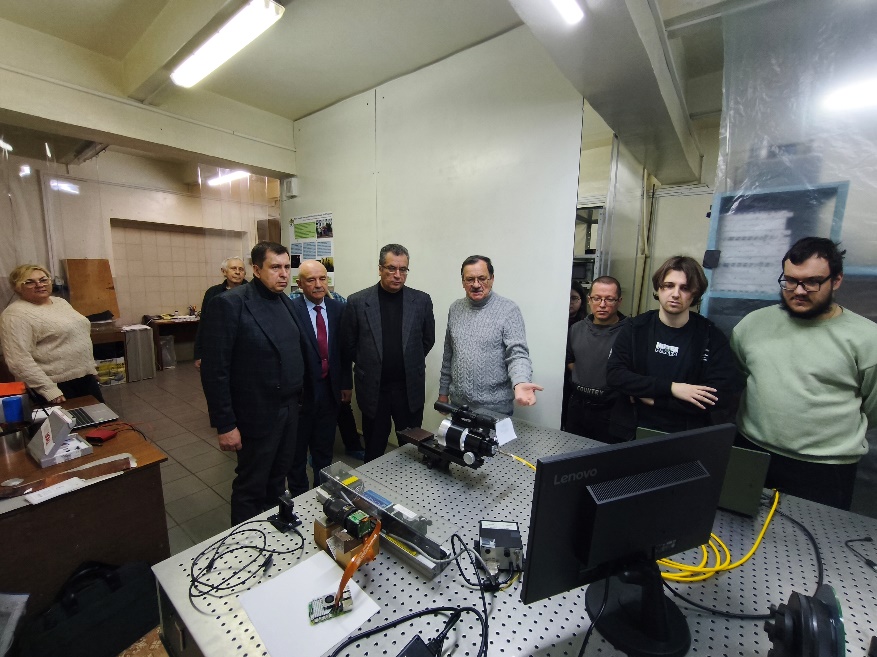
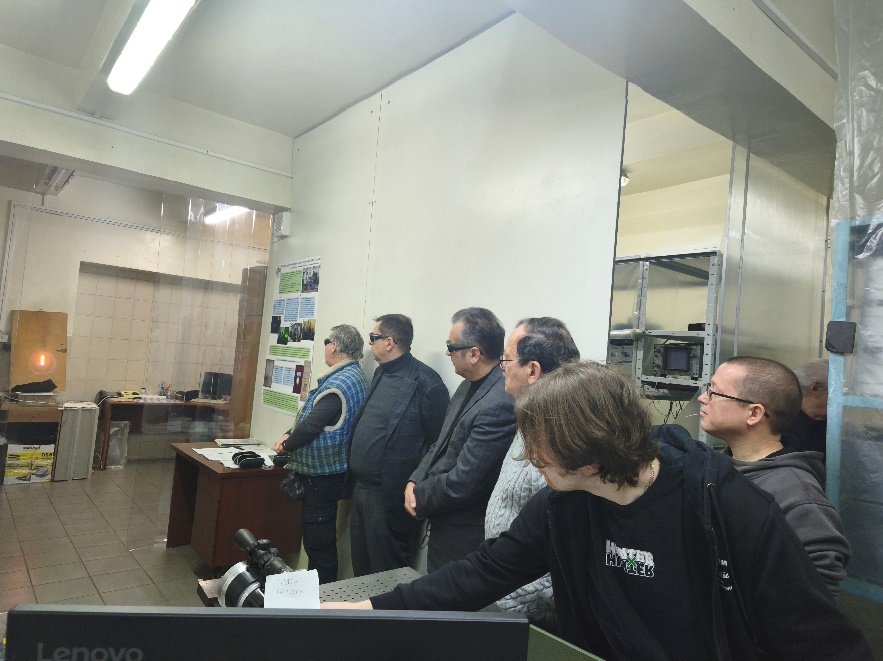
In particular, scientists from the Laser Spectroscopy Department, headed by Corresponding Member of the NAS of Ukraine Anatoliy Negriyko, presented materials related to developments concerning the study of reversible and irreversible effects of laser radiation on video systems, which have important applied significance for optical technologies, security systems, and modern information tools. These results demonstrate the high level of scientific achievements of the department and are relevant for the development of laser physics and photonics. It was also noted that in 2025, Senior Researcher of the department, Candidate of Physical and Mathematical Sciences Ludmyla Derzhypolska, was awarded the Order of Princess Olga III degree for her significant personal contribution to the development of science and many years of fruitful scientific activity.
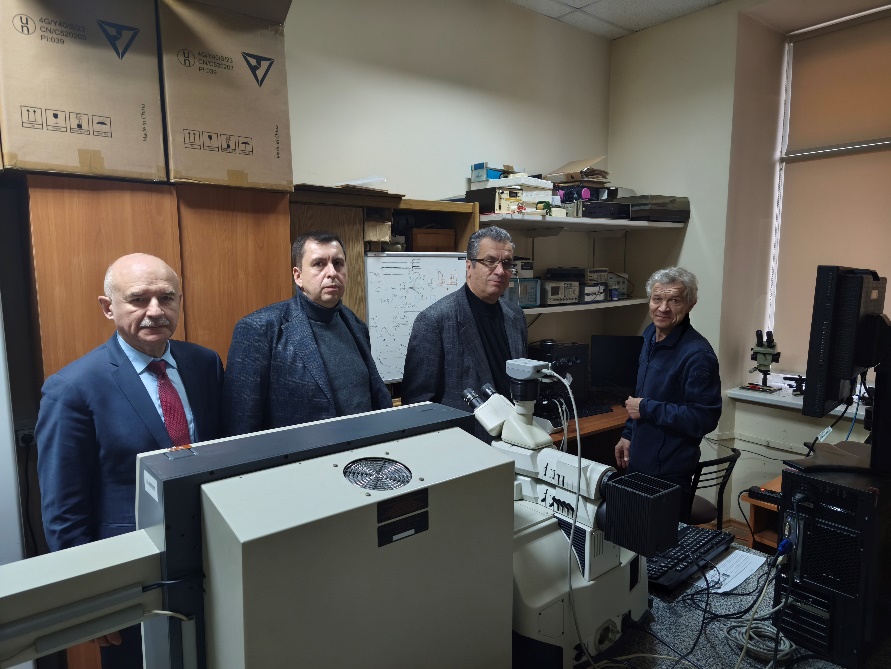
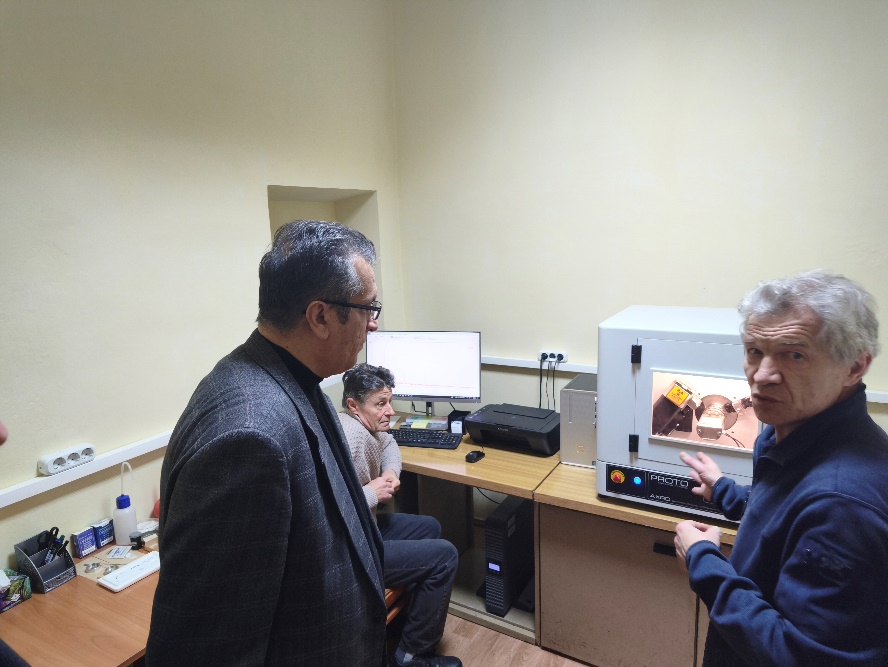
In the Crystal Physics Department, under the leadership of Doctor of Physical and Mathematical Sciences Vasyl Nazarenko, the delegation members were introduced to modern unique equipment acquired between 2020 and 2025, which enables advanced research in the field of liquid crystal physics and functional materials. Of particular note are developments of photosensitive polymers for controlling the orientation of liquid crystals and the study of the ferroelectric nematic state, which opens new possibilities for creating electro-optical devices. Additionally, the department actively engages in international activities: last year, together with Polish partners, it carried out the project "Ferroelectric Nematic Liquid Crystal: A New Paradigm for Electro-Optical Applications," and within the NATO Science for Peace program, the project "New Photosensitive Polymers with Embedded Intelligence."
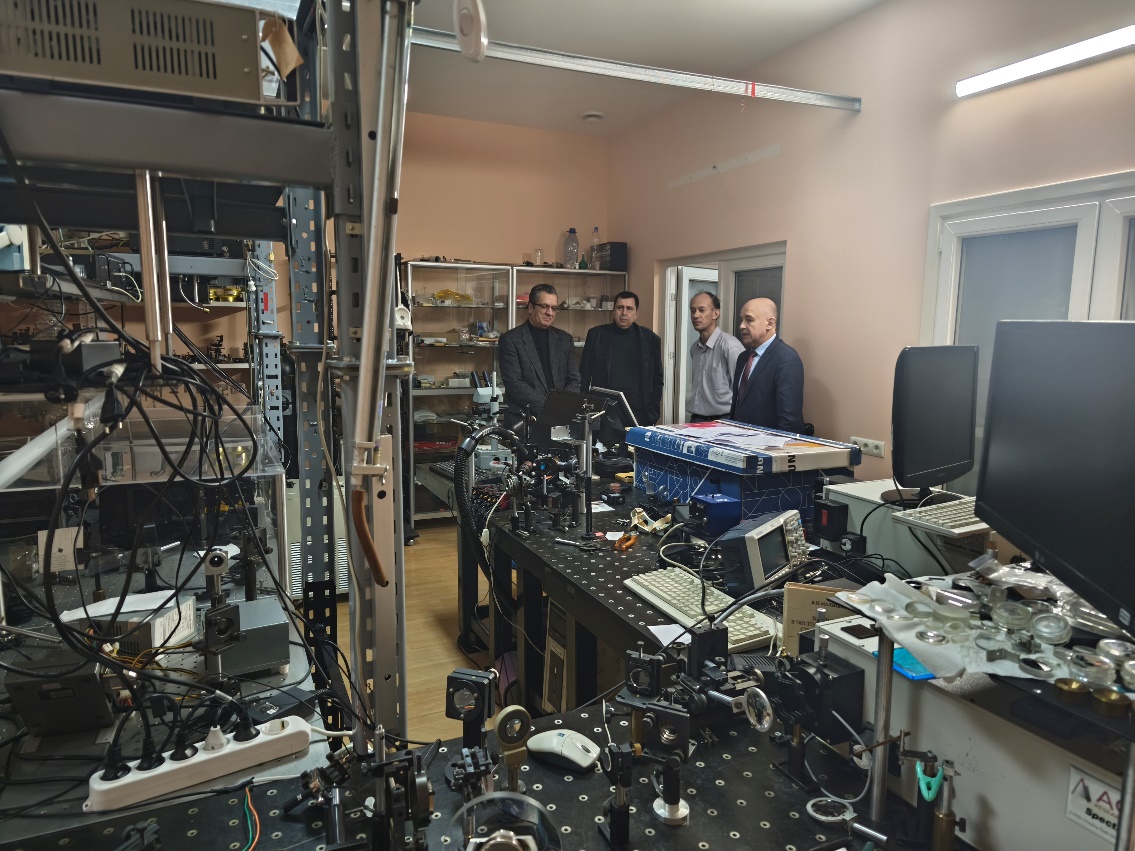
An important part of the visit was the introduction to the femtosecond laser complex of the Institute of Physics of the NAS of Ukraine—a modern experimental setup that enables the study of ultrafast processes in matter, as well as work in the fields of nonlinear optics and the physics of strong light fields. The activities of the complex and its scientific and technical capabilities were presented by Leading Researcher of the Photonic Processes Department, Doctor of Physical and Mathematical Sciences Andriy Dmytruk, who outlined the main research directions conducted using this unique equipment and its significance for training young scientists and developing international cooperation.
During discussions with scientists, issues of modernizing the experimental base, developing shared scientific equipment centers, supporting young researchers, and expanding the participation of the Institute of Physics of the NAS of Ukraine in international scientific programs and projects were addressed.
Summarizing the visit, the leadership of the NAS of Ukraine noted the high scientific level of research, strong personnel potential, and the important role of the Institute of Physics of the NAS of Ukraine in the development of fundamental physics, laser, and photonic technologies in our country.
According to information from the Institute of Physics of the NAS of Ukraine
Photo: Institute of Physics of the NAS of Ukraine