Established in 1997; scholars of the Department of History, Philosophy and Law of the NAS of Ukraine are awarded the Prize for outstanding academic papers in the field of philosophical sciences



Dmytro Ivanovych Chyzhevsky Prize
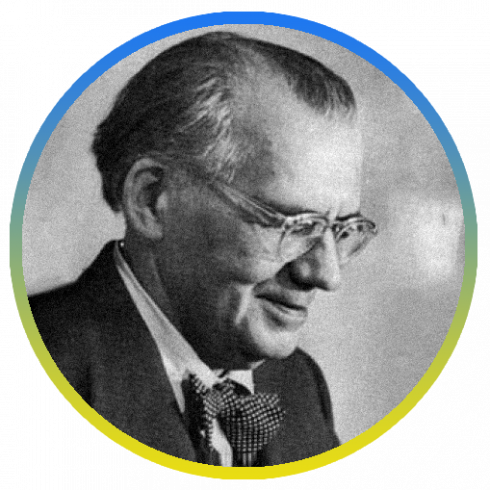
Dmytro Ivanovych Chyzhevsky – philosopher and historian of philosophy, Slavologist, researcher of the spiritual history of the Slavs – was born on April 4, 1894 in the city of Oleksandria (now – Kirovohrad region) in a family that descended from an ancient noble stem.
He got education at St. Petersburg (1911–1913) and Kyiv (1913–1919) Universities. In 1921 he had to emigrate illegally from Ukraine. He continued his philosophical studies at Heidelberg (1921–1922) and Freiburg (1922–1924) Universities. Prominent thinkers of that time: O. Hiliarov and V. Zenkivsky (Kyiv University), K. Jaspers, G. Rickert (Heidelberg University), E. Husserl, M. Heidegger, J. Cohn, R. Kroner (Freiburg University) were among his philosophy teachers.
After graduation, the young scientist delivered lectures on philosophy at the M. Drahomanov Pedagogical Institute in Prague (1924 –1932), where he achieved the rank of professor in 1927, and at the Ukrainian Free University (1929–1932), where he defended his first doctoral thesis “Hegel and the French Revolution” (1929). He defended his second doctoral thesis, “Hegel in Russia”, in 1933 at Halle University. This work was published in German (1934, 1961) and Russian (1939) during the scholar’s lifetime and was widely recognized in scientific circles.
Dmytro Chyzhevsky made a significant contribution to the development of philosophy, Slavic studies, and the study of the intellectual history of the Slavs. The scholar’s scientific pursuits are quite wide and diverse: the study of the history of the philosophy of the Slavic peoples and the history of Slavic literature, the influence of German culture on the spiritual life of the Slavs, as well as studies of Slavic lexicon and philosophy of language, church history, etc. The study of the spiritual history of the Slavs is the principal theme that unites all scientific studios of D.I. Chyzhevsky; the scholar devoted his whole life to it.
His work was innovative in many aspects and made it possible to evaluate things that seemed familiar from a different perspective. That is why the scholar remains a recognized authority on the history of Slavic thought even today. Without exaggeration, D.I. Chyzhevsky can be considered a historian of the intellectual life of the Slavs and a figure of pan-European significance.
Dmytro Chyzhevsky is the author of the first serious, methodologically sound works on the history of Ukrainian philosophy, which laid the foundation for the development of this sphere of Ukrainian humanitarianism. Before the publication of his papers, this branch of Ukrainian culture remained understudied, and publications on a similar topic at the end of the 19th and the beginning of the 20th century had an educational rather than a scientific nature. With the appearance of the Chyzhevsky’s monographs “Philosophy in Ukraine. An Attempt of the Historiographical Approach to the Issue” (Prague, 1926), “Essays on the History of Philosophy in Ukraine” (Prague, 1931), “Philosophy of G.S. Skovoroda” (Warsaw, 1934) it became possible to talk about the real beginning of historical and philosophical Ukrainian studies as an independent focus area. D.I. Chyzhevsky put forward the thesis that the specificity of national philosophy is characterized by three factors: the form of manifestation of philosophical thought; the method of philosophical research and the structure of the philosophical system, which determines the position and role of certain values in the system. According to the scientist, outstanding thinkers of each nation are the bearers of these signs. Accordingly, Dmytro Chyzhevsky considers the development of the history of philosophy in Ukraine as the development of philosophical culture and philosophical thought in general, relying on both professional philosophical papers and works that do not meet this criterion.
The main philosophical publications of the scientist are: “Logic” (1924), “Philosophy in Ukraine: An Attempt of the Historiographical Approach to the Issue” (1929), “Hegel and the French Revolution” (1929), “Hegel and Nietzsche” (1929), “Essays on the History of Philosophy in Ukraine” (1931), “Philosophy of G.S. Skovoroda” (1934), “Hegel in Russia” (1939), “Comenius and Western Philosophy" (1940), “The Philosophy of Ludovit Stur’s Life” (1941), “Cultural and Historical Epochs” (1948), “Labyrinth of the World” by Jan Comenius: Themes of the Work and Their Sources” (1953), “The Influence of the Philosophy of Schelling (1775–1854) in Ukraine” (1956), “Holy Rus. The history of Russian Thought of the 10th–17th centuries” (1959), “Russia between East and West: History of Russian Thought in 18th-20th centuries” (1961), “Skovoroda. Poet. Thinker. Mystic” (1974), and others.
The evidence of widespread recognition of D.I. Chyzhevsky scientific work was the fact that he was elected a full member of the Heidelberg and Croatian Academies of Sciences, as well as a member of many scientific institutions and societies, including the T. Shevchenko Scientific Society, the Ukrainian Free Academy of Sciences, the German Society for Slavic Studies, the International Hegelian Society, the Kantian Society, etc.