


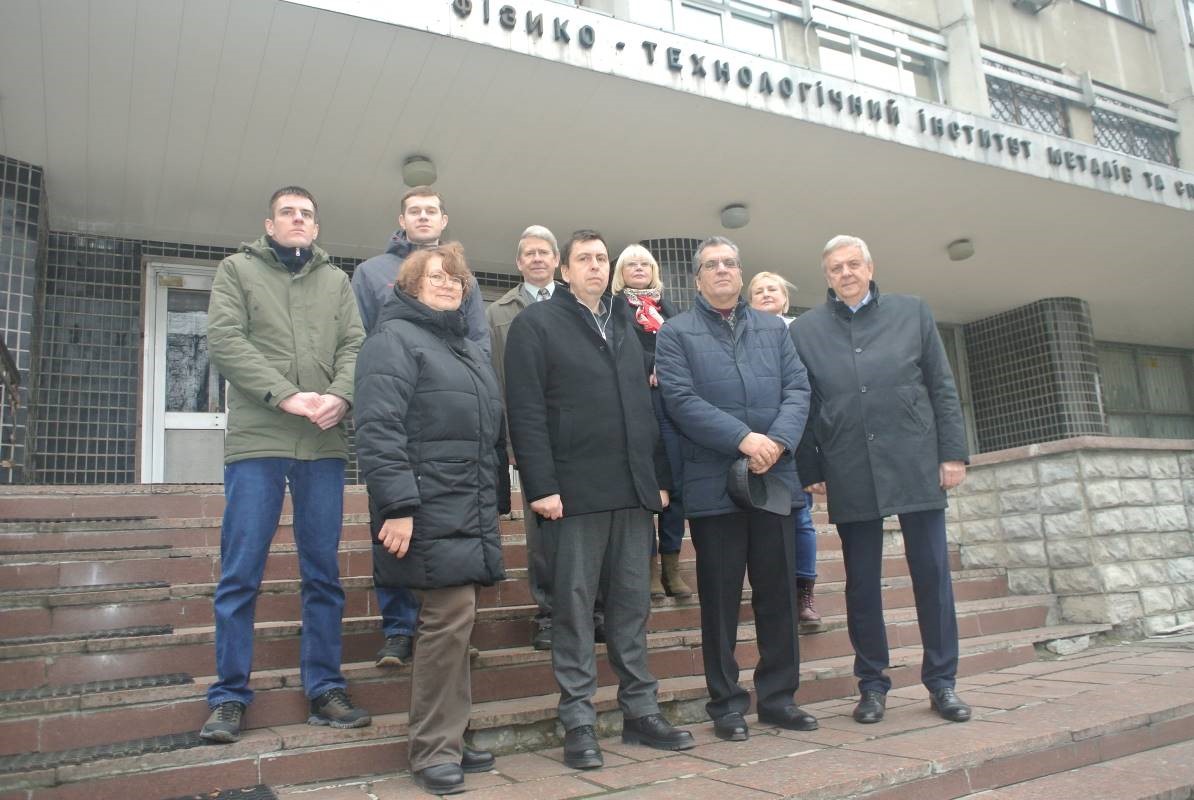
On December 9, 2025, the leadership of the National Academy of Sciences of Ukraine paid a working visit to the Physical-Technical Institute of Metals and Alloys of the NAS of Ukraine. The delegation of honored guests included the first vice-president of the NAS of Ukraine, head of the Section of Physical-Technical and Mathematical Sciences of the NAS of Ukraine, academician of the NAS of Ukraine Vyacheslav Bogdanov, academician-secretary of the Department of Materials Science of the NAS of Ukraine, academician of the NAS of Ukraine Ihor Krivtsun, scientific secretary of the Section, Doctor of Technical Sciences Serhii Bespalov, and scientific secretary of the Department, Candidate of Chemical Sciences Tetyana Sydorenko.
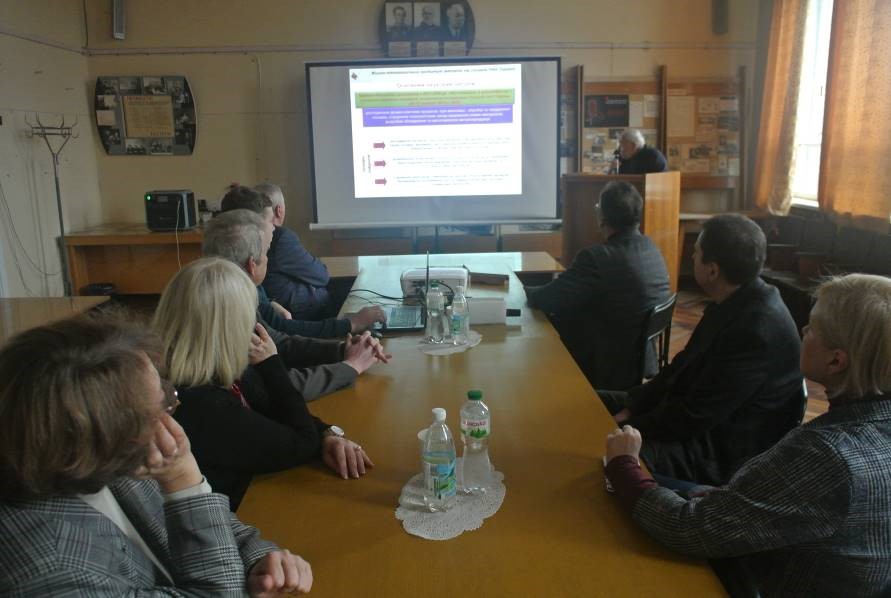
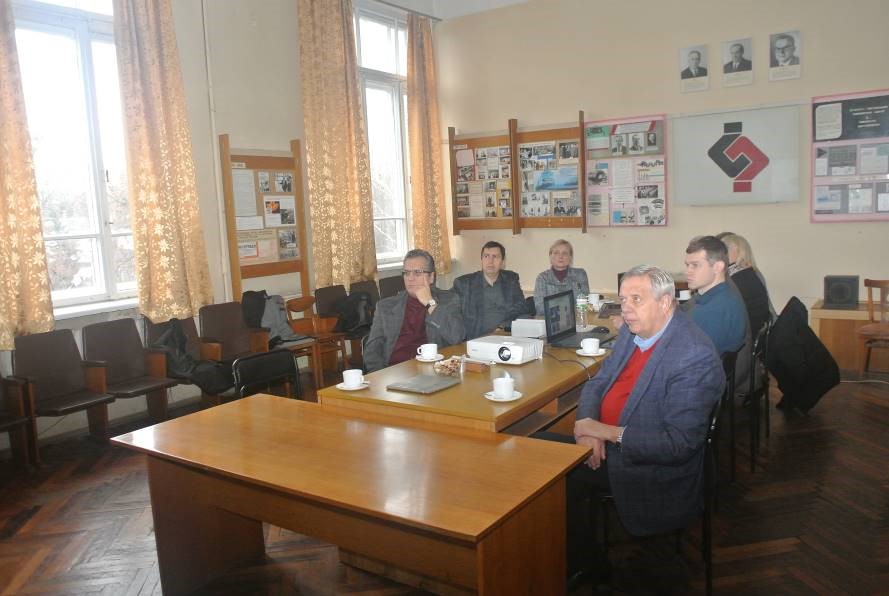
The director of the Physical-Technical Institute of Metals and Alloys of the NAS of Ukraine, corresponding member of the NAS of Ukraine Anatolii Narivskyi, in his presentation acquainted the guests with the structure of the institution, its personnel potential, volumes and sources of funding, new results and achievements in priority scientific research, scientific and technical developments, modern experimental capabilities, outlining the problems and key directions and prospects for the development of the Institute.
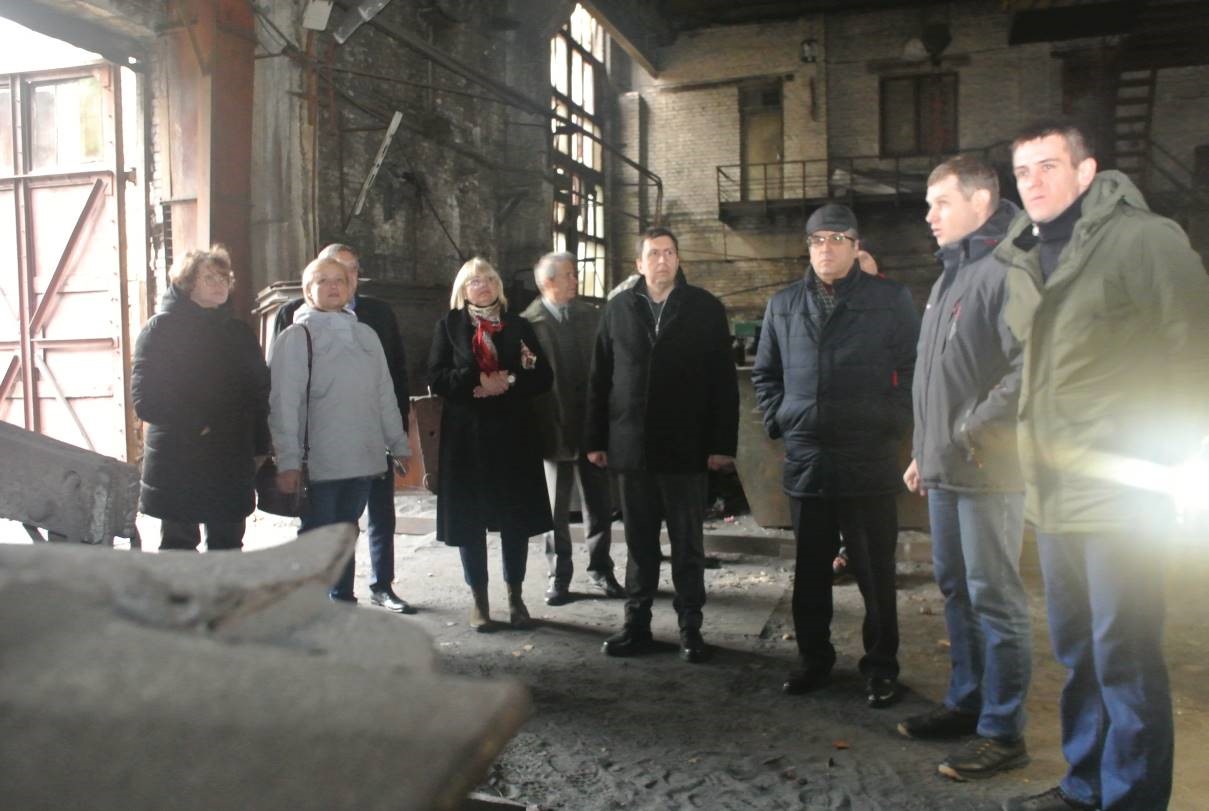
The delegation familiarized themselves with the research sites and laboratories of the Institute's units, which conduct research and develop technological processes and equipment for the production of cast products to strengthen the country's defense capability and restore metallurgy, foundry production, and the machine-building complex of Ukraine.
The deputy director for scientific work of the Institute, Candidate of Technical Sciences Pavlo Kalyuzhnyi, introduced the delegation to the work of the Institute's foundry site, whose task is to produce experimental batches of castings for machine building and various industries. The workshop and equipment for implementing the technological process of obtaining castings from iron-carbon alloys using gasifiable models were presented.
The Department of Melting and Refining Processes presented the latest equipment based on a vacuum MHD equipment complex and continuous casting of ingots for implementing the technology of obtaining hollow castings by centrifugal casting from new alloys of the Al-Mg system.
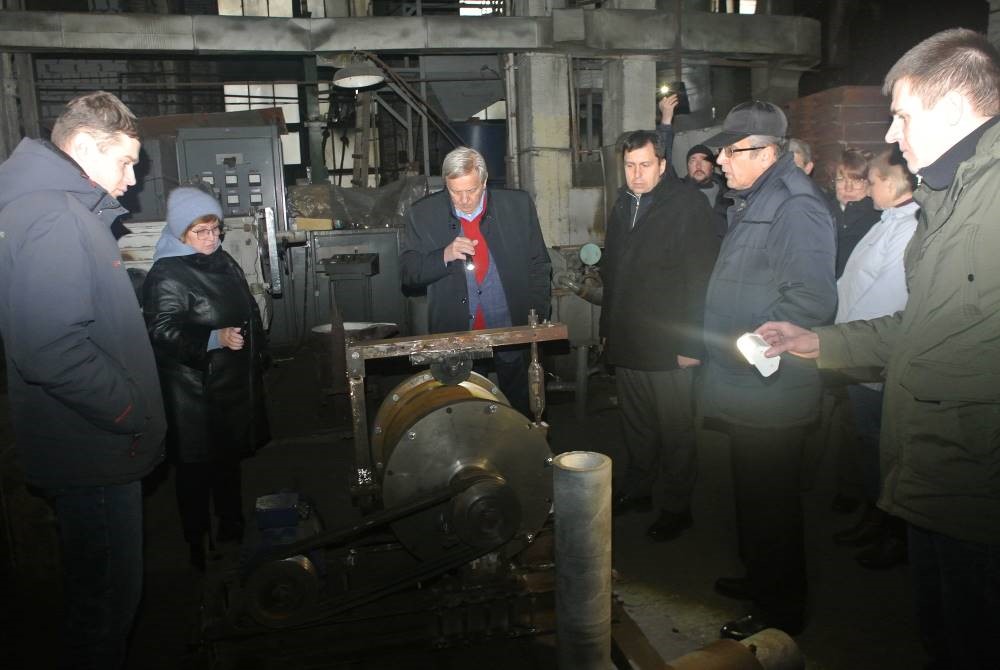
The delegation was also introduced to the experimental site of electron beam melting, whose equipment allows, using technologies developed at the Institute, to obtain castings from various metals and alloys (based on titanium, zirconium, nickel, aluminum, intermetallic systems, etc.), ligatures, and finished parts and structures for aerospace technology, energy machine building, and medical products.
The Department of Concentrated Energy Impacts, specializing in research on the formation processes of composite and bimetallic castings using new hybrid casting-laser, casting-plasma, and casting-CVS methods, presented equipment, technologies, and finished products. Among the latest are bimetallic billets based on iron-carbon and non-ferrous alloys, flat thin-walled bimetallic blanks for the production of critical parts of braking mechanisms in aircraft construction, wear-resistant bimetallic armor plates, and hammers for grinding equipment.
The Academy leadership familiarized themselves with the work of the laboratory-industrial experimental installation for semi-automatic continuous production of bimetallic (multilayer) strips from iron-carbon and non-ferrous alloys with enhanced functional properties, which can be used at enterprises of strategic industries of Ukraine.
A laboratory equipped with equipment purchased within the framework of a project under the grant of the National Research Foundation of Ukraine was shown. The complex includes an induction furnace and tools for manufacturing casting molds. The equipment allows conducting research on melting and preparing various alloys in small volumes (up to 15 kg) by working out different technological modes with subsequent scaling for industrial use of technologies.
In addition, the guests were presented with an induction heating installation with a transistor converter with a power of 15 kW and a current frequency of 19–34 kHz for preparing multicomponent alloys in vacuum or inert atmosphere. The staff of the Department of Physical Chemistry of Alloys fully designed this equipment from modern materials, blocks, and electronic devices.
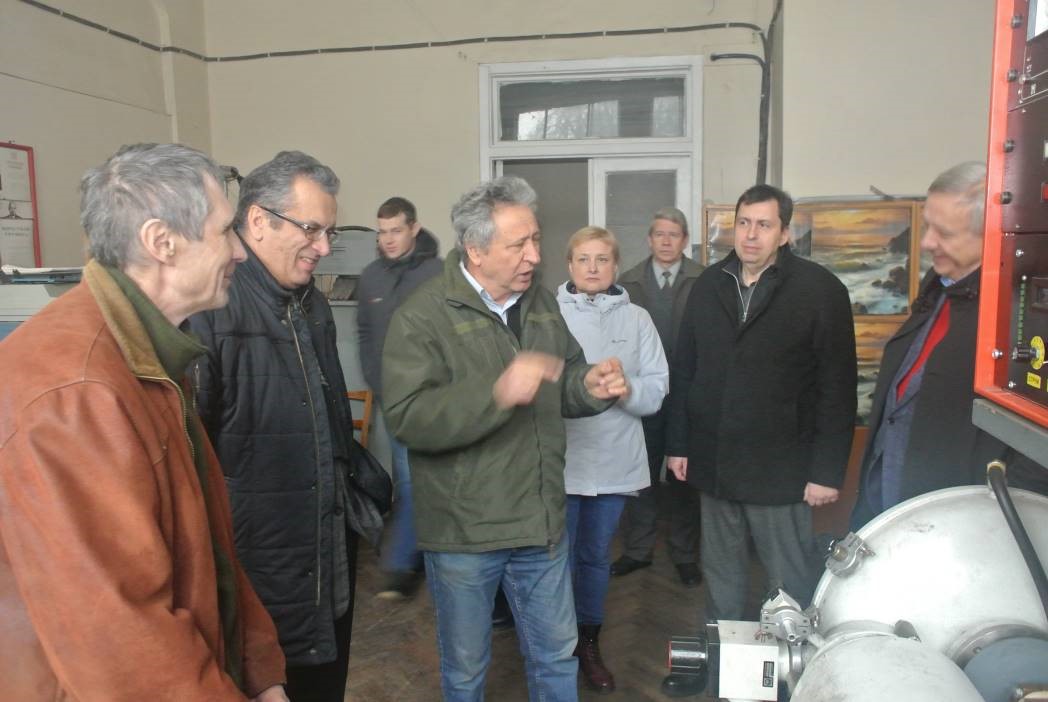
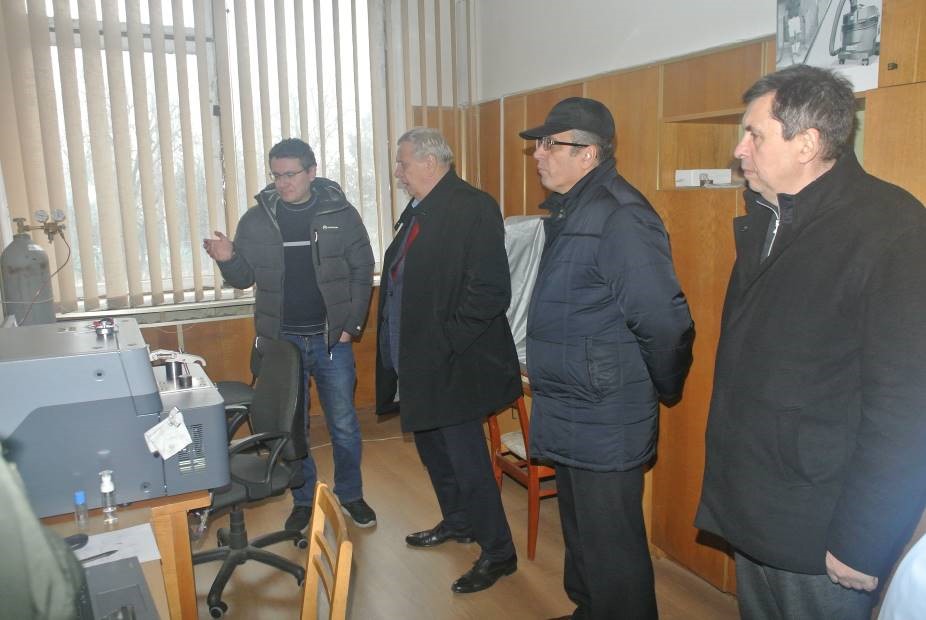
Special attention was paid to the Shared Use Center for Scientific Instruments "Center for Synchronous Thermal Analysis," which uses modern equipment for the needs of NAS of Ukraine institutions: synchronous thermal analyzer STA 449 Jupiter ("Netzsch," Germany) and stationary arc/spark optical emission spectrometric analyzer SPECTROMAXx.
Information provided by the Physical-Technical Institute of Metals and Alloys of the NAS of Ukraine