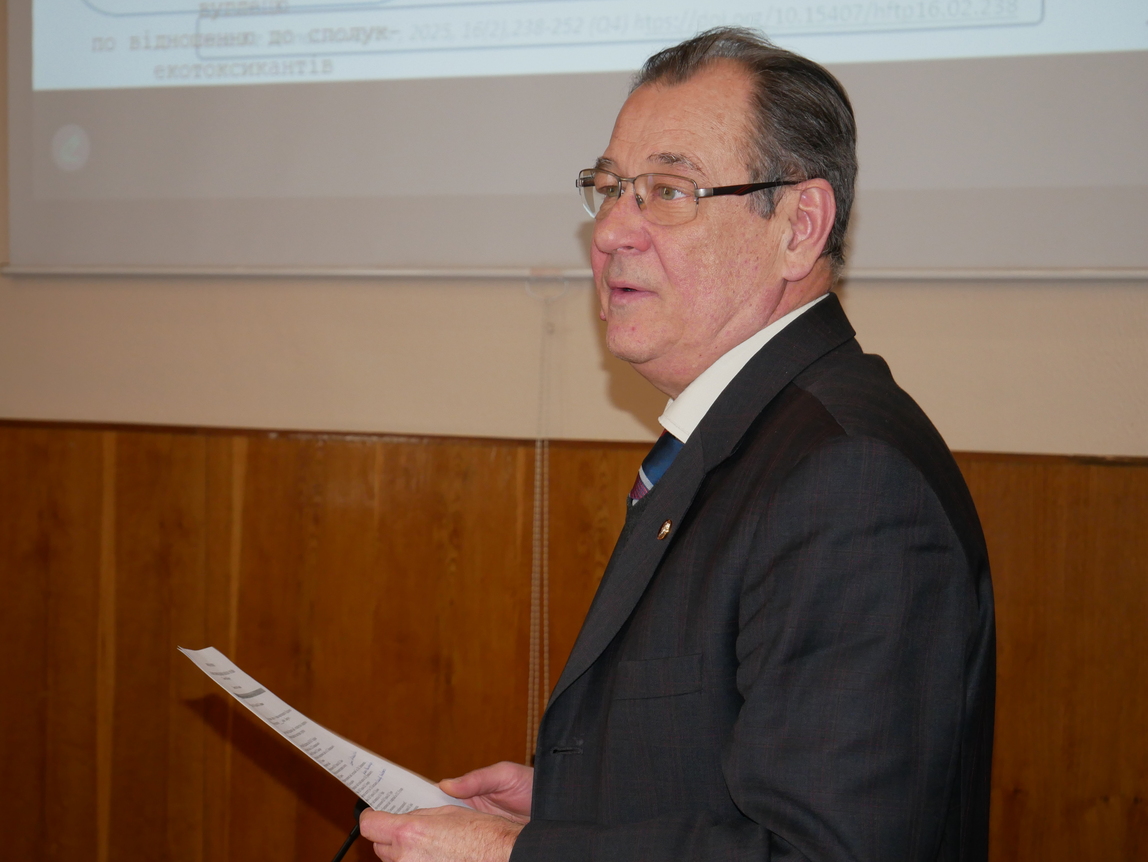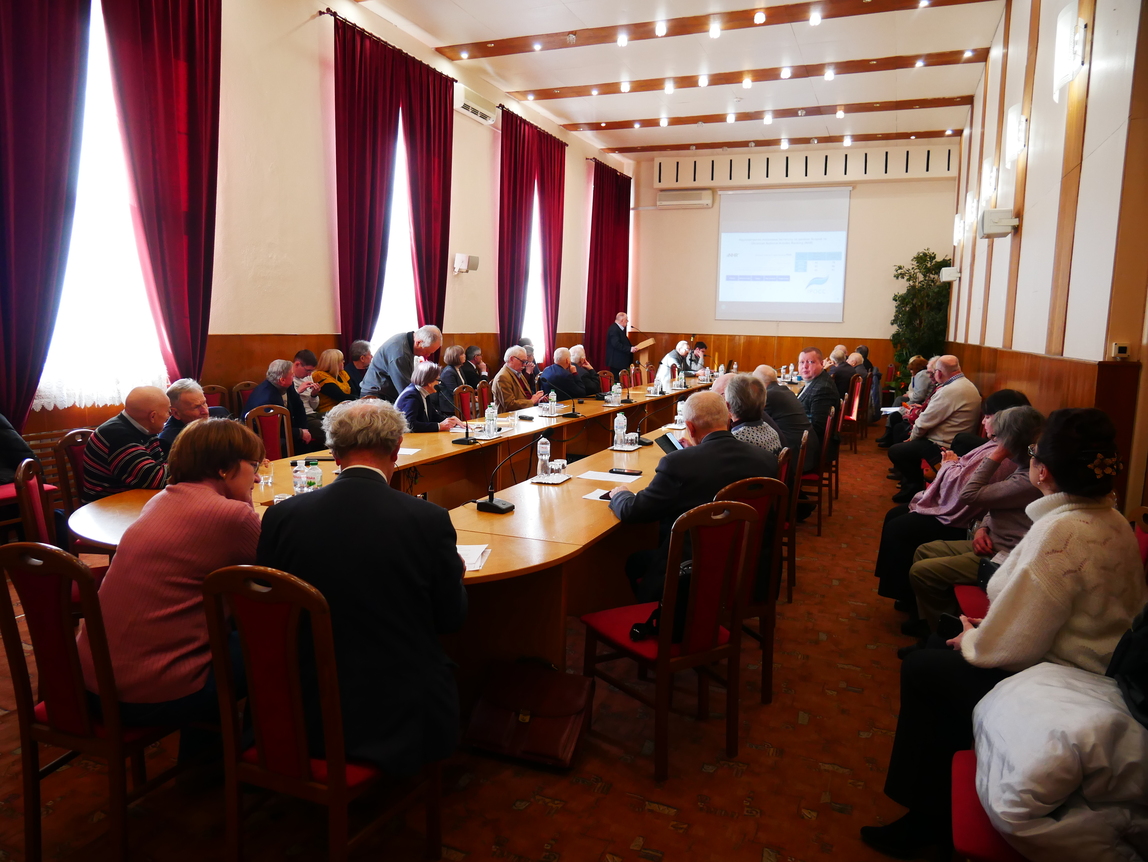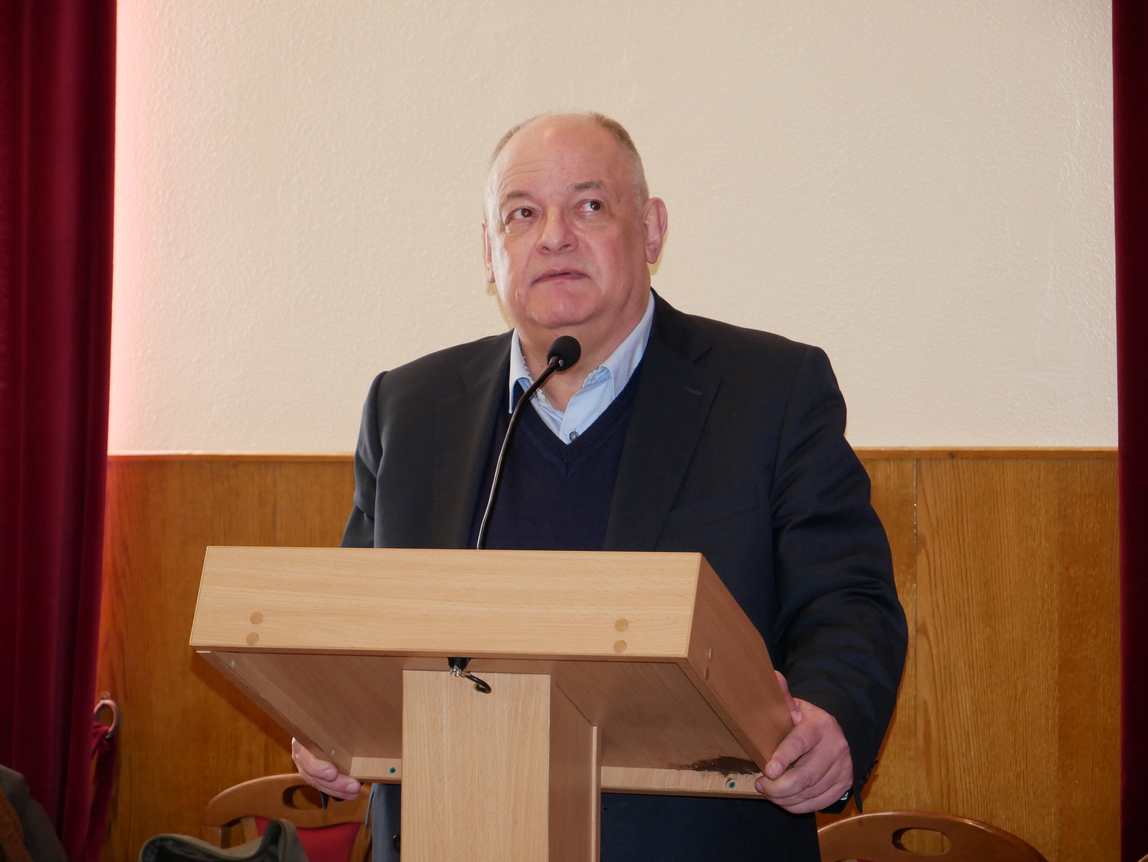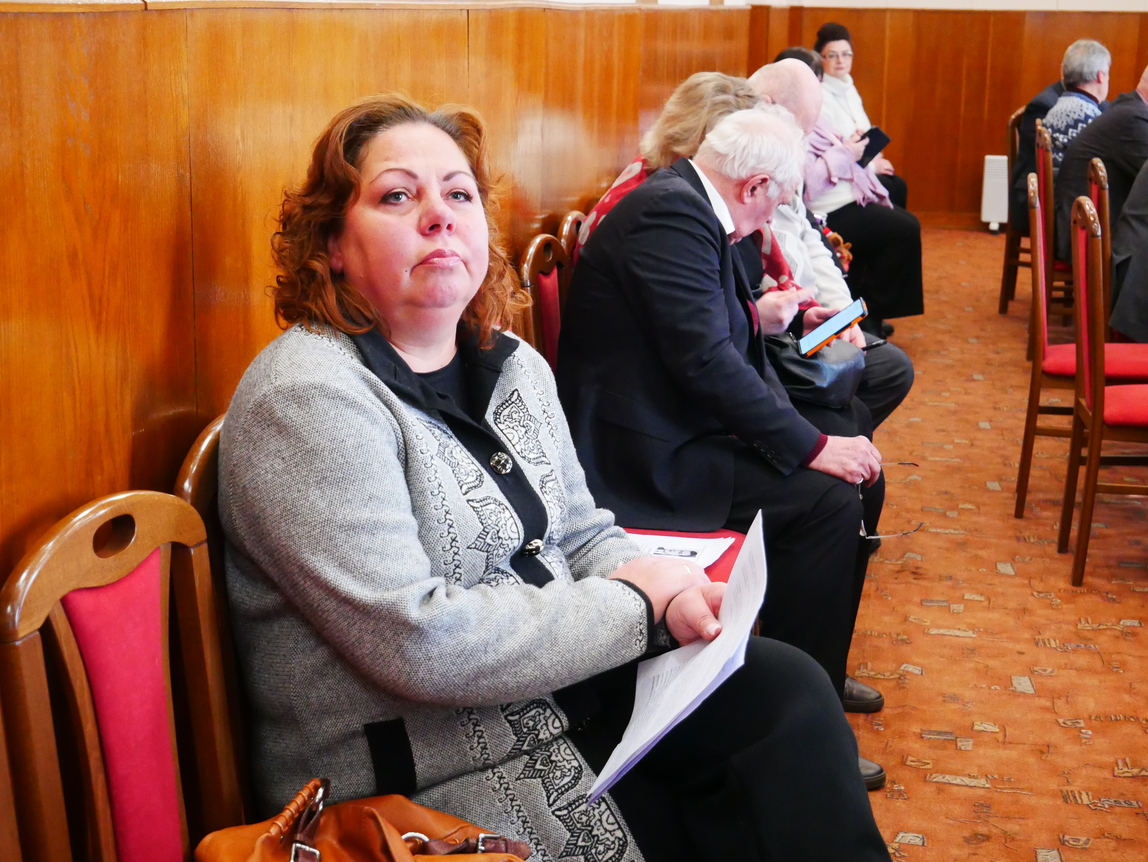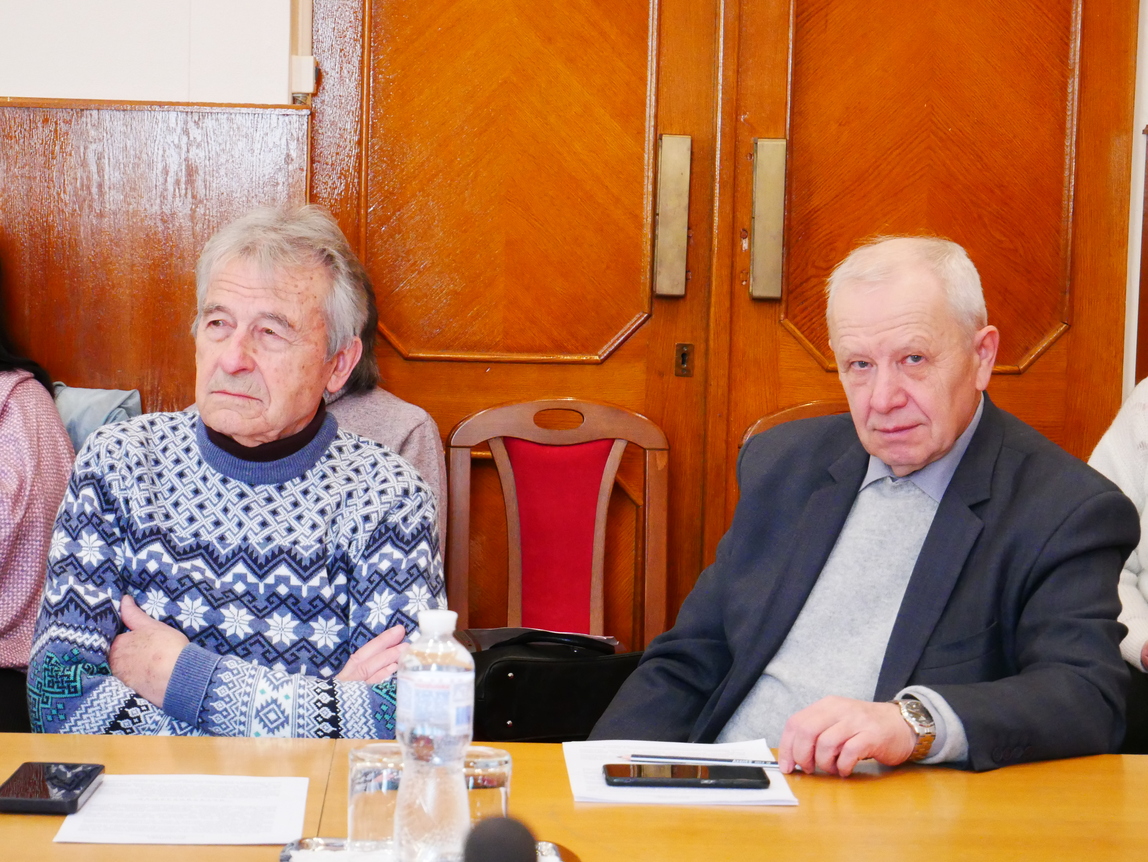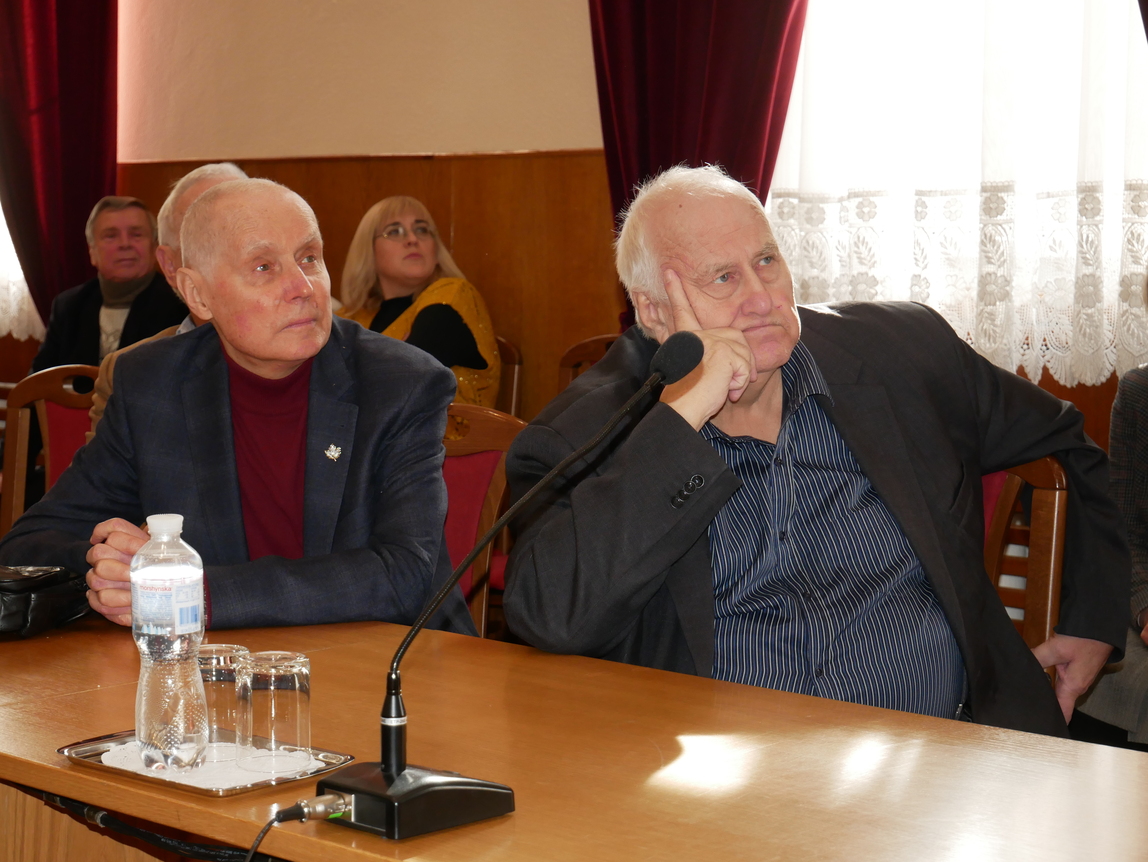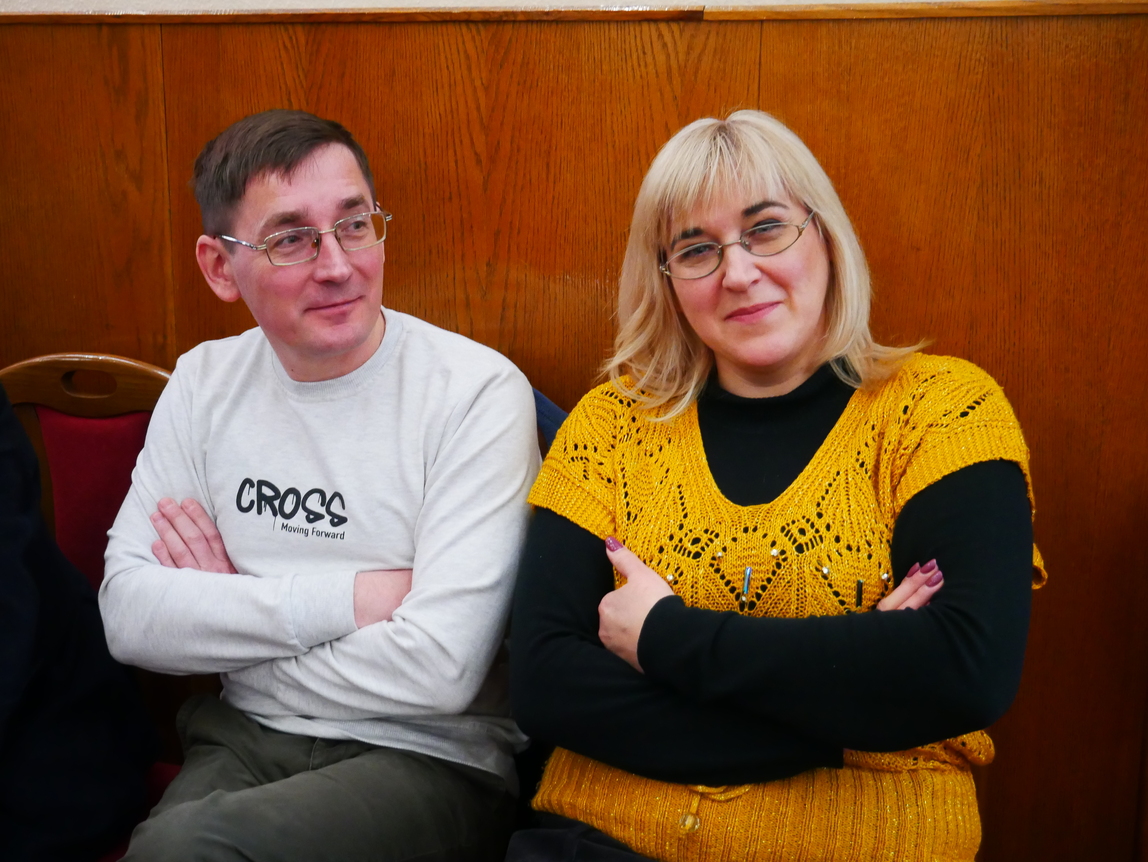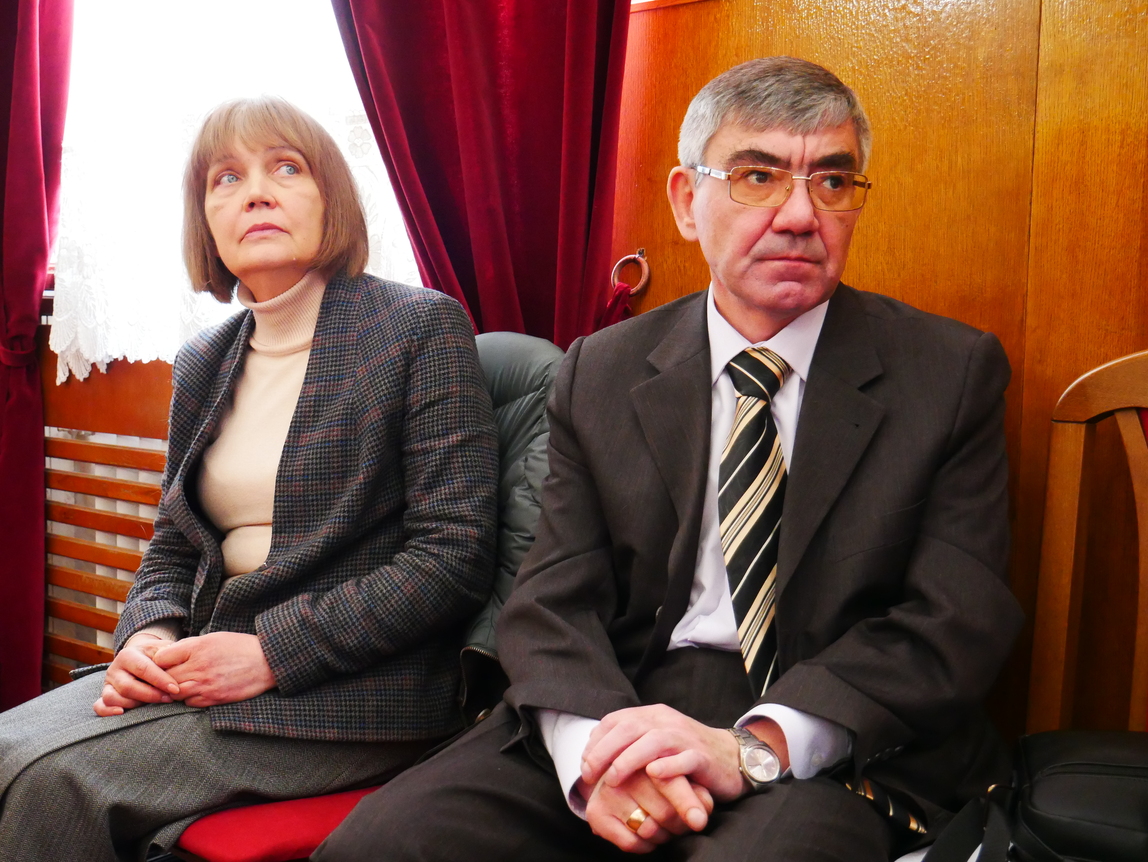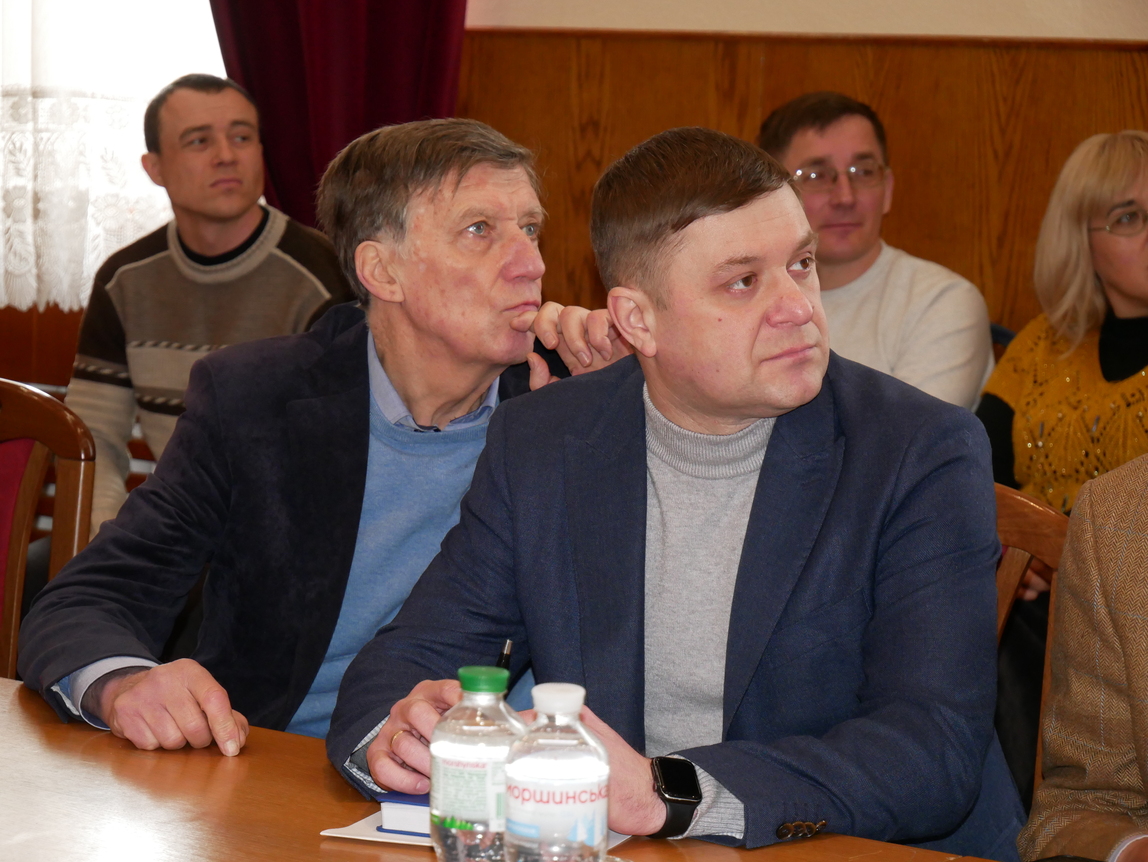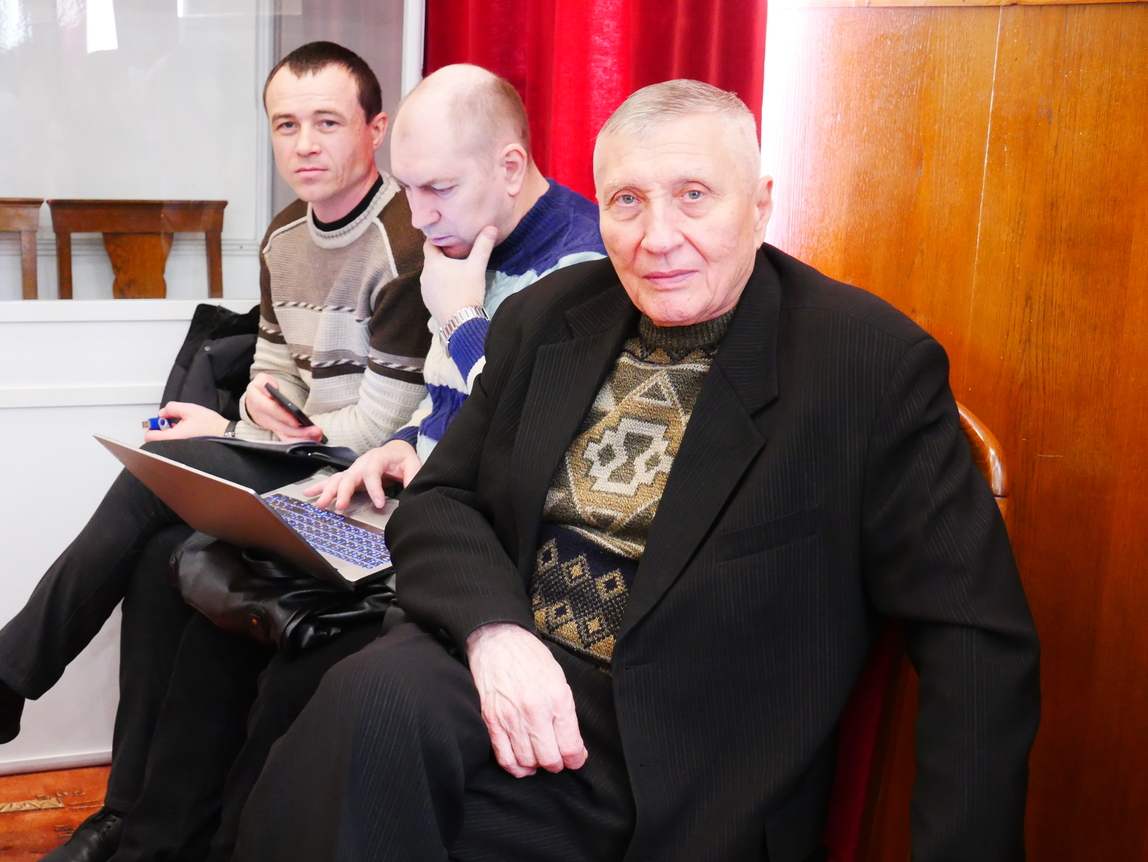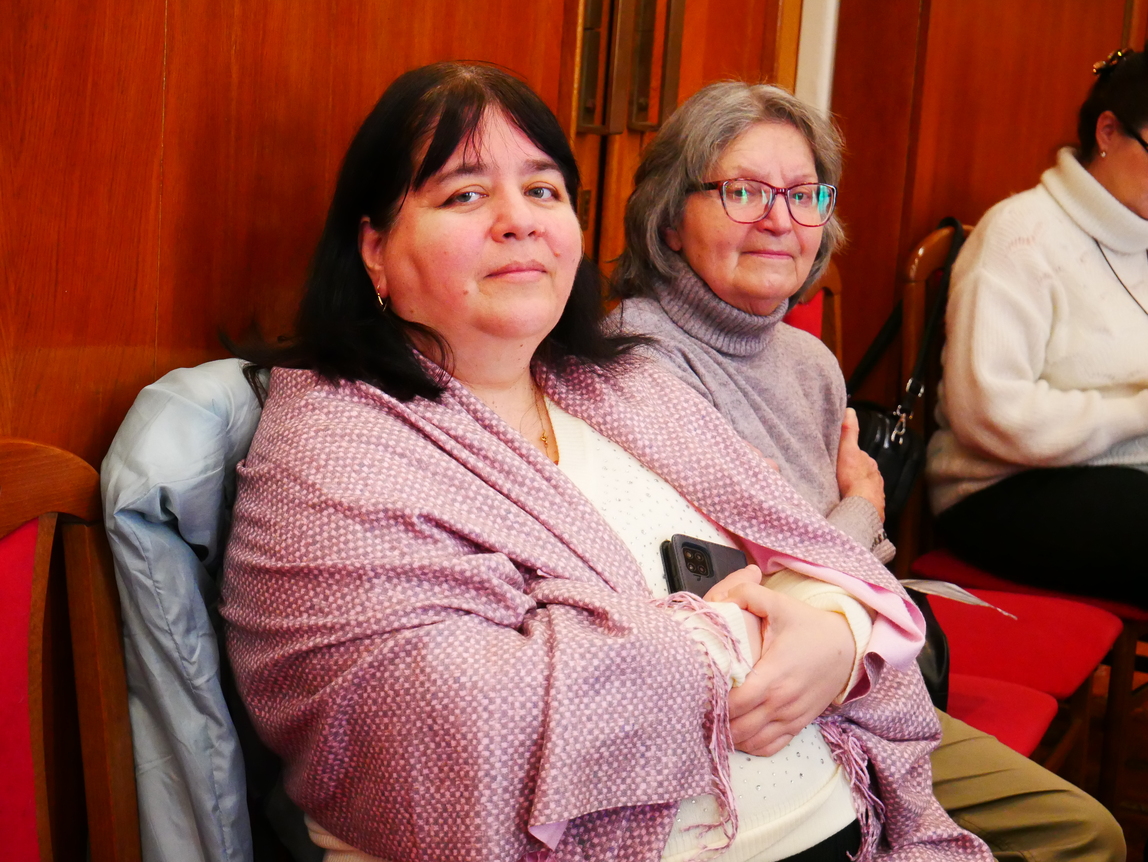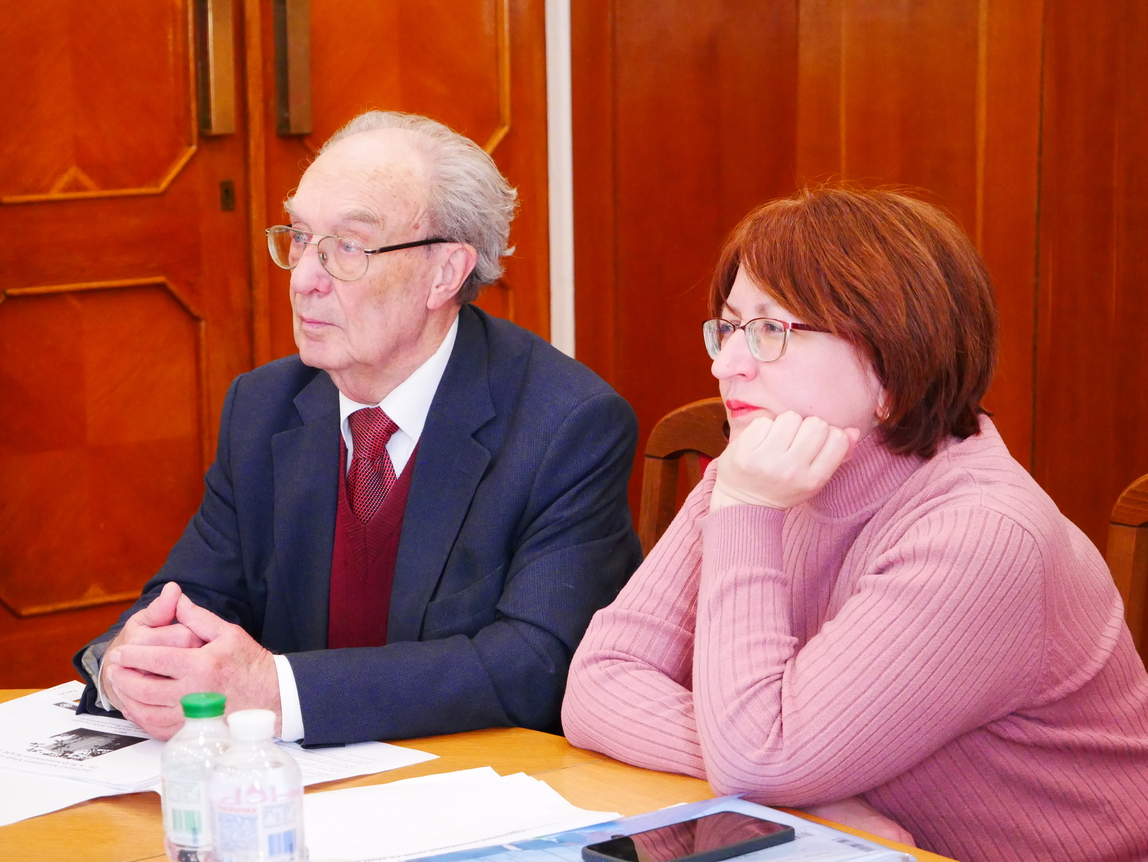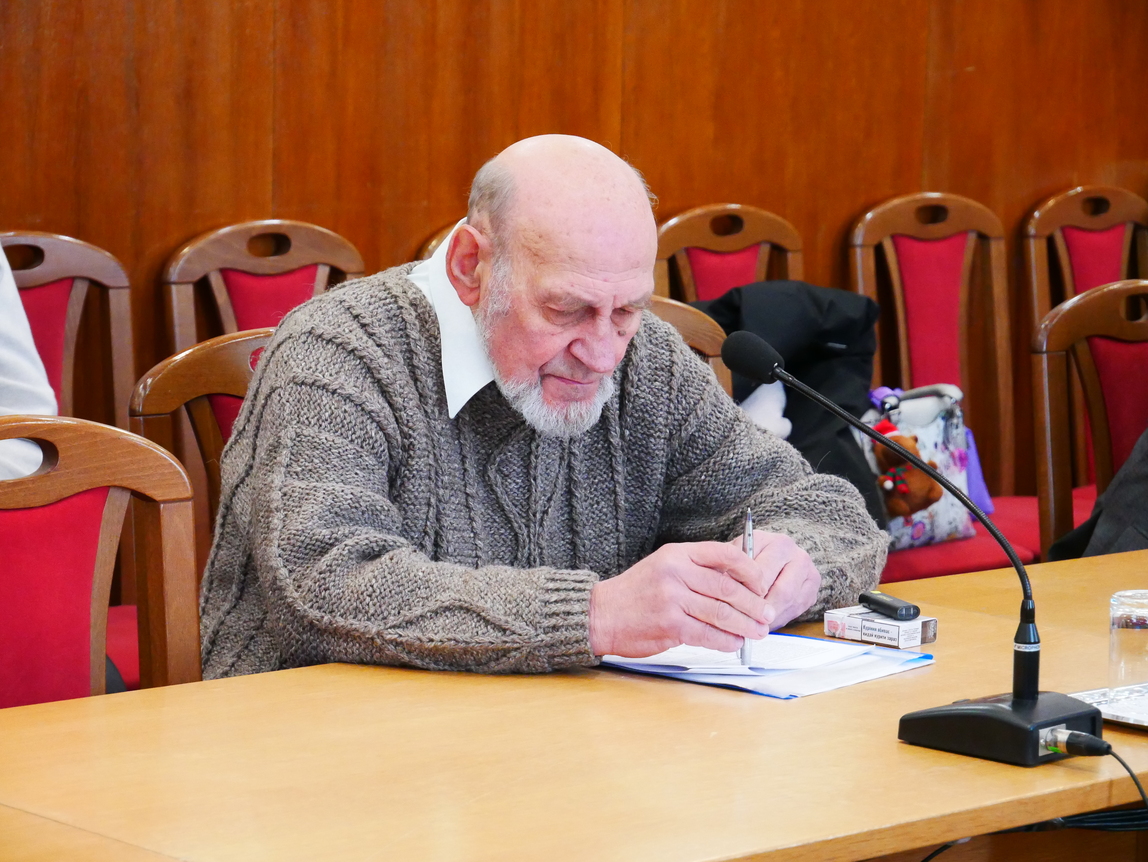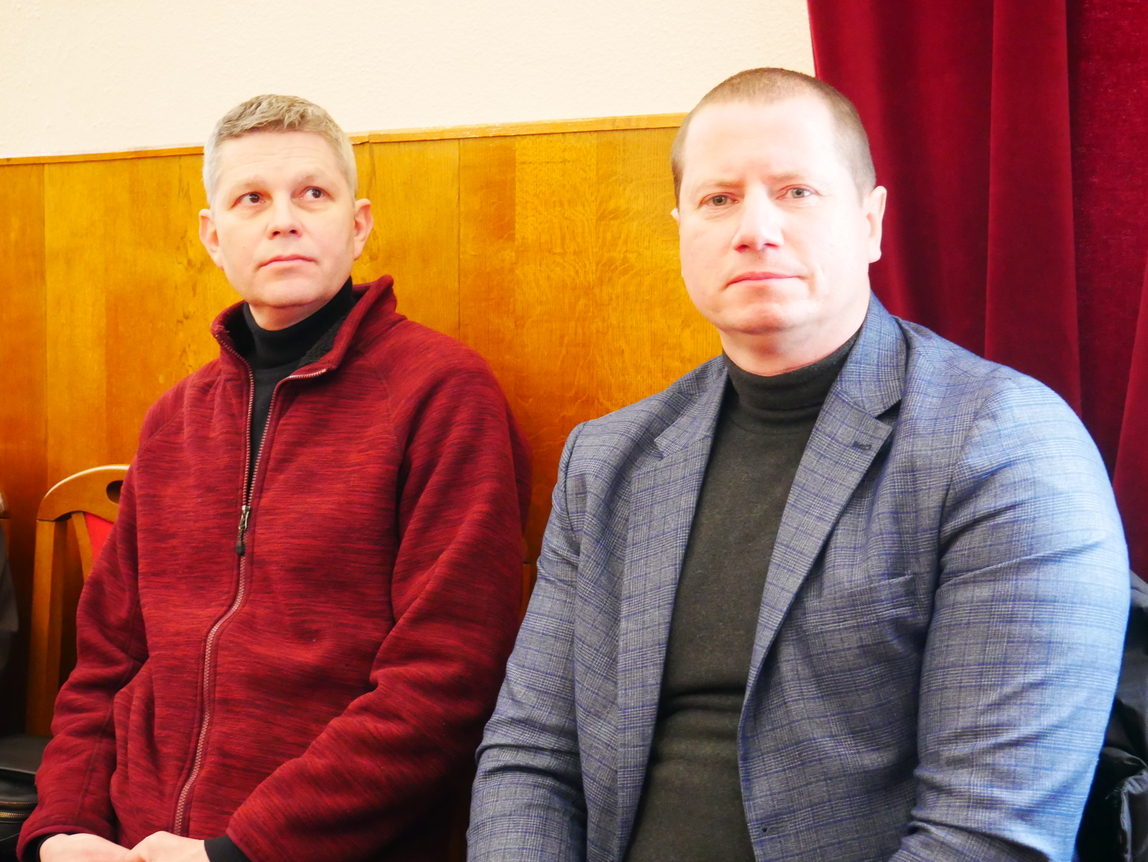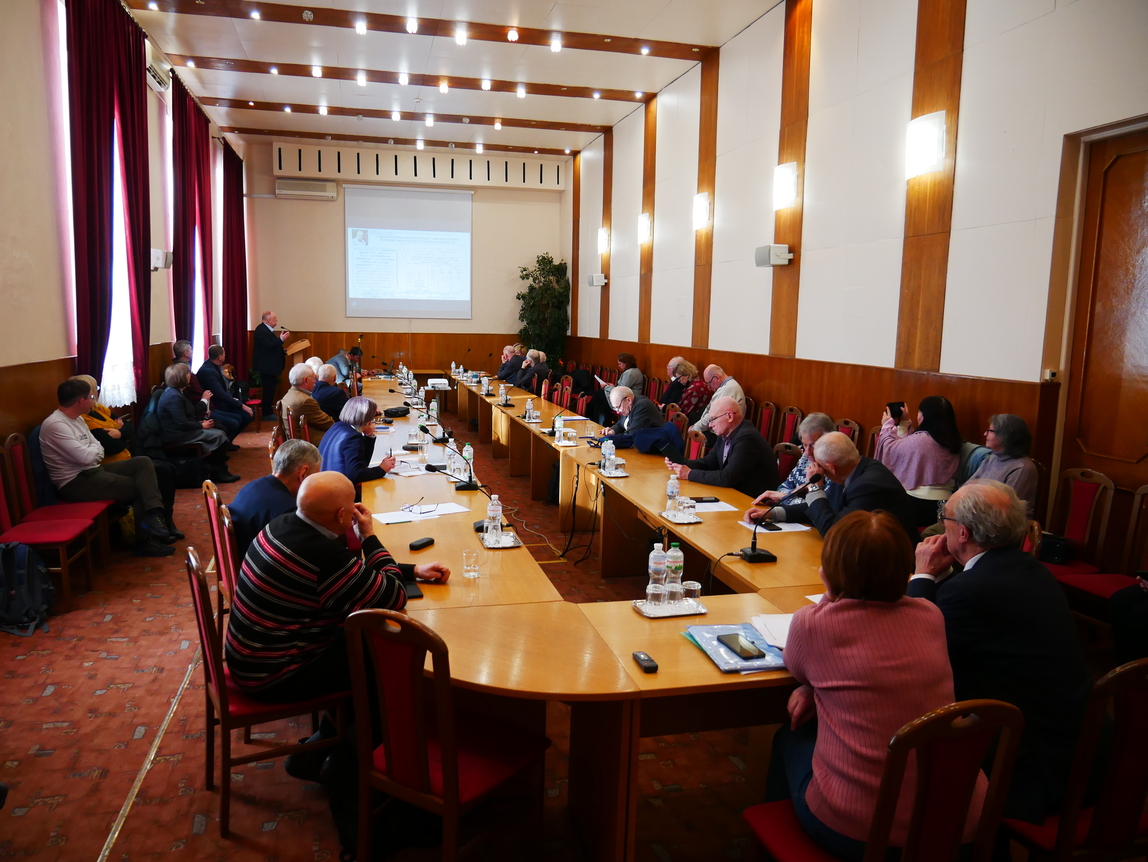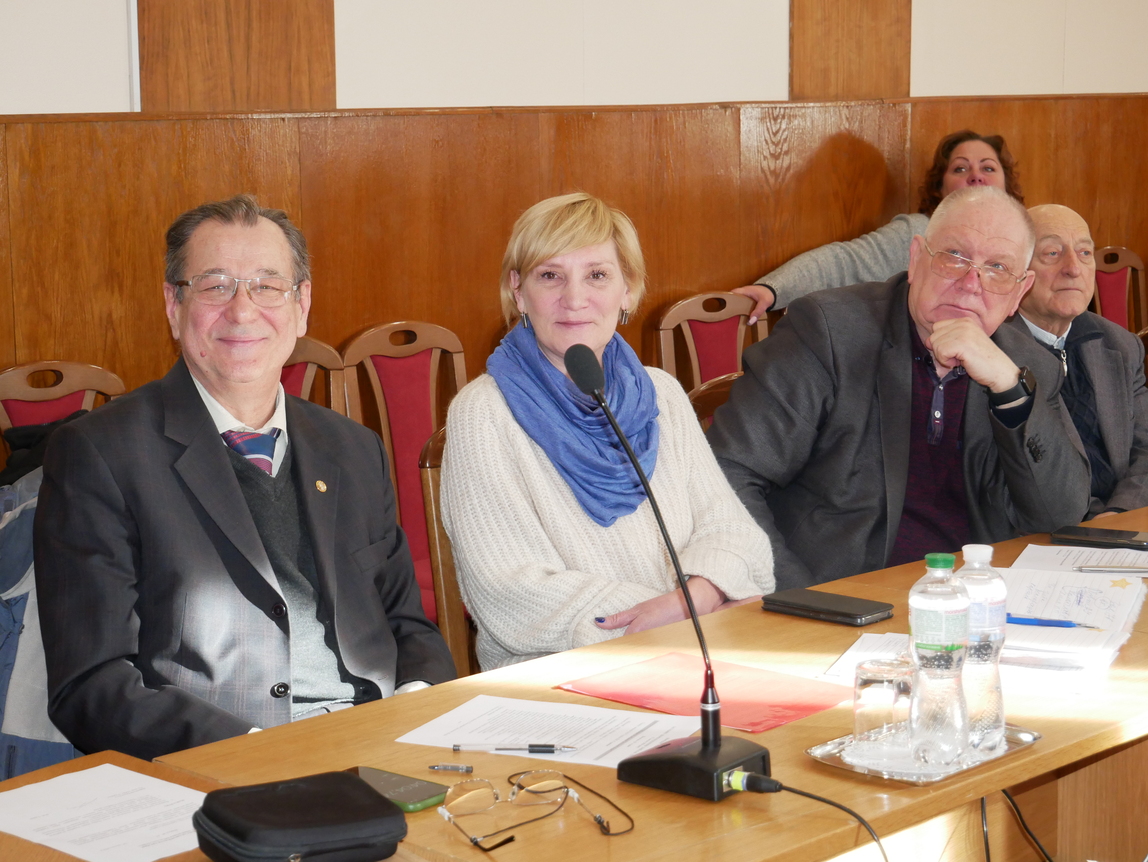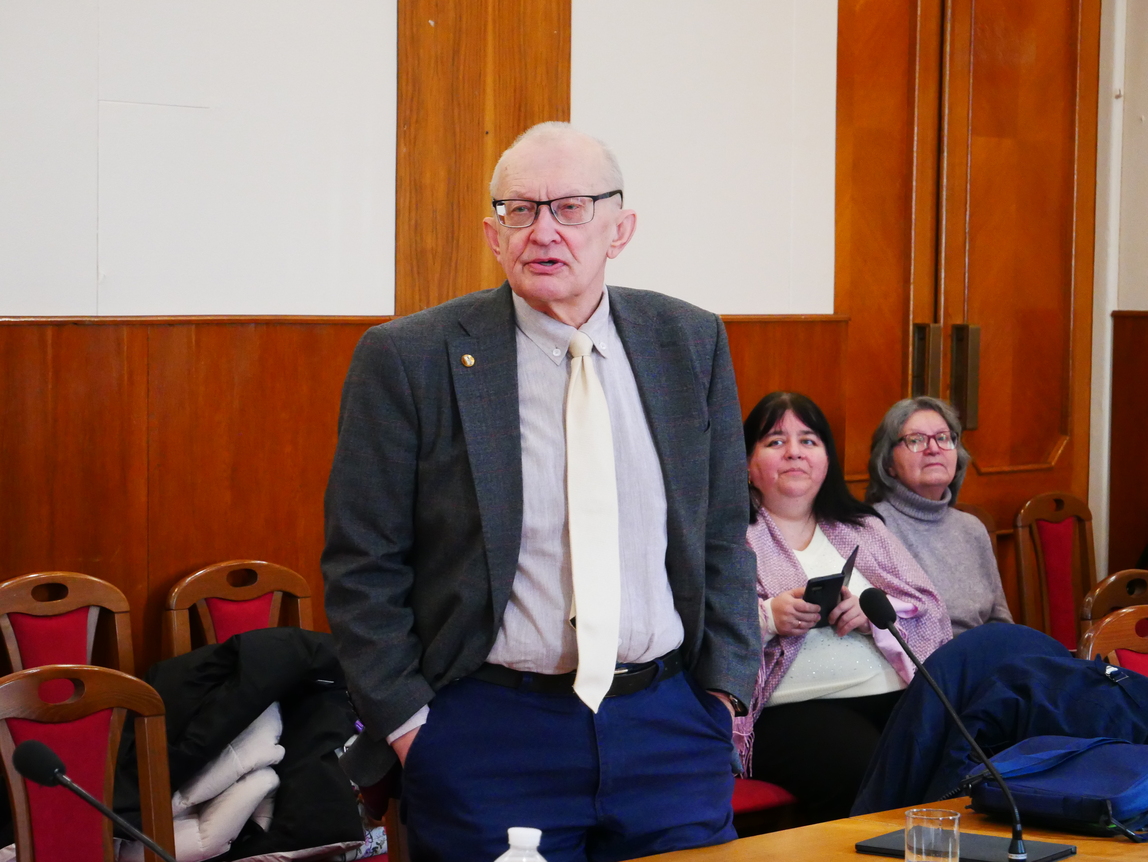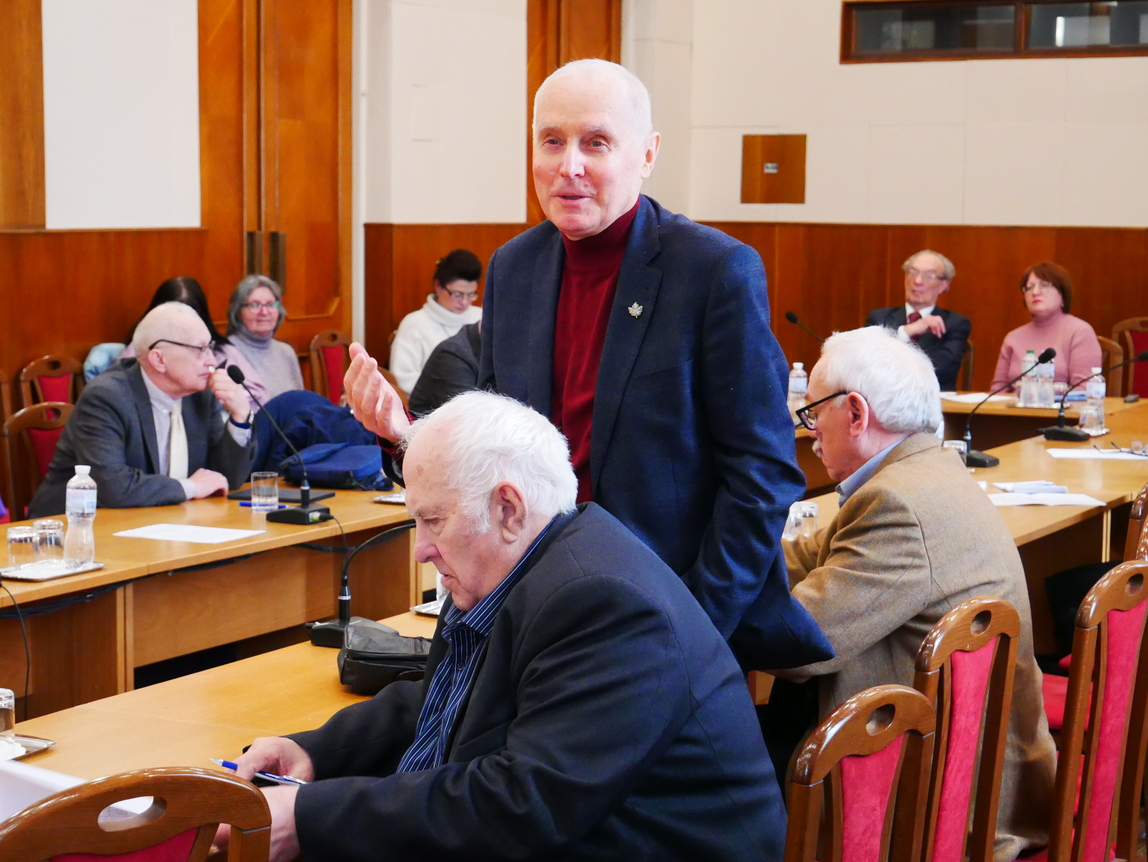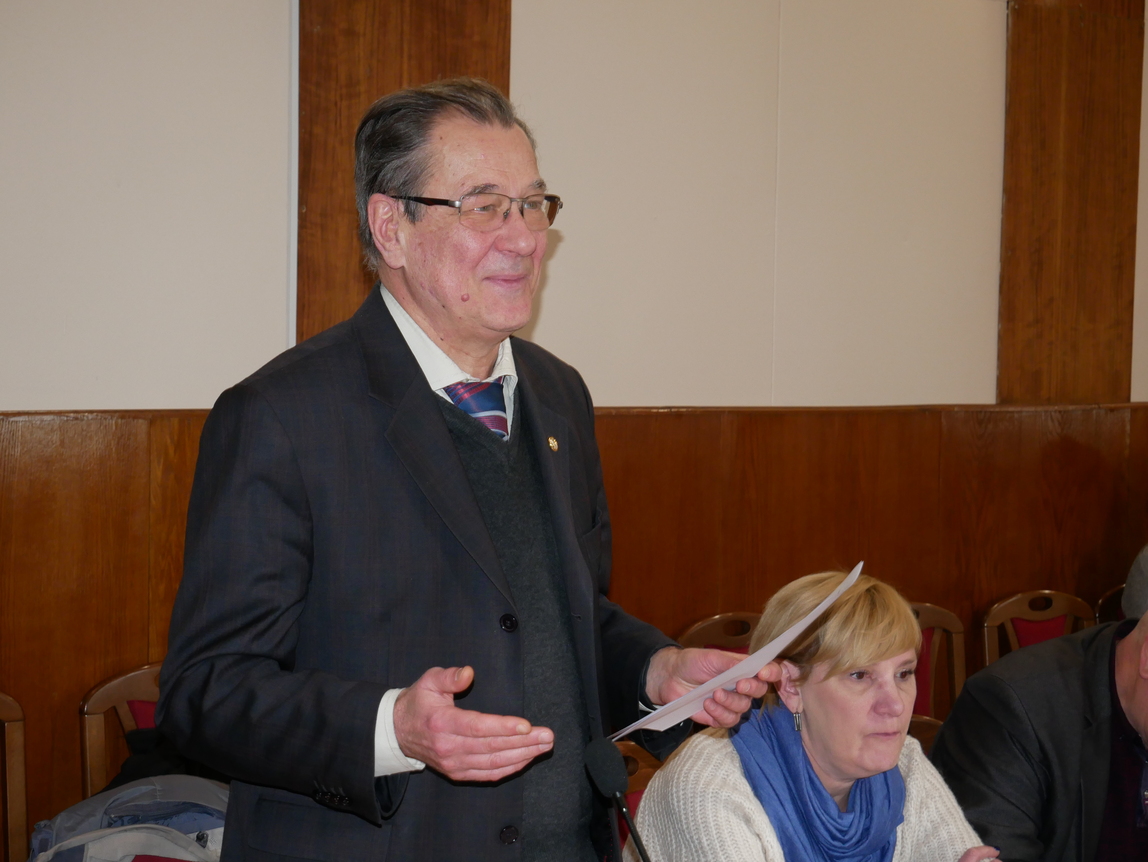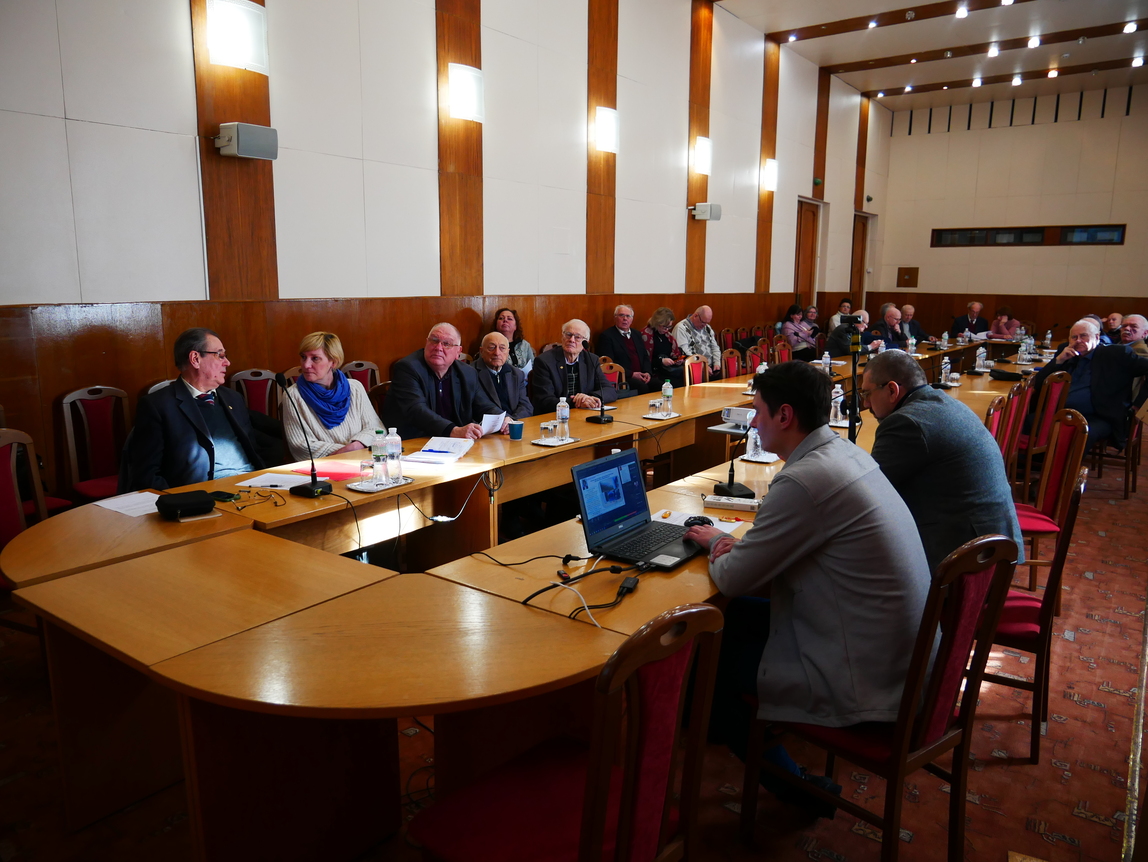
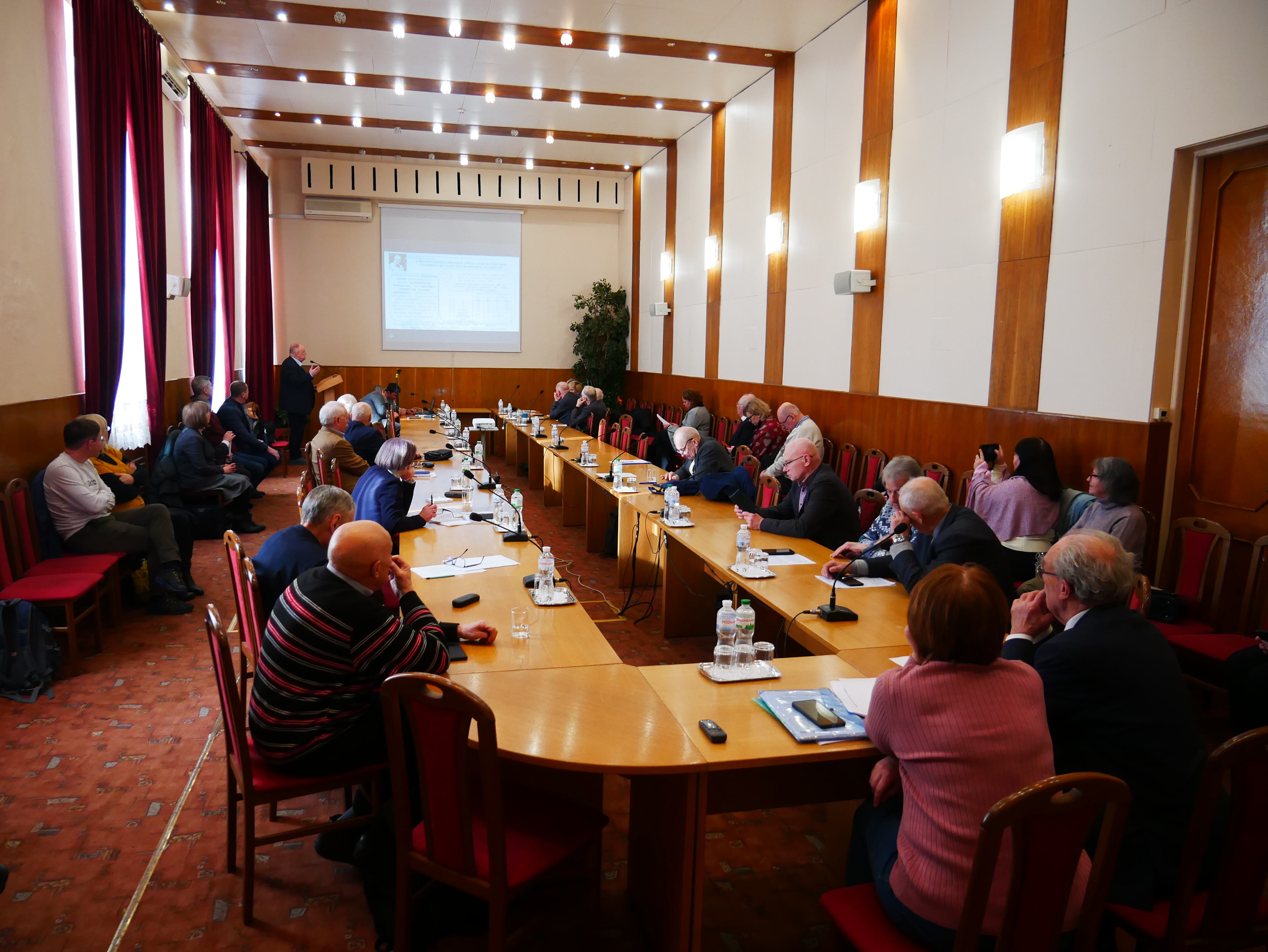
On February 17, 2026, the General Meeting of the Department of Chemistry of the NAS of Ukraine was held in the Large Conference Hall of the NAS of Ukraine, dedicated to hearing the reports of the directors of the Department's institutions on the results of scientific and scientific-organizational activities in 2025. Members of the Department of Chemistry of the NAS of Ukraine and employees of the Department's scientific institutions participated in the event.
The meeting was opened by a member of the Presidium of the National Academy of Sciences of Ukraine, academician-secretary of the Department of Chemistry of the NAS of Ukraine, academician of the NAS of Ukraine Petro Stryzhak. "Today's meeting is important for summarizing the work of our institutions, assessing the achieved results, identifying problematic issues, and forming priorities for the further development of fundamental and applied research in the field of chemical sciences,” he noted. “The analysis of the institutes' activities allows not only an objective assessment of the state of scientific research but also the identification of promising development directions, strengthening coordination between institutions, and promoting more effective use of the scientific potential of the Department."
Next, the attendees listened to and discussed the reports on the activities of the scientific institutions of the Department of Chemistry of the NAS of Ukraine in 2025. The following spoke at the meeting:
- Director of the L.V. Pisarzhevsky Institute of Physical Chemistry of the NAS of Ukraine, academician of the NAS of Ukraine Vitaliy Pavlishchuk;
- Director of the V.I. Vernadsky Institute of General and Inorganic Chemistry of the NAS of Ukraine, Doctor of Chemical Sciences Serhiy Solopan;
- Director of the Institute of Organic Chemistry of the NAS of Ukraine, Corresponding Member of the NAS of Ukraine Mykhailo Vovk;
- Director of the Institute of Chemistry of High-Molecular Compounds of the NAS of Ukraine, Doctor of Chemical Sciences Oleksandr Brovko;
- Director of the L.M. Lytvynenko Institute of Physico-Organic Chemistry and Coal Chemistry of the NAS of Ukraine, Doctor of Technical Sciences Volodymyr Bessarabov;
- Director of the A.V. Dumansky Institute of Colloid Chemistry and Water Chemistry of the NAS of Ukraine, academician of the NAS of Ukraine Vladyslav Honcharuk;
- Director of the O.V. Bogatsky Physical-Chemical Institute of the NAS of Ukraine, academician of the NAS of Ukraine Victor Kuzmin;
- Director of the O.O. Chuiko Institute of Surface Chemistry of the NAS of Ukraine, Corresponding Member of the NAS of Ukraine Volodymyr Turov;
- Deputy Director for Scientific Work of the V.P. Kukhar Institute of Bioorganic Chemistry and Petrochemistry of the NAS of Ukraine, Candidate of Chemical Sciences Serhiy Popilnichenko;
- Director of the Institute of Sorption and Endoecology Problems of the NAS of Ukraine, Corresponding Member of the NAS of Ukraine Volodymyr Brey;
- Director of the F.D. Ovcharenko Institute of Biocolloid Chemistry of the NAS of Ukraine, Doctor of Technical Sciences Vitaliy Prokopenko;
- Director of the Department of Physico-Chemistry of Combustible Minerals of the L.M. Lytvynenko Institute of Physico-Organic Chemistry and Coal Chemistry of the NAS of Ukraine, Doctor of Chemical Sciences Andriy Kitsya.
In their speeches, the speakers focused on the key results of scientific activities, the most important achievements, implementation of developments, international cooperation, work with young scientists, as well as problematic issues and prospects for the development of the institutions.
Based on the meeting results, a resolution was approved, which defined the following priorities:
- focus on fundamental and applied research on the most urgent problems of chemical science, paying special attention to current tasks (including strengthening defense capability and restoring Ukraine's economy);
- expanding participation in the implementation of academic scientific and scientific-technical programs, comprehensive scientific-technical projects, international projects, and grants;
- broader use of NAS of Ukraine collective use centers and institute equipment for fundamental research and applied developments;
- continuing coordination of scientific research within the Department to increase their effectiveness and practical orientation;
- improving postgraduate and doctoral studies in the Department's institutions;
- activating work with young scientists and creating a personnel reserve;
- strengthening attention to interaction with government authorities and media to popularize the best scientific achievements of the Department's institutions.
The meeting was summarized by the academician-secretary of the Department of Chemistry of the NAS of Ukraine, academician of the NAS of Ukraine Petro Stryzhak. "The presented materials confirm that, despite difficult conditions, the Department's institutions continue to ensure a high level of fundamental and applied research, maintain scientific schools, actively develop international cooperation, train scientific personnel, and implement research results into practice,” he noted. “At the same time, during the discussion, a number of problematic issues were outlined that require further attention, including updating the material and technical base, attracting young specialists, expanding interaction with industry, and increasing the efficiency of implementing scientific developments. Solving these tasks is a necessary condition for the further development of the Department's institutions and maintaining the competitiveness of Ukrainian chemical science in the global scientific space."
Academician of the NAS of Ukraine Petro Stryzhak reminded that the Department's institutes, like all scientific institutions of the Academy, operate in an extremely difficult time for our country. "The full-scale war creates serious challenges for the functioning of scientific institutions. Many teams work under constant threat of shelling, infrastructure damage, power supply interruptions, lack of heating, and other difficulties. Despite this, scientists demonstrate high professionalism, responsibility, and dedication to their work, continuing to conduct research and preserve the country's scientific potential," he emphasized and finally expressed sincere gratitude to the directors, scientific teams, and all employees of the Department's institutions for their devoted work, resilience, and contribution to the development of Ukrainian science.
According to the Department of Chemistry of the NAS of Ukraine
Photo: NAS of Ukraine press service