


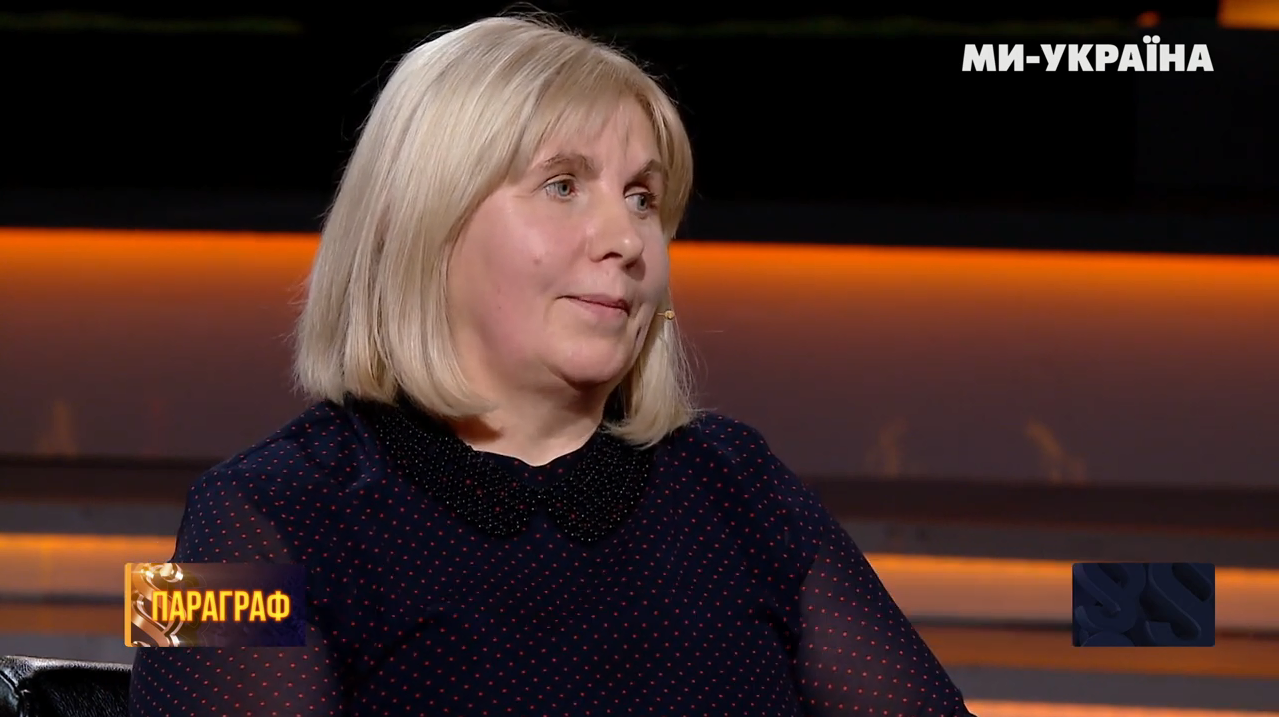
 Chief Researcher of the Department of Economic History at the Institute of Economics and Forecasting of the NAS of Ukraine, Doctor of Economics, Professor Nataliya Suprun in the popular science historical talk show "Paragraph" on the TV channel "We – Ukraine" spoke about the role of Ukrainian entrepreneurs in building a modern sugar industry in Ukraine in the second half of the 19th century, which was based on the introduction of the latest forms of organization and production technologies, the formation of an effective labor market, a focus on high product quality, and integration into European markets. According to the researcher, the uniqueness of the mission of Ukrainian industrialists – Tereshchenkos, Yakhnenkos, Symyrenkos, Kharitonenkos, and others – lay in the fact that their entrepreneurial activity was based on principles of social responsibility towards their own workers and the community: providing decent working conditions and pay, supporting social and cultural development of the community (construction of educational institutions, healthcare, cultural centers). The successful entrepreneurial activity and charitable initiatives of Ukrainian industrialists caused rapid development of the national economy and market, while also laying the economic foundation for building a modern Ukrainian society, whose norms became aspirations for freedom and independence, respect for labor, human rights, and a high quality of life.
"For Ukrainian entrepreneurs in the Russian Empire, the market of strategically important industries, highly profitable and attractive for business (coal industry, metallurgy, engineering, railway construction), was essentially closed," explains the scientist. "In the 19th century, the Russian Empire very actively developed entrepreneurial resources, investing huge funds to encourage entrepreneurs, but mostly potential Russian entrepreneurs. Besides state (government, budget-funded) orders – a typical tool of business encouragement at that time – they reduced taxes, established preferential or reduced interest rates on loans. Moreover, for Russian entrepreneurs – with their great-power chauvinism – it was very difficult to transition to a market way of life and force themselves to pay former serfs. Therefore, the state stimulated them by all possible means, primarily economic. The barriers to market entry for Ukrainians and other 'aliens' were quite high and strict. Therefore, Ukrainian entrepreneurs had to look for non-standard solutions.
Sugar production was a new industry of the 19th century. And it was precisely in the 19th century that this industry transformed from a manufactory to a machine-based one. That is, the industrial revolution gave a start or rather a restart to the development of the sugar industry: thanks to mechanization, labor productivity, processing speed, and production volumes immediately increased. That is why the 19th century is called the century of the sugar industry in Ukraine.
The first large Ukrainian sugar producer was probably the "Brothers Yakhnenko and Symyrenko" company [an agro-industrial company that initially specialized in grain and livestock, and from the mid-19th century began developing the sugar industry in Cherkasy region], which actually emerged based on an already existing industry. At the same time, the sugar dynasty of the Tereshchenkos was developing [they earned their initial capital in the Chumak trade, transporting grain to Crimea, and from Crimea to Sumy region – salt and fish; they started the sugar business in the mid-1850s], who were called the kings of sugar production in the Russian Empire. They introduced a new organizational form for that time, a joint-stock company, which allowed them to purchase new Western technologies to optimize production.
The future giants of the Ukrainian sugar industry of the 19th century very enterprisingly used their starting capital. It might have been easier for them to sell grain, flax, or even sugar beet. But they applied what today is called increasing the value-added chain, that is, they began processing raw materials, focusing on the quality of the finished product. And by producing a quality product, they quickly became competitive in European markets. For example, Tereshchenko products first spread throughout the Russian Empire, then entered the European market and even Eastern markets (China, Afghanistan). The tremendous profitability of this business, to be honest, was ensured by cheap raw materials, cheap labor, and cheaper business organization opportunities than elsewhere. Large profits were also due to the large scale of production. That is the first point. The second is the high demand for this product in European and other Western markets. European consumers already highly valued efficient production organization (in modern business, this is called organizational management). For example, for the Tereshchenkos, cleanliness at the enterprise, optimally organized technological processes, and convenient location of all production facilities and objects were important. In addition, most people whom we now call Ukrainian entrepreneurs and philanthropists of that time tended towards personal responsibility (in today's terms – extended producer responsibility), and were interested in all technological nuances of production. For instance, Nikola (Mykola) Tereshchenko specifically woke up at four in the morning to have time to talk with the masters and workers of the enterprise before the start of the working day, to find out if everything was working correctly, and if there were any requests or needs from the workers of his factories. This personal responsibility allowed, so to speak, to keep a finger on the pulse – to see how everything works, what does not work, and ultimately to achieve high positive results.
At their productions, Ukrainian entrepreneurs used, among other things, steam engines, which, thanks to the steam engine, accelerated the production of various products. For example, the Khanenko and Symyrenko brothers introduced the technology of pressing sugar into refined sugar, producing practically the first refined sugar in the territory of the Russian Empire. And this was a very interesting product – a novelty on the market, which quickly became popular with consumers in the Russian Empire and very popular in the West."
"Philanthropy is a very old tradition for Ukrainian society," continues Nataliya Suprun. "For example, at the expense of Ivan Mazepa, dozens of various buildings were constructed: educational, religious, and others. By the way, the Kyiv-Pechersk Lavra, in which for several centuries the name of Ivan Mazepa was cursed, is surrounded by a wall built at the expense of the hetman (there is even his coat of arms on that wall). The motto on the Tereshchenko family coat of arms is 'Aspiration for social usefulness.' That is, charity was an internal need of their family, a mission. The already mentioned Artemiy Tereshchenko bequeathed to his descendants to give 80% of profits to charity. And this figure was even officially fixed in the statute of the Tereshchenko brothers' company."
"It is known that Nikola Tereshchenko was very frugal and strict with spendthrifts. One of his sons once proposed to a girl who did not consent to marriage but promised to consider the proposal when the ground outside her windows was covered with white snow. Then the lover took sugar from the family factory and covered the future bride's yard with it. After that, the father removed him from business management and forbade him forever from appearing at any of his enterprises. Another interesting story from the memories of this family: having already agreed on a rather good specialist for the position of manager of one of the enterprises, Nikola Tereshchenko asked him to light a cigar, and when the man lit it from a match instead of a candle burning on the table, he ultimately refused to hire him. That was the internal culture – a culture of charity and at the same time frugal attitude towards land, resources, and people.
...I absolutely disagree with the statement that the Tereshchenkos did nothing for Ukraine specifically as Ukrainians. Even their family coat of arms is made in blue and yellow colors, which is absolutely atypical for the heraldry of that time. And that was a message, as they say today. They could afford it. Perhaps the Tereshchenkos did not position themselves as active Ukrainian patriots, but by their deeds, they did much more than many. They did the most important thing for the Ukrainian nation and Ukrainian independence – they created the industrial foundation for the country's development, laying the modern industrial base first in the sugar industry. The Tereshchenkos practically created a sugar empire that was reckoned with both in Moscow and in the West. For example, Nikola Tereshchenko was the only Ukrainian entrepreneur who had the right to sit in the presence of the emperor. Eventually, he returned from Moscow to Ukraine and laid the industrial power here. The second point: unlike Russian philanthropists, who at that time were also actively working and developing, the Tereshchenkos and Ukrainian philanthropists mostly acted, so to speak, more strategically – they invested in the future: in education, culture, and more. Even when they simply collected paintings by Ukrainian artists, which might seem like ordinary vanity.
In my opinion, it is also very important that by emphasizing working conditions and safety, and product quality, they first formed a new type of worker, and then a new type of society. Because a poor and uneducated person who does not have decent living conditions and does not understand their origin does not aspire to freedom and independence (we see this in the example of the Russian Empire, which it remains to this day). In my view, we owe the Tereshchenkos for making a civilizational and cultural leap in a disadvantaged, underdeveloped, agrarian Ukraine (even the agrarian sector did not develop properly). Thanks to their efforts, Ukraine already then embarked on the path of European integration. They taught Ukrainians to be citizens in the European, not Russian sense – open to the world, not isolated from it. So let's forgive them both the blue carbuncle (for which Mykhailo Tereshchenko was redeemed from Cheka imprisonment by his French wife) and the yacht "Iolanda," then the largest in the world... This was a wealthy family that led a lifestyle typical for the elite of that time. Hence such status things. For example, Fedir Tereshchenko [grandson of Artemiy Tereshchenko] was engaged in aircraft construction, and on weekends guests from Kyiv flew by planes to him in Zhytomyr region and back. It seems to me this story can be viewed from different angles: on one hand, it was extravagance, and on the other – innovation, for which (and not only because of the current war) we Ukrainians are known in the world."