

Ukrainian scientists continue to keep their finger on the pulse of social processes during the war, tracking changes in mass sentiments. The results of their work can and should be taken into account when forming an adequate domestic policy. So what trends do the results of the latest sociological surveys show? Is there a great potential for resilience among Ukrainians and what indicates this? Is Ukrainian society consolidated? Whom do our compatriots trust the most? The director of the Institute of Sociology of the NAS of Ukraine, corresponding member of the NAS of Ukraine Yevhen Holovakha answered these and other questions in an interview to the portal “Telegraf”.
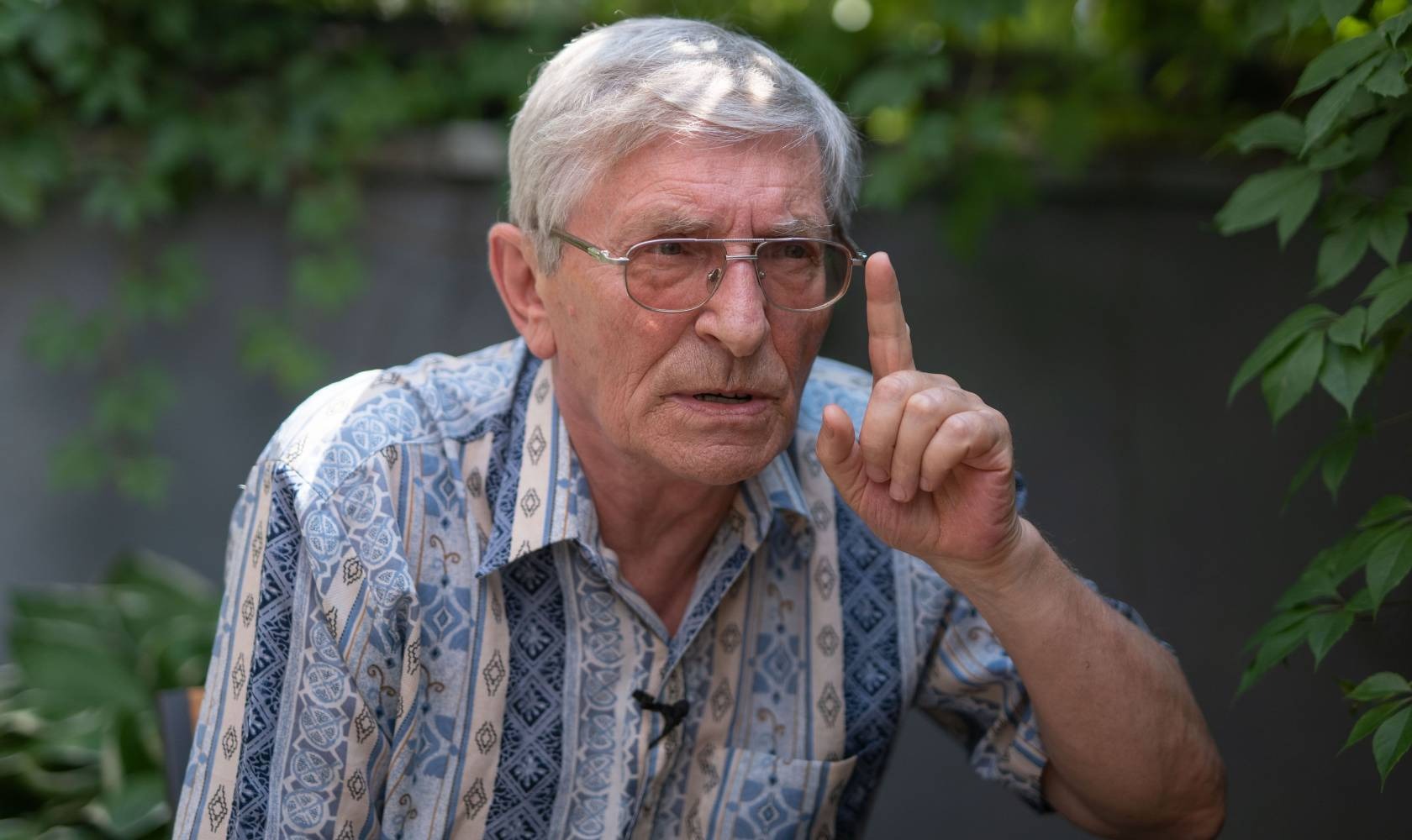
Corresponding member of the NAS of Ukraine Yevhen Holovakha
(photo: pravda.com.ua)
According to the scientist, in the third year of the war, as at the beginning of the full-scale Russian invasion, pride remains the main emotion of Ukrainians, although this indicator has changed somewhat. “Compared to 2022, when up to 80–90% felt pride in their country, and fear and sadness were about 20%, now pride is still felt by three quarters of the population, but fear and sadness have increased by 10%,” says Yevhen Holovakha. At the same time, pessimism and fear accompanying thoughts about the future are not as pronounced. Overall, Ukrainians do not lose hope and optimism. All this, according to the scientist, indicates a great potential for resilience in our society.
As for moods, according to sociological monitoring data from the Institute of Sociology of the NAS of Ukraine, in December 2022, 69% were ready to endure until victory, no matter how long it took, while now it is 43%: “Those ready to endure for some time (but not a defined period) were 24%, now 26%. Those not ready to endure, ready to capitulate, so to speak, were 5%, now 14%. Yes, the number of those ready to endure is decreasing and the enthusiasm that existed in 2022 is no longer there. I call that period shock euphoria. Then all positive assessments were off the charts, despite all the catastrophes the country experienced. It was a result of shock. When a person is in an extreme situation, they find amazing resources to get out of it and feel an emotional uplift. Now people assess the situation quite soberly. 2024, compared to 2022, is a year of harsh realism. Still, about 70% are ready to endure in general. I note that the dynamics of these moods in society can change with one positive event, and sociologists record this. If there are positive events, our potential can significantly increase. Overall, the balance of positive and negative is very important here. Much will depend on this balance on the fronts in terms of assessments and moods,” emphasizes the scientist. Yevhen Holovakha also reminded that Ukrainians mostly lean towards the opinion that peace is necessary without territorial concessions. This year, 80% of respondents hold this view.
As the scientist explains, moods first form in people, and situational assessments are based on the main moods: “If situational assessments do not change for quite a long time, convictions begin to form. And it is normal that there are hesitations among people with an unstable system of assessments. The vast majority of the population already has the conviction that Ukraine should join NATO and the European Union. This is a prerequisite for preserving independence and freedom. And 30% continue to hesitate, so it is not an absolute majority. Therefore, we need to fight for these people, for their consciousness, for their understanding of the situation.”
The sociologist also assessed the level of consolidation of Ukrainian society: “Recall that the consolidation of Ukrainian society was a terrible problem in the first decade of Independence. We had two main lines of division. Geopolitical and cultural-linguistic perceptions in different regions were very different. That is, we had specific factors that hindered stable consolidation. Now, at the level of the predominant parts of the population of the regions, we have overcome these differences, in particular thanks to the war. To prevent potential lines of division from becoming actual in the future, there must be programs for adaptation and harmonization of people who have gone through more serious stresses. These include programs to involve them in business projects, housing restoration programs, etc.”
Currently, Ukrainians trust the army the most, as well as volunteers, entrepreneurs, and the church (less so systemic politicians and state-political institutions, primarily the judiciary and legislative branches). In addition, according to various studies this year, 20-30% are already ready to join the army to defend Ukraine. In absolute numbers, this is 800 thousand people. “If mobilization is properly organized, if it is smart and high moral and material incentives are created, then there should be no problems with it. The second point—and this is a call to the elite—is to demonstrate that this concerns you as well. That this is not a war of the poor defending the rich, but a war of everyone,” emphasizes Yevhen Holovakha.
Analyzing processes in Russia, the sociologist predicted that the current Russian economic system will not last more than two years, so Ukrainians need to hold on until 2026. “The destruction of the Russian economy will begin in 2026, and then they will no longer care about Ukraine. It is no coincidence that their program is to defeat Ukraine by 2026. Economists there understand this well, even those working for the government. Therefore, the goal is formulated—to end the war with Russia’s victory in 2026. And we must survive 2026 with Ukraine’s victory.”
Full text of the interview:
According to the information of the Institute of Sociology of the NAS of Ukraine