


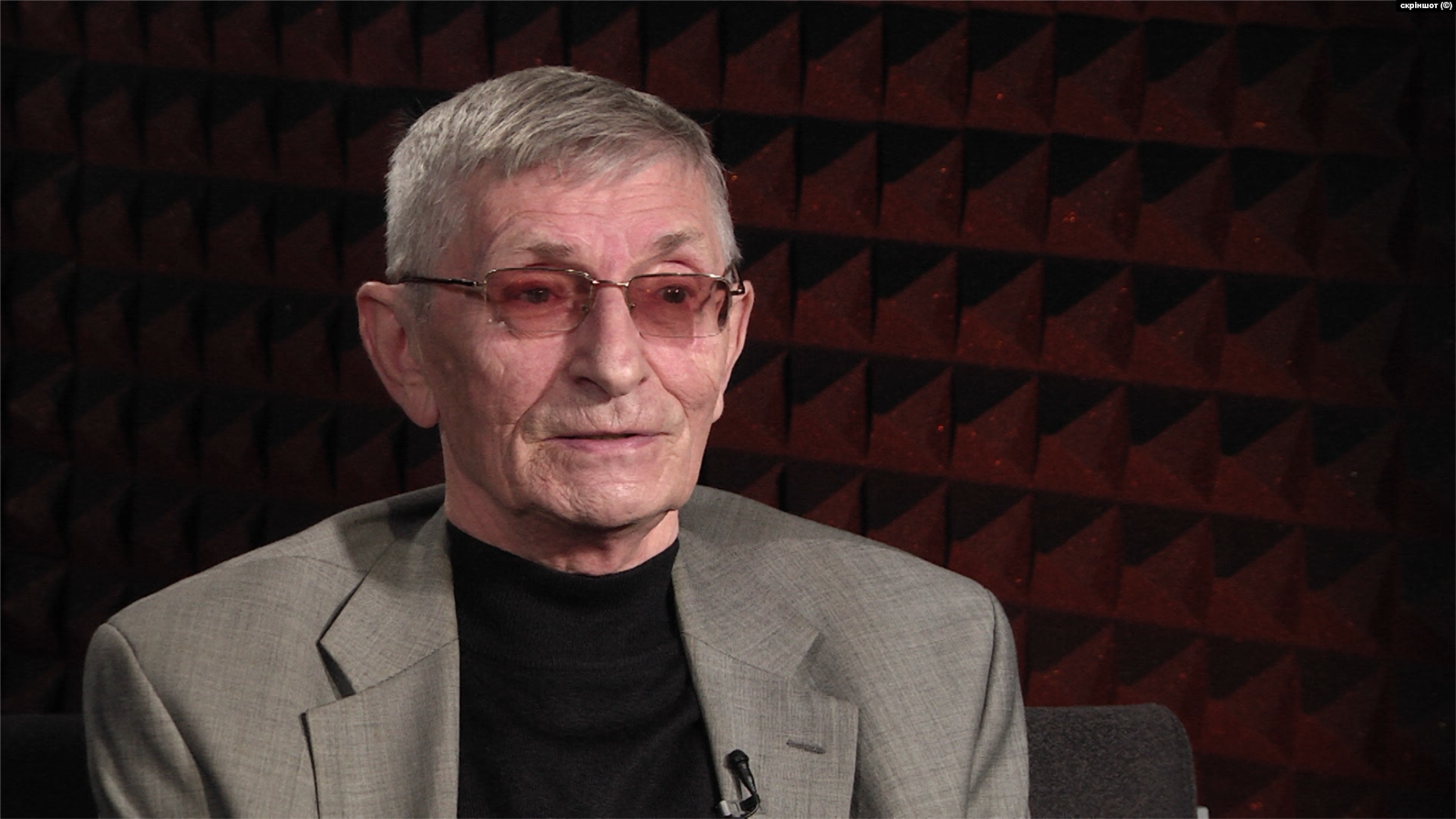
 The Director of the Institute of Sociology of the NAS of Ukraine, Corresponding Member of the NAS of Ukraine Yevhen Holovakha, in an interview with the Ukrainian edition of the Radio Free Europe/Radio Liberty information service, shared the results of scientific research conducted by the institution he leads and his thoughts on current pressing issues.
Talking about such an interesting and rather unique study as the sociological monitoring by the Institute of Sociology of the NAS of Ukraine, particularly regarding the stress resistance of Ukrainians, the scientist summarized: despite all the tragic events of the full-scale Russian invasion, the level of distress (i.e., destructive stress that significantly affects a person's health) among Ukrainians as of the time of the survey (which was in October 2023) was generally no higher than during the very stressful period of the COVID-19 pandemic. Additional stress-inducing factors of the war, strangely enough, did not significantly increase the stress level of Ukrainians. However, optimism about the future has significantly increased: in the pre-war years, optimists numbered no more than 17%, but at the peak of optimism in December 2022, they reached as much as 78%. Admittedly, in October 2023 this figure somewhat decreased—to 62%—but this is still a lot.
An unrealistic media campaign by the mass media, experts, and some politicians, which promised a quick liberation of occupied territories and success in the counteroffensive, led to the fact that, on one hand, the number of disappointed people increased, and on the other hand, Ukrainians began to assess the prospects for ending the war more realistically—within a year or even longer. How do Ukrainians envision victory? There is no single understanding. Since, according to experts' forecasts, after 2026 the economy and social conditions in the Russian Federation are expected to significantly deteriorate, we need patience and the ability to endure all the vicissitudes of the war without losing optimism. Our potential for resistance, despite stress and disappointment, remains quite high, the sociologist stated. Ukrainians do not agree to peace at the cost of losing territories and are not ready to capitulate.
Corresponding Member of the NAS of Ukraine Yevhen Holovakha predicts the return of at least half of the Ukrainians currently abroad. And this number will depend on the conditions of their settlement there, the timing of the war’s end, and other factors.
The scientist also touched on issues of political participation of Ukrainians, the popularity of the military in Ukrainian society, and more.
From the source
- “Russia is undergoing economic restructuring, but the standard of living of the population will begin to catastrophically decline in 2–3 years. There will be nothing else. And all professional economists understand this. Don’t think that there are complete idiots there. And so they decided that if they do not defeat us by 2026, then significant problems with Russia’s economy and the state of its population will begin. Russians have no ideology. It is neither a Nazi state nor a communist state. There is no ideology here at all. The attempt to revive the imperial idea is terrible, it is a temporary event, but it is doomed. <…> We must hold on until 2026, definitely. Everyone must prepare for this. We need optimism that is neither temporary nor euphoric. Or, as social psychologists say, unrealistic optimism. We must know that we need to hold on. The only realistic strategy is to hold on longer than Russia. That’s it. There is no other. We need to realize our potential to resist stress and disappointment. There are such tendencies. But these are emotional reactions against the backdrop of those unrealistic promises. We just need to explain to people that Russia did not accidentally choose 2026. Then it will begin to break down. <…> This war economy they are building will last two to three years.”
VIDEO RECORDING OF THE CONVERSATION
According to information from the Institute of Sociology of the NAS of Ukraine