


How the European Organization for Nuclear Research (CERN) ceased cooperation with Russian and Belarusian scientists and what obstacles Ukraine had to overcome on the way to this decision? What do they do at the Joint Institute for Nuclear Research in Dubna, Russia? How does this scientific center help Russia continue the war against our country and in which international research projects does it still participate for some reason? All this is explained in his article for the online publication "Dzerkalo Tyzhnia" by Ukraine's representative at CERN, director of the Institute of Scintillation Materials of the NAS of Ukraine (Kharkiv), academician Borys Hrynyev.
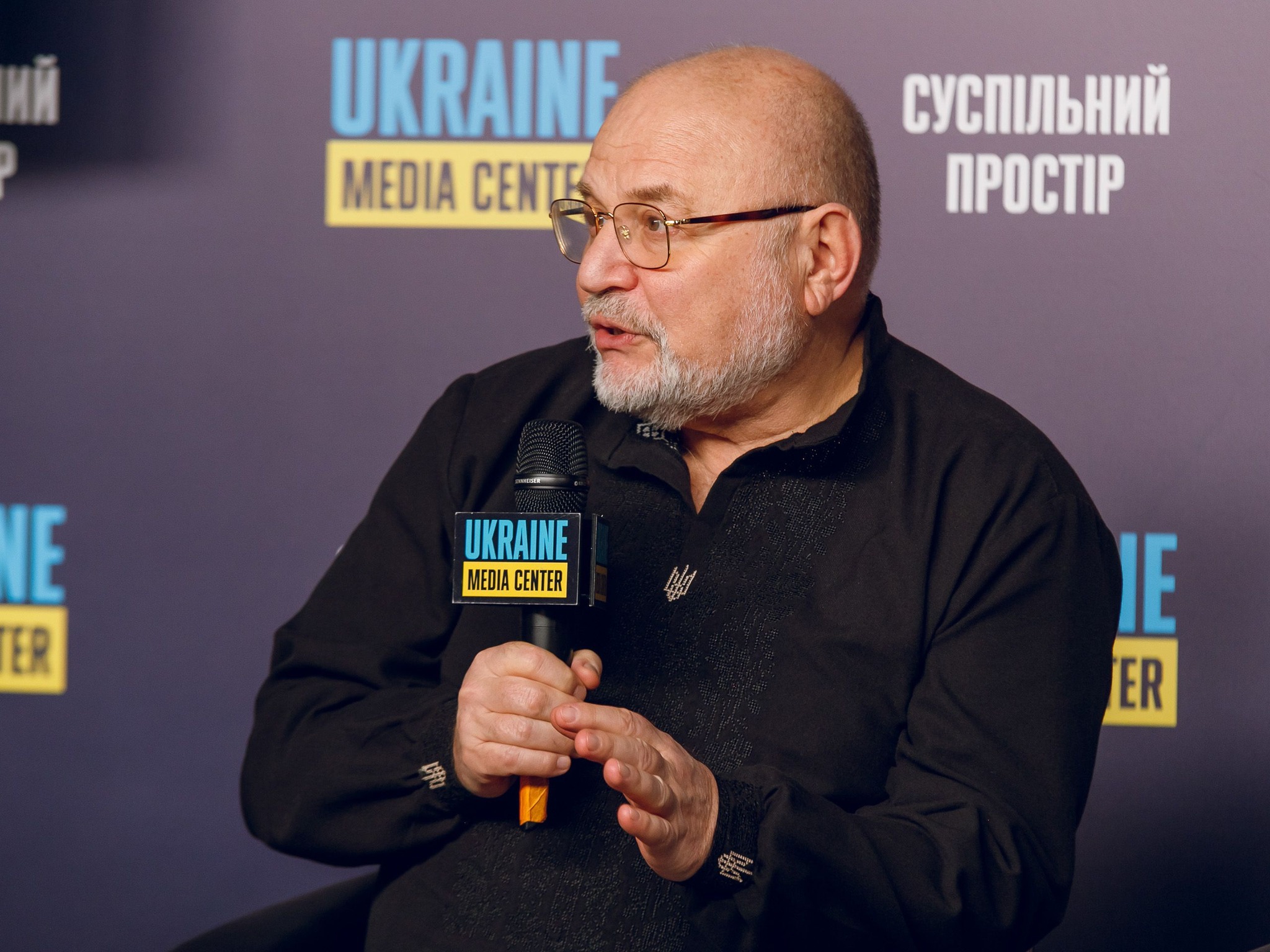
Academician Borys Hrynyev
"Recently, in response to the events unfolding in Ukraine, one of the largest international scientific organizations CERN — (European Organization for Nuclear Research) decided to cease cooperation with Russian and Belarusian scientists," writes the author. "This decision was an important and painful step that reflects not only the political reality but also the principled position of the global scientific community. And although scientists from institutes of the aggressor country have already packed their bags, it is too early to rejoice. Because Russia still has opportunities for international cooperation even in the field of defense developments. <...>
...since 2022, intense work has been ongoing to convince members of the CERN Council that cooperation with the Joint Institute for Nuclear Research (JINR) is dangerous and inappropriate. <...>
JINR initiated the creation of a Special Economic Zone in Dubna, where many other military enterprises are located, specializing in the production of drones, electronic components, technical fabrics, and military equipment.
Scientists at JINR and the Dubna enterprises they work with also share their knowledge with countries that support Russian aggression in Ukraine: Iran and North Korea. <...>
JINR scientists also work directly on dual-use projects, such as developing fuel cells for drones or neutron activation methods to detect defects in missile parts without dismantling them. <...>
Moreover, JINR has several joint ventures with the Federal Security Service of Russia (FSB). Security service employees at JINR are FSB employees. Even the JINR trade union office is located in the FSB building in Dubna. But the greatest concern is that JINR scientists working at FSB enterprises are also members of large international collaborations. This provides them with unrestricted access to scientific institutions worldwide.
Ultimately, despite involvement in scientific espionage, JINR claims cooperation with 990 scientific institutions in more than 70 countries. This access is important because technological developments are not a strong point of Russia. If previously it used scientific espionage to obtain new technologies (as in the case of the Manhattan Project), now Russia does this through participation in international scientific projects. Russian research institutes traditionally have a strong production infrastructure that allows not only conducting experimental research using these new technologies but also manufacturing equipment, including for the Russian military-industrial complex."
"...despite cooperation with the FSB and participation in Russian military projects, scientists from JINR and through it other institutes in Russia continue to participate in international scientific projects, publish in international journals, and travel across Europe and the world with virtually no restrictions. This provides unlimited opportunities to acquire new technologies useful for creating new weapons to be used in Ukraine and beyond. JINR is not yet under sanctions in Ukraine. This must be corrected as soon as possible. Ukrainian scientists at CERN are doubling their efforts to convince the scientific community at CERN and beyond of the danger of continuing cooperation with JINR," emphasizes academician Borys Hrynyev.