


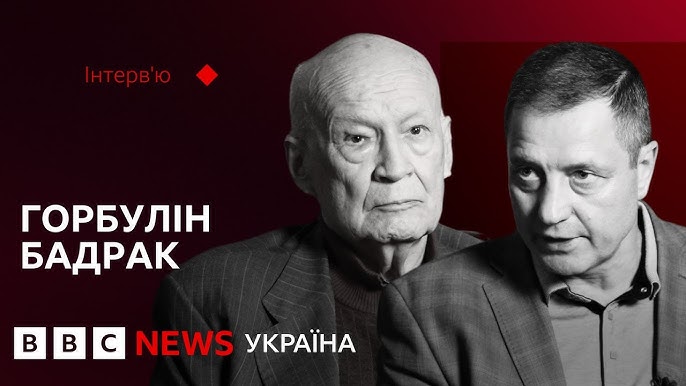
How does the current Russian-Ukrainian war differ from past wars? What restrictions did the Budapest Memorandum impose on Ukraine? Does our country need nuclear weapons now and why? All this and much more was discussed in an interview with the Ukrainian BBC service by the first vice-president of the National Academy of Sciences of Ukraine, academician of the NAS of Ukraine Volodymyr Horbulin, and the director of the Center for Army, Conversion and Disarmament Studies, Valentyn Badrak.
Here are some excerpts from the answers of NAS Ukraine academician Volodymyr Horbulin.
On urgent needs:
“From the very beginning of Ukraine’s independence, I had one main thought. I expressed it to the president, to the National Security and Defense Council, and to various experts, that Ukraine needs several things. First of all, to have anti-missile weapons, because we had none at all, we used what was made in the Russian Federation, as I already told you.
Second – to have our own missile weapons that could fly at a distance capable of resolving all strategic issues.
The strategic plan includes both 1000 km and 5000 km. That is, to create in Ukraine a missile that would fly at medium range, and medium range ends at five and a half thousand kilometers, intercontinental is ten thousand kilometers and beyond. And this task our native country will still have to solve. I have been talking about this not since 2022, but much earlier.”
On the features of the modern Russian-Ukrainian war:
“So far in this war, the [use of drones] is the main factor shaping the results of combat operations directly one against the other. It shapes a zone that extends 20 kilometers in one direction and the other. And this creates the need to hide tanks and artillery deeper in order to continue combat operations.
The most important thing is that everything has changed in the air. Because helicopters against drones, frankly speaking – are no longer weapons. And the results of combat operations show this. And most importantly, over these three years and four months, very serious changes have occurred in the conduct of military operations along the front line and nearby. And this is probably the main thing happening during the Russian-Ukrainian war. Such shifts were unexpected.”
On nuclear weapons for Ukraine:
“If you had asked me before this war started, I would still have been thinking. Now I think we need to return [to reviewing the obligations under the Budapest Memorandum], because we have full moral right. Every day and every night, after all the attacks by Russian aviation, and not only aviation, after these night shellings, when Russia uses all its capabilities, everything it has in stock today. <…>
[A possible path] is to unite with Western European countries that constantly feel the threat of the Russian Federation. Literally two or three weeks ago, Polish Prime Minister [Donald] Tusk said that they would feel better if they had nuclear weapons. This cannot be ignored.
Pay attention to how the situation has changed in the United Kingdom. And this despite the fact that the UK can use nuclear weapons only when the United States gives its consent. And the French nuclear arsenal? They openly stated that it is insufficient to stop Russia if a war of the Russian Federation against Western Europe begins.
Therefore, it is necessary to seek allied bridges so that Ukraine can engage in its own [nuclear armament]. Considering the scientific school that exists in Ukraine, and the fact that Ukraine has enough not only scientific base.
So I think that by uniting with some European country, we can try to take such a step.”