Established in 1979; scholars of the Department of Literature, Language and Art History of the NAS of Ukraine are awarded the Prize for outstanding academic papers in the field of philology, ethnology and art history



Ivan Yakovych Franko Prize
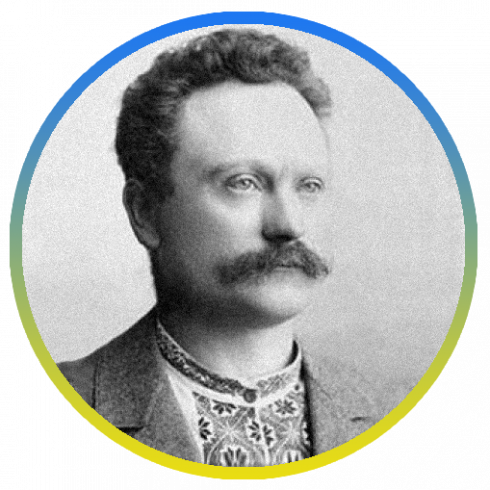
Ivan Yakovych Franko, the world-famous Ukrainian writer, scientist, publicist, public figure, was born on August 27, 1856 in the village of Naguyevychi, Lviv region, in a peasant family. During 1864–1867 he studied at the Drohobych Basilian School. While studying at the gymnasium, Franko read the original works of Goethe, Lessing, Schiller, Racine, Cornell, and others. He also undertook literary work himself. He dedicated the first poem, “Easter of 1871”, to his father. He translated the writings of Homer, Sophocles, Horace, Heine, as well as “The Tale of Igor’s Campaign”. Being a student, Ivan Franko advocated the opinion that the vernacular should be the basis of the Ukrainian literary language. He had phenomenal abilities: he could repeat almost verbatim the information given by teachers in classes, he deeply learned the content of the books he read.
The intensive self-education of Franko, a high school student, was facilitated by the library he collected, which included about 500 books in Ukrainian and other European languages.
In the autumn of 1875, Ivan Franko became a student of the Faculty of Philosophy of Lviv University (he also graduated from Chernivtsi University in 1891). I. Frank was arrested for socialist propaganda in 1877.
After eight months of imprisonment, he became even more actively involved in public and political work, helping in the organization of workers’ circles in Lviv. In 1880, I. Franko was arrested for the second time, accused of inciting the peasants against the authorities. In 1889, he was arrested again.
Along with the active public and literary activities I. Franko continued his studies: first at Chernivtsi University, writing a dissertation on Ivan Vyshensky, then at Vienna University, where he defended his doctoral thesis on July 1, 1893.
In 1894, Ivan Franko ran for a professorship in the history of Ukrainian literature at the Lviv University, but because of the resistance of reactionary forces, he did not get this position.
I. Franko vividly revealed his all-round giftedness, encyclopedic education and extraordinary diligence in many spheres of Ukrainian culture. He was a poet, playwriter, novelist, critic, historian and literary theorist, folklorist, translator and publisher. I. Franko drew plots for his writings not only from the life and struggle of his native people, but also from the primary sources of human culture – from the East, antiquity and the Renaissance. He was a golden bridge between Ukrainian and world literature.
I. Franko is deservedly considered one of the leading realist writers in Ukrainian literature and the most prominent poet of the post-Shevchenko time.
The artist’s poetry is characterized by thematic diversity, pathos and lyricism, aphorism and philosophical understanding of existence.
Famous Ukrainian composers A.I. Kos-Anatolsky, K.F. Dankevych, G.I. Mayboroda wrote songs based on I. Franko’s poems.
Among the dramatic works of Ivan Franko, the socio-psychological drama “Stolen Happiness” is particularly popular, and is still successfully performed in Ukrainian theaters.
Ivan Franko’s prose includes more than 100 short stories, ten novellas and novels and is distinguished by genre richness and a vivid depiction of the life of all social strata.
Ivan Franko was deeply respected by famous philologists – his contemporaries: O. Potebnia, A. Krymsky, O. Shakhmatov and others.
In 1906, the Kharkiv University Council unanimously awarded I. Franko the doctoral degree in Russian literature. In 1907, reactionary circles in Russia prevented his election as a full member of the St. Petersburg Academy of Sciences for political reasons. Works of I. Franko are translated into many languages. Some poems have been set to music, some prose works have been filmed and staged.
In 1908, physical and psychological overfatigue resulted in a serious illness. But weakened I. Franko wrote and dictated fictions and translations.
In 1915, his candidacy was nominated for the Nobel Prize in Literature, but the proposal was not considered due to the delay.
The most complete edition of I. Franko’s works counts 50 volumes; however, his legacy is almost twice as large and includes many scientific papers in various fields of humanitarian knowledge.
In honor of I. Franko, the city of Stanislav was renamed Ivano-Frankivsk in 1962. Streets, squares, theaters, libraries, educational institutions, etc., are named after him in many cities of Ukraine, the Ivan Franko Institute of the National Academy of Sciences of Ukraine functionates in Lviv since 2011, and Franko’s portrait is depicted on the 20-hryvnia banknote.