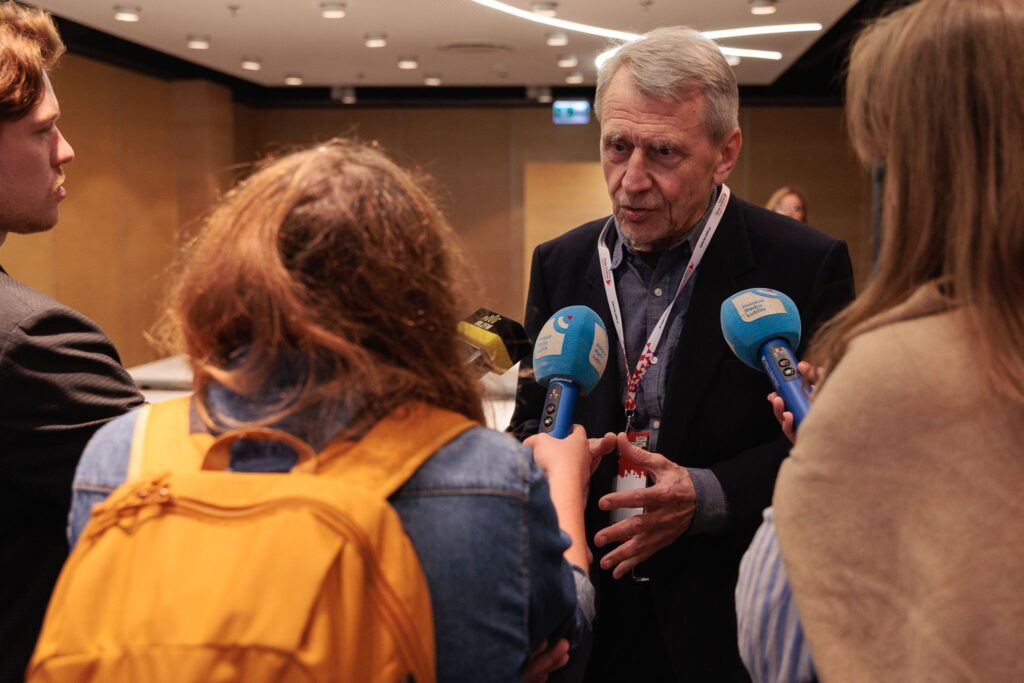
Mykola Ryabchuk, PhD in Politics, Leading researcher of the I.F. Kuras Institute of Political and Ethnic Studies of the NAS of Ukraine, took part in the international Lublin forum “Russian Aggression: Root Causes and Manifestations”, which brought together scientists and experts in order to discuss the historical, political and social factors of the present Russian-Ukrainian war.
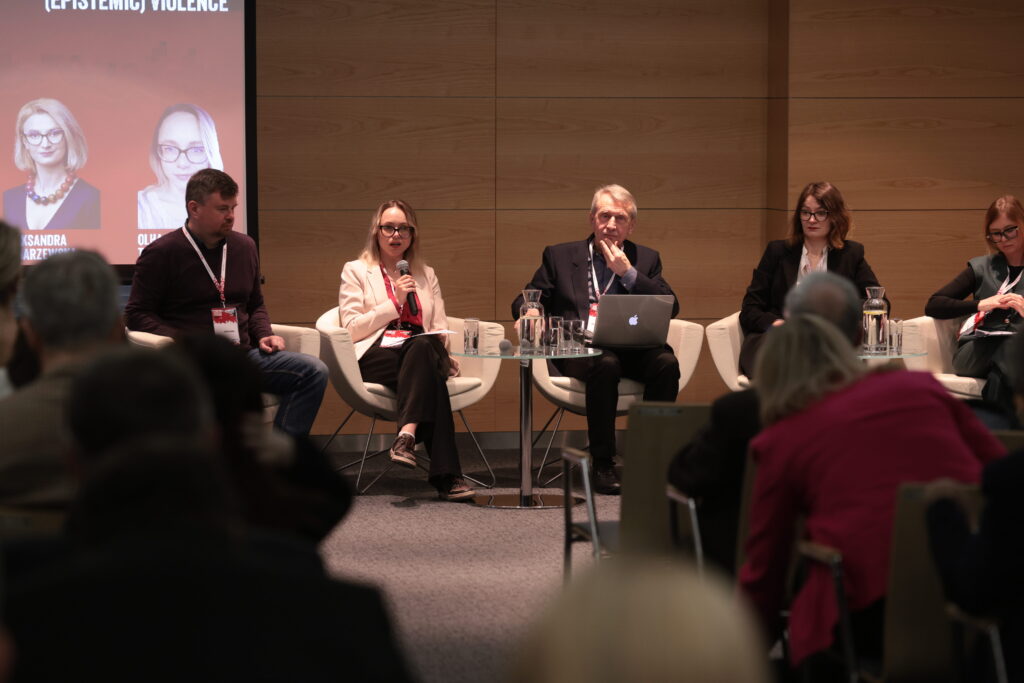
On the first day of the two-day event, Mykola Ryabchuk moderated the introductory panel discussion "History as a Tool of Power and (Epistemic) Violence." The discussion was a continuation of the keynote speech by historian Serhii Plokhiy "The Rise and Decline of the Pan-Russian Idea," dedicated to the historical origins of modern Russian politics.
In the course of the discussion, the scholar drew attention to the special role of historical myths in shaping Russian state identity. According to him, while all peoples to some extent create and maintain their own historical narratives and "fictional traditions", in the case of Russia, the falsified heritage of Kievan Rus and complete identification with it have become one of the central elements of state ideology.
Mykola Ryabchuk emphasized that the existence of independent Ukraine calls into question Russian imperial narratives and undermines their legitimacy. For this reason, in his opinion, Ukraine is perceived by the Russian authorities as a challenge to the established system of historical perceptions built on myths and falsifications.
In his speech, the scholar also noted that the Russian establishment increasingly uses historical arguments to justify aggressive policies. Narratives aimed at denying the distinctiveness of Ukrainian history and statehood play a special role in this.
According to the researcher, the current decolonization policy in Ukraine is aimed at overcoming historical distortions and restoring a fair vision of the past. At the same time, this forces Russia to rethink its own identity and abandon imperial approaches, which remain one of the key factors of the current conflict.
The Lublin forum became a platform for international discussion of the causes, mechanisms, and consequences of Russian aggression, and the role of historical memory and memory politics in contemporary international relations as well.
Information is provided by the I.F. Kuras Institute of Political and Ethnic Studies